
Related videos:
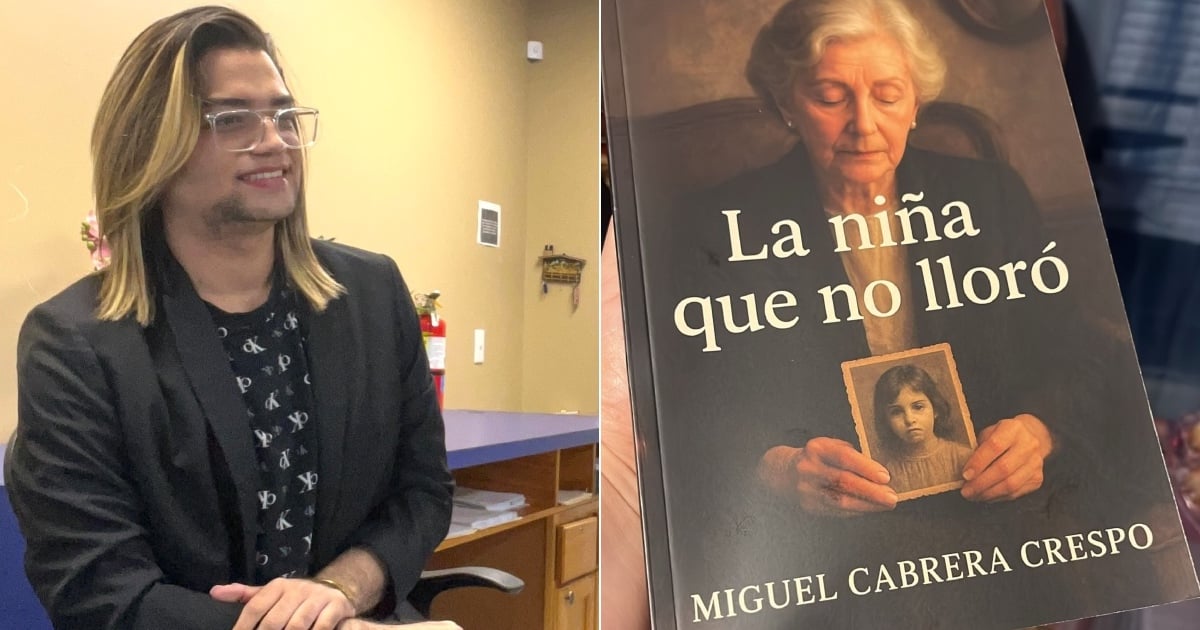
At just 27 years old, the young man from Camagüey, Miguel Cabrera Crespo, has achieved one of his great dreams: publishing his first book after four years in the United States.
The Girl Who Didn't Cry is a story that was born from the pain after the passing of her grandmothers in Cuba and became a beautiful tribute to those women who taught her to navigate through life.
According to the book review, “The Girl Who Didn’t Cry is an intimate and moving saga that tells the story of a woman marked by adversity, yet whose indomitable spirit refuses to break. From her childhood, she faces abandonment, betrayal, and loneliness, turning each pain into a steady step towards inner freedom." In each chapter, the silence of her tears is a testament to formidable resilience: a heart that, despite suffering, ignites with hope and love.”
The story behind this work has parallels in many Cuban women, which makes it feel so close and intimate: “This narrative is a tribute to those who have endured life's sorrows without surrendering, transforming suffering into strength. With a prose that balances the poetic with the raw, The Girl Who Did Not Cry invites readers to embark on a journey where the past merges with memory and the future shines with the promise of rebirth, reminding us that sometimes, the most beautiful things emerge from the silence of a suppressed cry. It is a story that reflects the history of a Cuban woman and her resilience.”
The book, published this June and available in English and Spanish, is now for sale on Amazon in both hardcover and paperback, as well as in Kindle version.
In statements to CiberCuba, Miguel recounted that he left the island several years ago for Spain: “I was there for a short time involved in education, as I worked as a language teacher in Cuba. From Spain, I went to the United States in 2021, and just upon arriving, my grandmothers passed away on the island."
"They were the source of inspiration for my book, they were my entire family, so everything was poured into it, and the refuge I found was in writing. Since then, I started to write, and finally this year I was able to finish my first book," he states.
He currently works for Dolfintech Financial, but he confesses that his hobby and passion is writing and he is already focused on a second book.
His hometown of Guáimaro has never left his mind and efforts, and for that reason, in 2023, he founded the Alicia Idalmis Charitable Group In Memoriam, also in tribute to his grandmothers, which raises funds and provides free lunches to assist elderly people in that municipality of Camagüey.
Frequently asked questions about Miguel Cabrera Crespo and his book "The Girl Who Didn't Cry"
Who is Miguel Cabrera Crespo and what is his recent achievement?
Miguel Cabrera Crespo is a young writer from Camagüey who has published his first book titled "The Girl Who Didn't Cry." This achievement is significant as he accomplished it just four years after emigrating to the United States. His work is a tribute to the women who inspired him, particularly his grandmothers, following their passing.
What is the book "The Girl Who Didn't Cry" about?
"The girl who did not cry" is an intimate and moving story about a woman who faces adversity from her childhood, transforming suffering into strength. The book tells how the protagonist turns each pain into a step toward inner freedom, symbolizing the resilience of many Cuban women. It is a narrative that blends the poetic with the raw, inviting the reader on a journey of hope and love.
Where can the book "La niña que no lloró" be purchased, and in what formats is it available?
The book "The Girl Who Did Not Cry" is available for purchase on Amazon in different formats: hardcover, paperback, and Kindle version. It is published in English and Spanish, making it more accessible to a wider audience.
What motivated Miguel Cabrera Crespo to write "The Girl Who Didn't Cry"?
Miguel Cabrera Crespo was motivated by the passing of his grandmothers in Cuba, who were a fundamental part of his life. The pain of their loss led him to find solace in writing, transforming that pain into a work that honors the resilience of the women around him. This personal experience is reflected in the emotional depth of the book.
Filed under: