
Related videos:
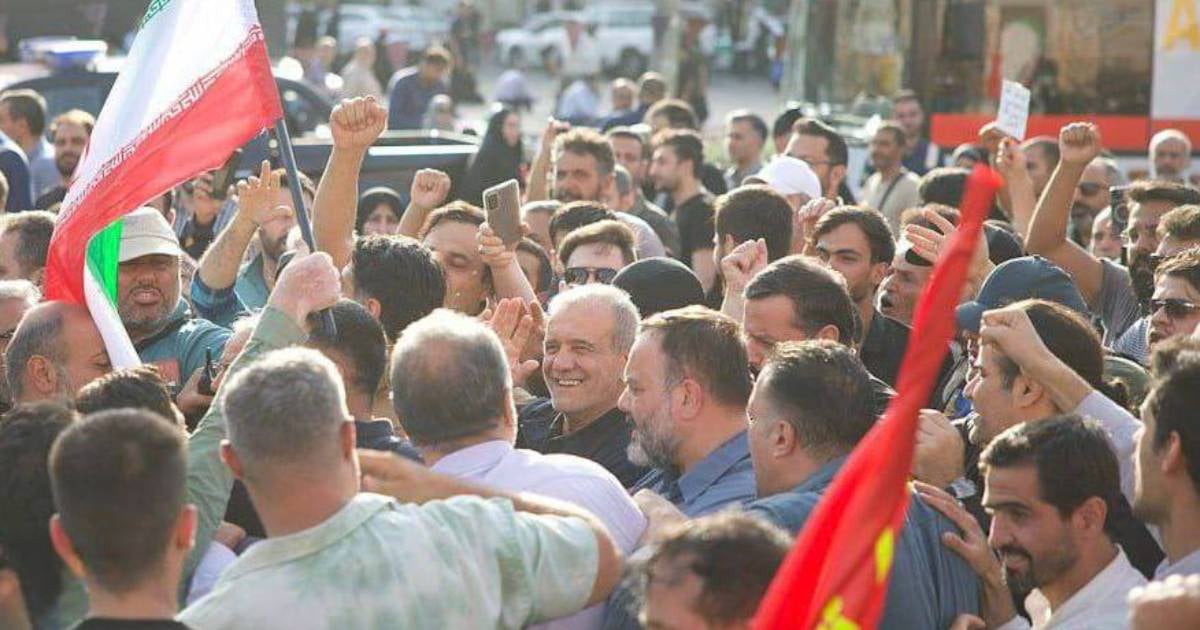
The Iranian president, Masoud Pezeshkian, proclaimed this Tuesday the end of a “war imposed” by Israel and celebrated what he described as a “historic victory” for his country, after twelve intense days of conflict that left the world on edge.
In an address broadcast by state television IRIB, Pezeshkian asserted that his nation bravely resisted the attacks of the " Zionist regime", and claimed that the ceasefire, accepted by both parties and brokered by U.S. President Donald Trump, represents a defeat for Israel.
“We are witnessing a ceasefire and the end of the 12-day war that was imposed on the Iranian people through the reckless aggression and warmongering of the Zionist regime,” stated the Persian leader.
The war began in the early hours of June 13 with Israeli bombings on Iranian nuclear facilities. The offensive intensified with attacks in several regions of the country, including the capital.
Iran responded with a barrage of missiles and drones against key targets in northern and central Israel, raising concerns about a regional escalation.
A ceasefire with a taste of challenge
The ceasefire came into effect in the early hours of Tuesday, following a proposal from Trump for a 12-hour truce, which was accepted by both nations. However, the Iranian government quickly turned the military pause into a declaration of political victory.
Pezeshkian stated that Israel "suffered a severe and historic punishment" and that its attacks failed to destroy the nuclear facilities, impact the country's scientific development, or provoke social chaos.
“The aggressive enemy failed time and again to achieve its sinister objectives of destroying nuclear facilities, weakening nuclear development and causing social unrest”, the president emphasized.
According to American and Israeli media, Trump himself asked Prime Minister Benjamin Netanyahu to cancel a new imminent attack. Although Netanyahu initially refused, he agreed to scale it back.
“Israel is not going to attack Iran. All the planes will turn around and return home while giving a friendly wave to Iran”, Trump wrote on his social media Truth Social.
However, tensions persisted. Israel accused Iran of violating the ceasefire by launching a missile, which Tehran denied. In retaliation, Israel destroyed a radar near Tehran, as confirmed by local and international media.
In the midst of the tense ceasefire, Iran announced this Tuesday that it is ready to resume its nuclear program without interruptions, including uranium enrichment operations.
"Our program will not stop," warned the Iranian Atomic Energy Agency, in a clear message that the truce does not mean surrender.
Frequently Asked Questions about the Conflict between Iran and Israel
How did the 12-day war between Iran and Israel end?
The 12-day war between Iran and Israel ended with a ceasefire, mediated by U.S. President Donald Trump. Both nations agreed to halt the attacks, bringing an end to the military confrontations that began on June 13, 2025.
What did Iran declare after the ceasefire with Israel?
After the ceasefire, Iranian President Masoud Pezeshkian stated that Iran had achieved a "historic victory" and that Israel had failed to meet its objectives of destroying Iran's nuclear facilities or causing social chaos. Additionally, Iran declared itself ready to resume its nuclear program without interruptions.
What was the role of the United States in the conflict between Iran and Israel?
The United States played a crucial role in mediating the ceasefire between Iran and Israel. President Donald Trump pushed for the truce and, despite the tensions, managed to get both parties to agree to halt the attacks. Additionally, the U.S. participated in military actions to curb Iran's nuclear capacity.
What impact did the conflict have on the Middle East region?
The conflict between Iran and Israel generated great tension in the Middle East, with devastating attacks resulting in the deaths of hundreds of people, mainly civilians in Iran. The war also sparked fears of a broader regional escalation, although the ceasefire managed to temporarily contain the situation.
Filed under: