
Related videos:
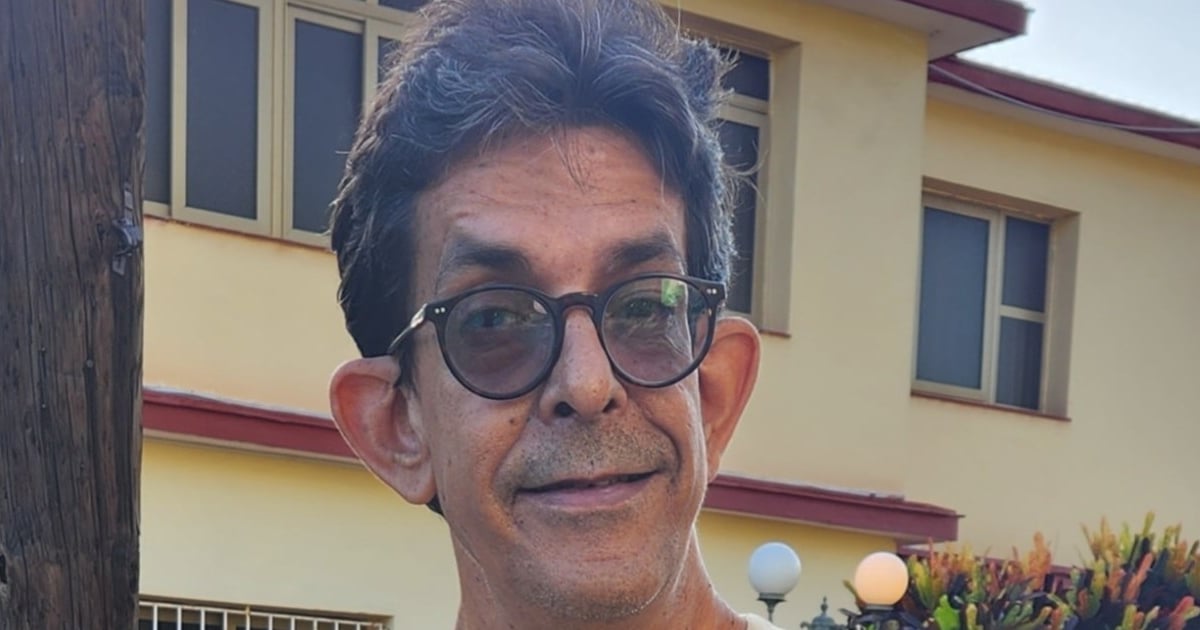
The Cuban comedian Ulises Toirac has once again delivered one of his most critical and scathing reflections on the country's situation, warning that Cuba is experiencing an irreversible economic collapse with no prospects for recovery.
In a post on Facebook, he questioned the very foundation of the Cuban economic model, which in his view suffers from a "congenital malformation," and warned of an even worse deterioration by September if deep transformations are not undertaken.
"I saw it coming even before the price hike, and I posted about it on social media," he wrote.
The arrival of summer, combined with "aberrant" measures like those of ETECSA, has worsened the economic crisis, said Ulises, who specified that the current situation is not due to recent mistakes, but rather to the application of "anti-economic formulas in all their magnitude and splendor."
For Toirac, the problem lies in a fundamentally flawed economic philosophy. "Economics is economics," or simply put: if a country spends more than it earns, it either goes into debt or collapses, as has happened.
In a bitter tone, the comedian also questioned the artificial construction of "social achievements" at the expense of productive sectors.
"When you divert money from your economy to make those achievements possible at the expense of your potential economic driving forces, you are doing a double disservice to your economy," he stated.
But that is just one of the many mistakes made by the government over these decades, alongside excessive centralization, the nationalization of businesses, the high and unproductive number of university graduates, incoherent agricultural measures, and the fear of wealth as a result of hard work.
Toirac also questioned the government's insistence on trying to escape bankruptcy by inventing financial mechanisms rather than economic ones.
He criticized that the country invested for years in capturing foreign exchange without generating real production: "They focused on hunting for foreign currency instead of designing a solid production strategy."
This approach has led to the current situation, with blackouts lasting more than 30 hours: "There is no electricity because there is no power system, and there is no money to meet the demand." And without electricity, he added, production cannot occur to reverse the situation.
His prognosis is as clear as it is devastating: everything will be much worse in September.
"Keep playing at nonexistent recovery while the sick, the elderly, and children die. This economy does not deserve plans. It needs drastic structural changes if we want to avoid a society out of control," he emphasized.
At the end of May, Toirac already sparked social media with an analysis in which he warned that "the summer is going to be tough", and painted a grim picture of prolonged blackouts, soaring inflation, and hospitals lacking resources.
His words not only described an energy crisis, but also the deterioration of the entire national infrastructure.
With pointed phrases like "the Cuban peso isn't worth the shell," he exposed an economy that implements neoliberal measures without the mechanisms of a functioning market, which can only worsen the poverty and vulnerability of the population.
In another post, he recounted a conversation that left him "speechless with horror," upon learning that the residents of Pinar del Río have adapted to living with daily power outages of 18 hours.
For Toirac, this collective resignation is a form of psychological defense against collapse, but at too great a cost.
The crisis, he recalled, goes far beyond energy. The shortage of medicines, the loss of food due to lack of refrigeration, the disruption of services, and the absence of basic goods have created an environment of daily survival.
Toirac compared the current situation to that of occupied countries during wars, only that in Cuba, he warned, there are no advancing allies or friendly troops to liberate. "There is none of that here. Neither in two nor in ten years, nor ever," he wrote.
Far from proposing technical solutions, Toirac advocates for a major overhaul: dismantling the inefficient pillars of the system and building another model from scratch.
His reflection, shared and commented on by thousands, did not offer comfort, but rather a strong warning: without production, without electricity, and without real reforms, what lies ahead is much worse.
Frequently asked questions about the economic crisis in Cuba according to Ulises Toirac
What is Ulises Toirac's main criticism of the Cuban economic model?
Ulises Toirac criticizes that the Cuban economic model has a "congenital malformation" and that it is necessary to implement drastic structural changes. According to Toirac, the current system is based on uneconomical formulas that lead the country to collapse. He believes that without real and profound reforms, the situation will only worsen.
What consequences does Ulises Toirac highlight regarding the current crisis in Cuba?
Ulises Toirac points out that the economic crisis in Cuba has led to prolonged blackouts, shortages of food and medicine, and a deteriorating national infrastructure. He also emphasizes that the population has adopted a collective resignation as a psychological defense mechanism, which, according to him, has a high cost for society.
What is Ulises Toirac's stance on ETECSA's price hike?
Ulises Toirac harshly criticizes ETECSA's rate hike, considering it an abuse and a form of exploitation of the population. Toirac points out that the measure imposed by ETECSA is unfair, especially in a country where access to foreign currency is limited and the average salary is very low. Furthermore, he emphasizes that such policies increase the class divide and limit access to information and connectivity.
Filed under: