
Related videos:
After an extended halt, Cuba resumes national production of wheelchairs, a vital resource for thousands of people with motor disabilities who face enormous challenges in accessing this basic means of mobility.
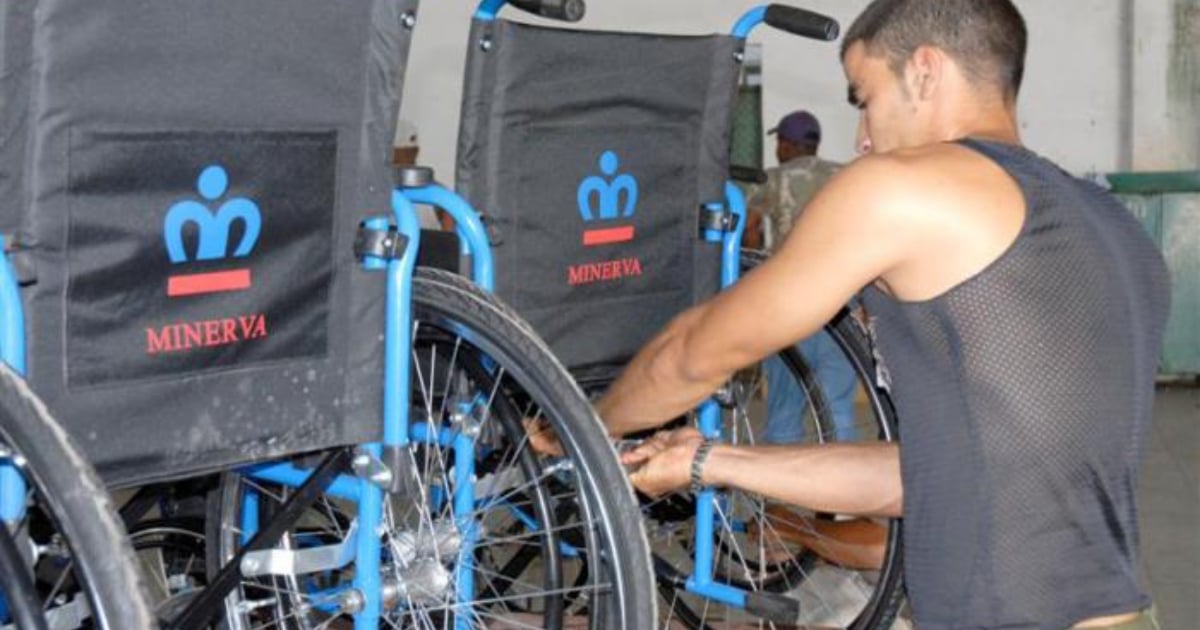
According to the official newspaper Granma, the Ángel Villareal Bravo Industrial Company, better known as Ciclos Minerva and located in Villa Clara, has resumed the assembly of wheelchairs after two years without producing them.
As of 2025, 1,800 units have already been produced and delivered to the Public Health system for distribution in hospitals, nursing homes, and other institutions.
For the rest of the year, the production of an additional 1,200 chairs is expected.
Although the figure represents a partial relief, it remains insufficient given the high demand, acknowledged engineer Yojani Muñoz Rodríguez, deputy director of the company.
According to him, the new chairs - featuring a basic design but with some improvements such as solid rubber, armrests, and hand brakes - aim to provide better quality compared to previous models.
Years of scarcity and dependence on external aid
The shortage of wheelchairs in Cuba has been a crisis for years, exacerbated by a lack of state funding and the inability to import this equipment in sufficient quantities.
In many areas of the country, people with disabilities completely lack a wheelchair or depend on deteriorated units, severely limiting their autonomy and quality of life.
In light of this reality, it has been the solidarity of Cubans abroad and civil society organizations that has bridged part of the gap.
From Miami and other parts of the world, hundreds of wheelchairs have been sent to the Island as part of donations and humanitarian projects.
Some arrived thanks to public figures like the comedian Limay Blanco, who organized a support network for vulnerable individuals.
The situation has reached such precarious levels that in some hospitals, makeshift solutions have been seen: plastic chairs placed inside old metal frames of wheelchairs.
A national product lagging behind global standards
Although Granma highlights that the new Cuban model presents certain technical improvements, the images published in the official press reveal heavy and rudimentary chairs, far from the current global standards, where there are ergonomic, lightweight designs tailored to various physical conditions.
Cuba lacks the capacity to offer customized models or state-of-the-art materials, which significantly reduces the functionality and durability of the delivered equipment.
Limited production for urgent needs
The note from Granma does not clarify what happened with the announcement made with much fanfare by the company Ciclos Minerva in 2023 to manufacture 1,000 wheelchairs that year.
According to the then director of the facility, there was a guarantee of financing and the necessary raw materials for production.
Whether that production plan was fulfilled or not is something the authorities have managed to conceal very effectively.
That year, the factory announced other ambitious plans for the production of commercial items, such as 6,000 electric motorcycles for sale in freely convertible currency (MLC), more than 18,000 mechanical bicycles, and other equipment.
When waiting turns into resignation
The resumption of wheelchair production in Cuba, after years of inactivity, is positive news but insufficient.
National production is far from meeting the actual demand of the country, and many people continue to wait for a vehicle that will allow them to move around with dignity.
Meanwhile, citizen solidarity and international aid networks continue to be the primary support for those in greatest need.
In a Cuba marked by chronic scarcity and structural sluggishness, having a wheelchair should not be a privilege or an odyssey.
Frequently Asked Questions about Wheelchair Manufacturing in Cuba
Why was the production of wheelchairs resumed in Cuba?
The manufacturing of wheelchairs has resumed to meet the high demand from people with motor disabilities who do not have access to this basic means of mobility. Production had been halted for two years due to a lack of funding and resources.
How many wheelchairs have been produced in Cuba in 2025?
Until now, 1,800 wheelchairs have been produced in 2025, with a target of manufacturing an additional 1,200 units for the remainder of the year. However, this figure is insufficient to meet the existing demand in the country.
How are the wheelchairs manufactured in Cuba distributed?
The wheelchairs produced by Ciclos Minerva are distributed to the Public Health system in Cuba, which assigns them to hospitals, nursing homes, and other institutions. However, availability remains limited due to high demand.
How are the wheelchairs manufactured in Cuba being improved?
Cuban wheelchairs have been improved with solid tires, armrests, and hand brakes to provide greater quality compared to previous models. However, they are still far from global standards of ergonomic design and durability.
What role do international donations play in the provision of wheelchairs in Cuba?
International donations have been crucial in addressing the shortage of wheelchairs in Cuba. Organizations and Cubans abroad, such as the comedian Limay Blanco, have arranged for the shipment of donated wheelchairs to assist people with reduced mobility on the island.
Filed under: