
Related videos:
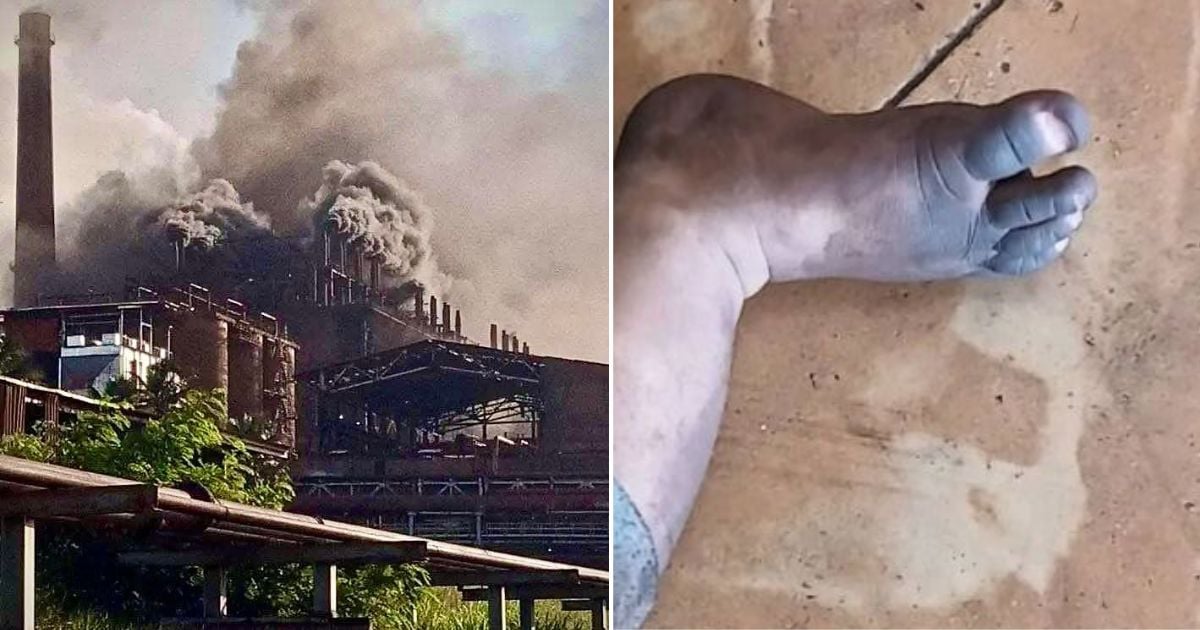
The Cuban activist Yamilka Lafita Cancio, known on social media as Lara Crofs, issued a strong public denunciation against the Cuban government on Thursday through an open letter, in which she holds the authorities responsible for decades of industrial pollution and environmental neglect in the municipality of Moa, in the province of Holguín.
The letter, titled “Moa Breathes Poison,” was published by Lafita on her Facebook profile, and is addressed to the Ministry of Science, Technology, and the Environment (CITMA), the Ministry of Energy and Mines, the Council of State, the Communist Party of Cuba, and other official agencies that —as stated in the complaint— have allowed prolonged and systematic damage to the health of the population and the natural environment of the region.
In the text, the activist directly accuses the nickel industry, specifically the Comandante Ernesto Che Guevara plant, operated by the state itself, of being the main source of toxic emissions that have been polluting the air, water, and soil of Moa for over 40 years.
“What some still refer to as ‘temporary annoyances’ is, for those who live there, a constant exposure to toxic gases, dust laden with heavy metals, and diseases that worsen year after year with no effective response from the State,” warns Lafita.
Based on data from national and local studies —some prepared by official entities— the letter states that Moa is one of the municipalities with the worst air quality in Cuba, with dangerous levels of sulfur dioxide (SO₂), nitrogen dioxide (NO₂), and fine particulate matter (PM10 and PM2.5), far above the internationally established safe limits, as acknowledged by the regime this Wednesday.
The effects, according to the activist, are reflected in the alarming increase of respiratory diseases, lung cancer, childhood asthma, chronic bronchitis, and emphysema, especially among children, the elderly, and workers in the mining sector.
Additionally, it denounces the constant dumping of industrial waste into the Moa River and the bay, which has led to the loss of biodiversity, water pollution, and the disappearance of traditional forms of life such as artisanal fishing in the riverside communities.
"The images are devastating: roofs covered in black dust, gray trees, houses stained with soot. And all of this happens with the knowledge of the State," he adds.
The letter also questions the official narrative, pointing out that it is not a communication problem, as regime-aligned media have suggested, but rather a lack of political will to take action and modernize industrial processes.
"The people of Moa are not ignorant. They know that the emissions that suffocate them are the result of industrial processes without filters or with filters in poor condition," she denounces.
In that regard, he criticizes the government for not investing in clean technologies or implementing urgent measures to reduce environmental impact.
Additionally, it states that the existing environmental laws in Cuba—such as the Mining Law and regulatory decrees—are violated every day without any legal consequences.
As part of its claim, Lafita makes five specific demands to the Cuban state, including the immediate installation of clean technologies and industrial filters in all the plants operating in Moa, as well as the conduct and publication of independent studies on the environmental and health impacts in the region.
It also calls for priority attention to the most vulnerable sectors, including children, the elderly, and people with chronic illnesses; the establishment of a citizens' commission for environmental oversight, with genuine participation from the affected residents; and finally, for the government to publicly assume institutional responsibility for the damage caused to the population and the natural environment.
"Breathing can no longer be an act of risk. Living in Moa can no longer be a sentence," concludes the document.
The activist also invites other people to add their names to the letter, which she plans to deliver to the authorities next Monday.
Every day, as he explained, an updated version of the text will be published with new signatures added.
Frequently Asked Questions about Pollution in Moa and the Complaint by Lara Crofs
Who is Lara Crofs and what is her complaint about Moa?
Lara Crofs, whose real name is Yamilka Lafita Cancio, is a Cuban activist who has publicly denounced the Cuban government for decades of industrial pollution in Moa. Her open letter, addressed to various institutions of the regime, accuses the industrial plants, especially the Comandante Ernesto Che Guevara, of emitting toxic gases and heavy metals that seriously affect the health of the population and the environment in the region.
What are the main pollution problems in Moa?
The pollution in Moa is primarily due to emissions of sulfur dioxide (SO₂), nitrogen dioxide (NO₂), and fine particles (PM10 and PM2.5) from the nickel and cobalt processing plants. These emissions exceed international safety limits, leading to respiratory illnesses and the deterioration of the local environment, including air, water, and soil pollution.
What response has the Cuban government given regarding the allegations of pollution in Moa?
The Cuban government, through the Ministry of Energy and Mines, has acknowledged that dust emissions have exceeded legal limits due to technical failures and planned shutdowns. However, the official response has been to justify the incidents without providing effective solutions, which has drawn criticism for the lack of transparency and action to mitigate the impacts on health and the environment.
What actions does Lara Crofs demand to improve the situation in Moa?
Lara Crofs demands the immediate installation of clean technologies and industrial filters in Moa, as well as the conduct of independent studies on environmental and health impacts. Furthermore, she requests priority attention for vulnerable sectors, the establishment of a citizen environmental monitoring committee, and that the government publicly accept its responsibility for the damage caused.
Filed under: