
Related videos:
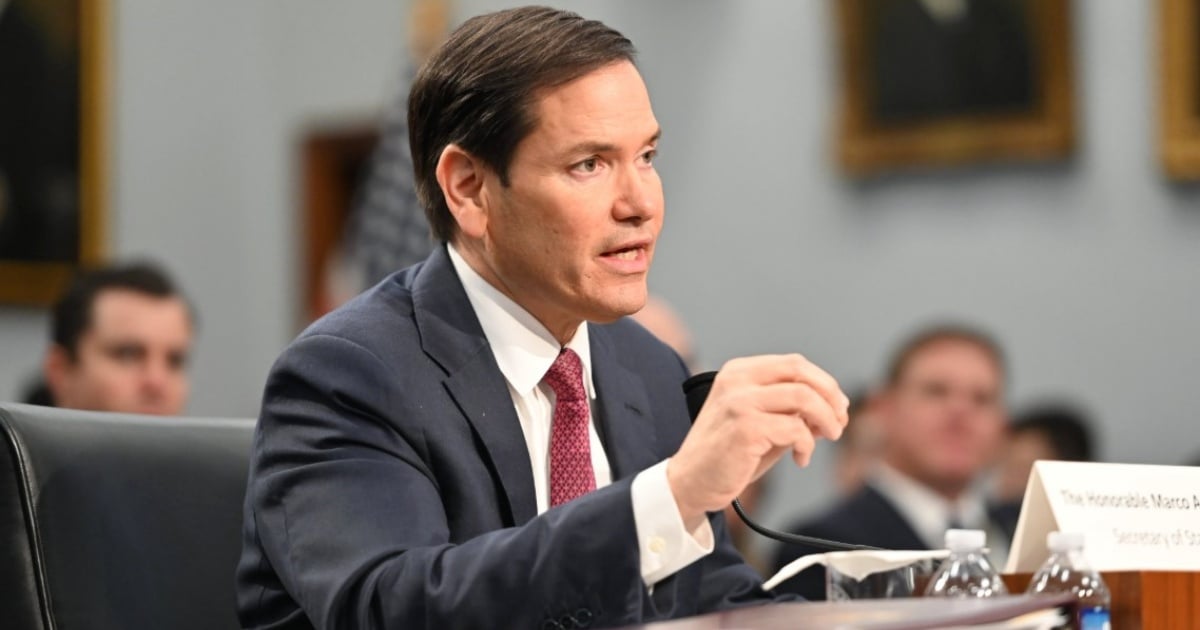
An impostor managed to deceive both U.S. and foreign officials by using artificial intelligence (AI) to impersonate the Secretary of State of the United States, Marco Rubio.
The sophisticated operation included the cloning of his voice and the imitation of his written communication style, all aimed at gaining access to sensitive information.
The authorities have not yet identified the person responsible for the deception, but the seriousness of the incident has raised alarms within the State Department.
Sophisticated impersonation: cloned voice and personalized messages
According to an internal cable from the State Department, sent from Rubio's office on July 3 and obtained by The Washington Post, the imposter had contacted at least five individuals outside the Department.
Among the objectives are three foreign ministers from unidentified countries, a U.S. governor, and a member of Congress.
The document indicates that the impersonator used the encrypted messaging app Signal to communicate with their victims.
This platform is widely used by government officials due to its high level of security, especially since the Trump administration.
What is unsettling about the case is the use of artificial intelligence tools to imitate both Rubio's voice and writing style.
“The actor left voice messages on Signal to at least two target individuals and, on one occasion, sent them a text message inviting them to communicate via Signal,” the report notes.
To do this, he created an account with the fraudulent username Marco.Rubio@state.gov, which does not correspond to an official government address.
Objective?: Access sensitive information
Although the exact details of the information that the impersonator was trying to obtain are not yet known, authorities believe that their main motivation was to “gain access to sensitive information or accounts.”
The attempt at manipulation was carried out through a carefully orchestrated campaign that began in mid-June, according to sources from the State Department cited by the Post.
In addition to the impersonation of Rubio, the cable warns that other officials from the State Department were also impersonated using fraudulent emails, suggesting a broader and more organized operation that could have national security implications.
The State Department, queried by The Washington Post, did not provide details regarding the contents of the intercepted communications or the names of the officials involved. However, it assured that it “would conduct a thorough investigation and continue to implement security measures to prevent this from happening again.”
Accessible technology, increasing risk
Although the authorities still do not know the identity of the person responsible, experts agree that the attack did not require extraordinary technical skills.
"You only need 15 to 20 seconds of audio from the person, which is easy in the case of Marco Rubio. You upload it to any service, click on a button that says 'I have permission to use this person's voice,' and then you write what you want them to say," explained Hany Farid, a specialist in digital forensic analysis at the University of California, Berkeley, to the mentioned media outlet.
"Leaving voice messages is particularly effective because it is not interactive," he added.
The use of artificial intelligence to generate fake voices is a growing phenomenon that has raised alarms among security agencies worldwide.
The ease with which the identity of a public figure can be replicated using these types of tools poses a significant challenge to authenticity in governmental communications.
The institutional response of the State Department and the legal void
The State Department has announced a thorough investigation.
"The Department takes its responsibility to protect your information very seriously and is taking ongoing measures to improve its cybersecurity and prevent future incidents," stated a senior official to The Independent.
However, so far the contents of the messages and the names of the officials involved have not been disclosed.
The diplomatic cable also recommends that employees of the Department of State and external officials report any attempts at identity theft to the FBI and the Diplomatic Security Office.
In the United States, impersonating a public official for deceptive purposes is a federal crime that can carry a sentence of up to three years in prison.
Reactions in Congress: An Urgent Call to Legislate
Cuban-American congresswoman María Elvira Salazar reacted firmly to the incident and renewed her call to regulate such practices.
"That's why we need the NO FAKES Act now. It would establish the first federal protection for your voice and image. Let's do it and defend all Americans from exploitation," he posted on X.
The NO FAKES Act (Nurture Originals, Foster Art, and Keep Entertainment Safe Act), currently under discussion, seeks to establish a legal framework to protect the image and voice of any citizen against unauthorized use by technologies such as artificial intelligence.
A structural flaw in the cybersecurity of the U.S.?
The use of Signal as a channel for official discussions has faced strong criticism.
Despite its end-to-end encryption, several recent incidents have exposed its vulnerability.
One of the most remembered episodes is the so-called Signalgate, which occurred in March, when a journalist was mistakenly added to a Signal group where high-ranking officials - including Marco Rubio serving as acting national security advisor - were discussing military operation plans in Yemen.
The Secretary of Defense, Pete Hegseth, even shared classified information in another group that included his wife and personal attorney.
This scandal led to the dismissal of National Security Advisor Michael Waltz, who had formed the groups.
"I take full responsibility. I formed the group. It's embarrassing. We are going to get to the bottom of this," declared Waltz.
The recurrence of incidents of this nature has led the Department of Defense to prohibit the use of Signal, WhatsApp, and iMessage for discussing non-public official matters since 2023.
A concerning pattern
This is not the only recent case of identity theft troubling the Trump administration.
In May, the phone of Susie Wiles, chief of staff at the White House, was compromised.
The impostor accessed her contact list and posed as her to communicate with senators, governors, and executives.
The White House and the FBI have launched an investigation, although President Trump downplayed the matter: "No one can pretend to be Susie. There's only one Susie."
According to the FBI, this type of campaign—based on voices generated by artificial intelligence—forms part of an expanding pattern aimed at stealing information or funds.
In a warning published in May, the agency alerted: “If you receive a message claiming to be from a high-ranking U.S. official, do not assume it is authentic.”
Similar cases have been reported in other countries.
In June, the Security Service of Ukraine reported that Russian agents were posing as authorities to recruit civilians for sabotage missions.
Canada also reported similar campaigns of fraudulent calls using synthetic voices pretending to be high-ranking officials, aimed at stealing sensitive information or injecting malware into networks.
As of the closure of this note, Secretary of State Marco Rubio has not commented on the leak made to the Post.
Filed under: