
Related videos:
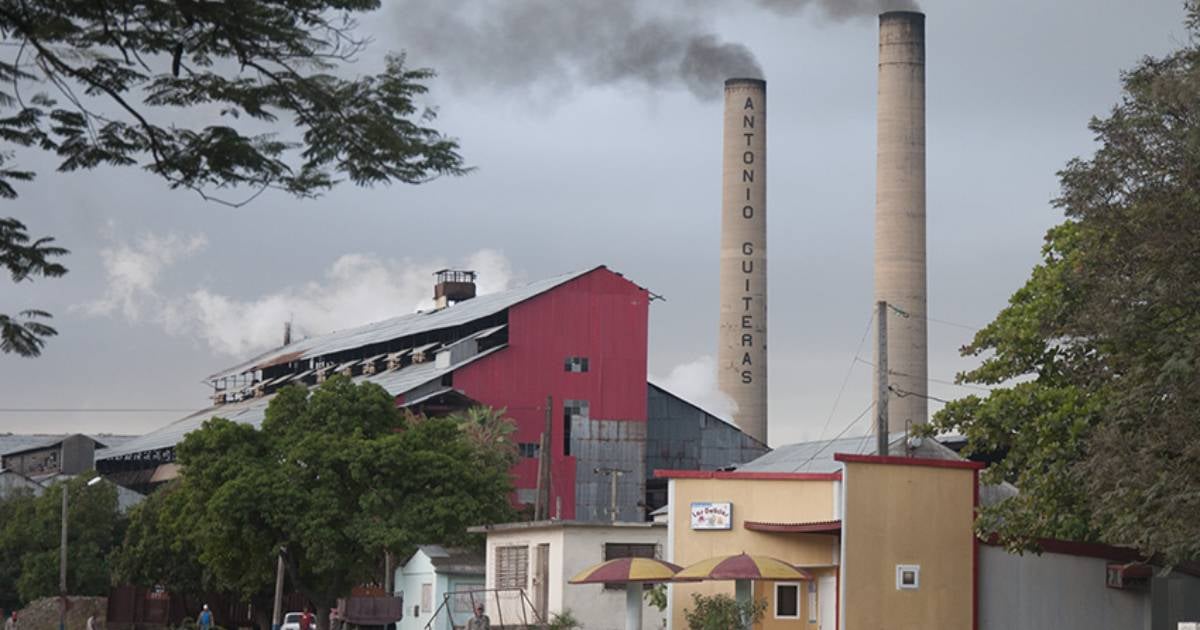
After several days of forced shutdown due to a lack of essential resources, the Antonio Guiteras sugar mill, located in the municipality of Puerto Padre, concluded its sugar campaign early, achieving only 16% of its production target.
With that figure, the current harvest is regarded as the worst in the recent history of the mill, which, like the others in the country, has been failing to meet its projections for several years now.
The decision to close the mill was made after exhausting all possible alternatives, acknowledged the regime, citing an article from the official Periódico 26.
According to Rafael Pantaleón Quevedo, the general director of the sugar agro-industrial company Antonio Guiteras, the workers had chosen to continue the harvest as long as the minimum conditions allowed, whether to produce sugar, generate electricity, or extract molasses.
However, the ongoing shortage of lubricants and fuels, along with interruptions in the electricity supply, led to the end of the harvest.
The Antonio Guiteras Sugar Mill promised in January to maintain 60 percent of its grinding capacity, which is equivalent to processing about 2,250 tons of sugar cane daily, but the figures remained far below expectations.
Pantaleón Quevedo, who blames the embargo for the failures in the logistics and operations of the Cuban sugar industry, stated that the shortages affected not only the agro-industrial machinery of the mill but also the automotive and railway transport systems, which are essential for the transportation of sugarcane and the distribution of the final product.
The unfortunate outcome is not exclusive to Las Tunas; in neighboring Camagüey, the sugar harvest only achieved 20% of the planned production for the year.
Among the causes are the low availability of resources, excessive lost time, including 41 days of delays in startup due to a lack of fuels and lubricants, and insufficient preparation and training of personnel, acknowledged the local government. The Carlos Manuel de Céspedes sugar mill, located in the municipality of the same name, only utilized 17% of its potential capacity and lost 87% of milling time for various reasons.
Guantánamo also concluded the harvest with 38% of the expected output, and Granma with 27%.
Although the decline has been ongoing for several years, the statistics for 2025 indicate a new historical low in an industry that was, for decades, the economic backbone of the country and a symbol of its national identity.
Frequently Asked Questions about the Sugar Harvest Crisis in Cuba
Why did the Antonio Guiteras sugar mill in Las Tunas produce only 16% of its sugar plan?
The Antonio Guiteras sugar mill in Las Tunas produced only 16% of its sugar plan due to a lack of essential resources, such as lubricants, fuels, and stable electricity supply, which forced an early halt to the sugar campaign.
What are the causes of the failure of the sugar harvest in Cuba in 2025?
The causes of the failure of the sugar harvest in Cuba in 2025 include the low availability of resources, the obsolescence of machinery, and the energy deficit. Additionally, there were delays in the startup of several mills and logistical problems that affected the transportation and distribution of sugar cane.
How has the sugar crisis impacted the Cuban economy?
The sugar crisis has severely impacted the Cuban economy by reducing production in a sector that has historically been strategic. This not only affects local supply and the export of sugar, but also worsens the need to import sugar, a product that Cuba traditionally exported, adding pressure to the already weakened economy of the country.
What role does the U.S. embargo play in Cuba's sugar crisis?
The Cuban government attributes part of the logistical and operational failure of the sugar sector to the U.S. embargo. However, the embargo is just one of many factors, as a lack of investment, outdated machinery, and poor internal management have also significantly contributed to the collapse of the sector.
Filed under: