
Related videos:
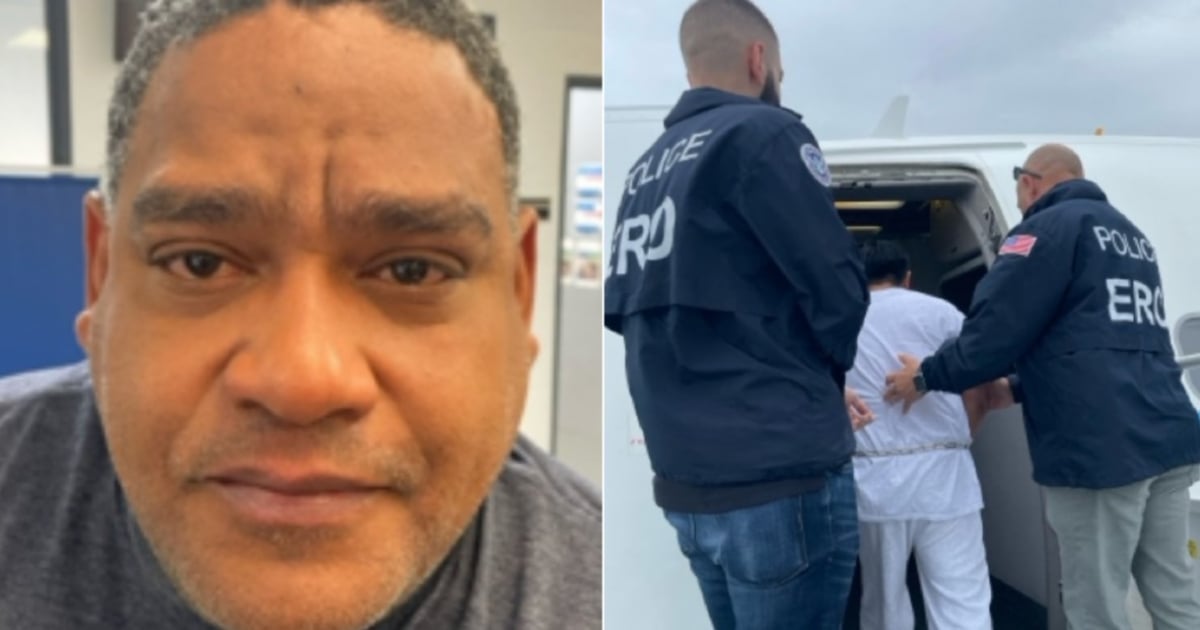
A Cuban citizen with a history of sexual offenses against minors was arrested this Tuesday in Miami by agents from the Office of Removal Operations (ERO) and the Immigration and Customs Enforcement (ICE), and will be deported as part of the new immigration policies of President Donald Trump.
The detained individual, Ariochy Morán, 52 years old, is an undocumented Cuban immigrant who had previously been convicted of attempting lewd acts against a minor under the age of 12.
According to confirmation from federal authorities via their official account @EROMiami, Morán has a final deportation order and will remain in the custody of ICE while awaiting his removal from the country.
"Today, ERO and HSI Miami arrested Ariochy Morán, an illegal immigrant with a criminal background. Morán was convicted of attempted lewd behavior against a minor under 12 years old. He has a final order of removal and will remain in ICE custody," the agency posted on social media platform X.
The arrest comes just a day after the U.S. Supreme Court authorized the resumption of migrant deportations to third countries, even if those affected do not originate from those destinations and without a proper assessment of the risk of torture or death, a policy pushed by Trump and previously blocked by a court order.
With a 6-3 vote, the conservative majority of the Supreme Court overturned the decision of federal judge Brian Murphy, who had halted those deportations on the grounds that they could violate basic human rights.
Among the migrants affected by this policy were citizens of Cuba, Mexico, Myanmar, Laos, Vietnam, and South Sudan, several of whom had no criminal records.
The Department of Homeland Security (DHS) hailed the ruling as a victory for the "security of the American people" and indicated that the measure could be applied immediately, without the need for prior notice or minimum guarantees of legal defense.
The liberal judge Sonia Sotomayor, in her dissenting vote, accused the government of acting "without legal restraints" and the Supreme Court of "rewarding illegality," warning that thousands of migrants could be sent to “lremote places where they face violence” without due process.
The decision reinforces the agenda of mass deportations promoted by Trump, who has reactivated agreements with countries like Panama and Costa Rica to host migrants due to the refusal of other states to receive them. At least two Cubans have been sent to South Sudan in this context.
The case of Ariochy Morán, although related to a serious criminal offense, highlights the immediate impact of this policy, which could also extend to Cuban migrants without criminal records if they are subject to deportation orders under the new provisions from the Executive, warn analysts who advocate for human rights.
Human rights organizations and immigration lawyers have warned that the lack of support networks in third countries, along with the absence of individual risk assessments, poses a serious threat to the integrity and safety of thousands of people expelled from U.S. territory.
It has not been specified whether Morán will be sent to Cuba, as in previous cases the island has refused to accept its citizens.
Frequently Asked Questions About the Deportation of Immigrants with Criminal Records in the U.S.
Why was Ariochy Morán arrested in Miami?
Ariochy Morán was arrested in Miami due to his criminal record for attempted lewd acts against a minor under 12 years old. Additionally, he is in an irregular situation in the United States and has a final deportation order.
How does the Supreme Court's decision affect migrants with criminal records?
The Supreme Court's decision allows for the resumption of deportations of migrants to third countries, even if they do not come from those destinations, and without assessing the risk of torture or death. This reinforces mass deportation policies, impacting migrants with criminal records by facilitating their expulsion without due process.
What implications does the U.S. government's deportation policy have for Cubans?
The deportation policy under the Trump administration has intensified the arrests of Cubans with criminal records, many of whom face deportation to third countries due to the Cuban government's refusal to take them back.
What do human rights organizations think about these deportations?
Human rights organizations have criticized these deportations, arguing that the lack of individual risk assessments and deportation to third countries without family or historical ties poses a serious threat to the integrity and safety of the deported individuals.
Filed under: