
Related videos:
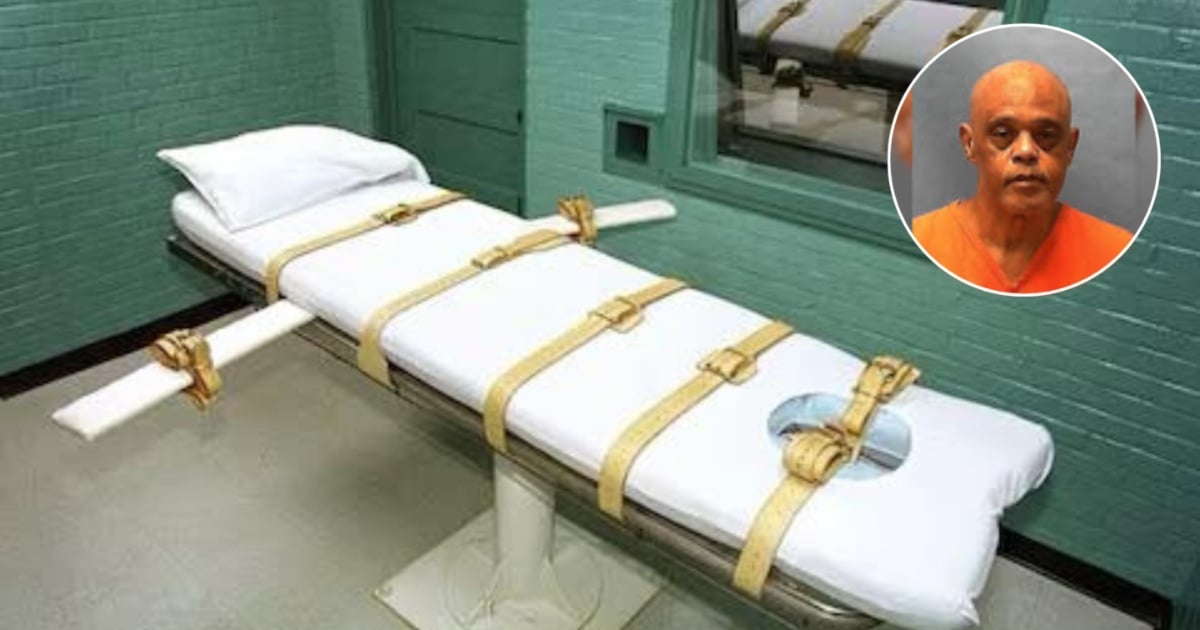
The state of Florida is set to execute on August 19 a man convicted of the kidnapping, attempted rape, and murder of a woman in 1982.
According to local media, Kayle Bates will be the tenth scheduled execution in the state this year.
Governor Ron DeSantis signed the execution order last Friday, just three days after the state carried out the death penalty on Michael Bell, convicted of a double homicide in 1993.
Bates, 67 years old, was convicted of first-degree murder, kidnapping, armed robbery, and attempted sexual assault.
According to court documents, on June 14, 1982, he kidnapped Janet White at her workplace, a State Farm insurance office in Bay County.
He took her to a nearby wooded area, where he attempted to rape her, stabbed her to death, and tore a diamond ring from her finger.
The state attorney general, James Uthmeier, detailed in a letter summarizing the case that it was a brutal and premeditated crime.
The crime has been widely regarded as a case of femicide due to the sexual violence and brutality with which it was committed.
For his part, Bates' defense attorney, James Driscoll Jr., announced that he will submit new appeals. “We believe that his execution would violate the Constitution of the United States,” he stated in a phone interview on Saturday.
Last week, Michael Bell became the 26th person executed in the United States in 2025, a figure that already surpasses the 25 executions recorded the previous year and marks the highest number since 2015.
The reactivation of executions in Florida has been a policy reinforced by Governor DeSantis, who has made the enforcement of the death penalty a tool of his "law and order" agenda.
The execution of Bates would mark the continuation of this trend, amidst a national upward trend in the application of the death penalty.
Executions in the United States have reached their highest point in a decade. This increase is due to more aggressive policies in some states, such as Florida, Texas, and South Carolina, which have ramped up their use of the death penalty, disregarding abolitionist trends present in other regions of the country.
In 2025, the majority of executions in the United States have been carried out by lethal injection, but alternative methods, such as nitrogen inhalation and firing squads, have also been used. The latter method has been employed in South Carolina for the first time in 15 years due to a shortage of drugs for lethal injection.
Frequently Asked Questions About the Death Penalty in Florida
Why has Florida increased executions in 2025?
Florida has increased executions in 2025 due to more aggressive policies in the application of the death penalty, driven by Governor Ron DeSantis. These policies have been part of his "law and order" agenda, which seeks to impose stricter penalties for serious crimes. This increase stands in stark contrast to the abolitionist trend seen in other parts of the United States.
What are the methods of execution used in Florida?
In Florida, lethal injection is the primary method of execution, although the electric chair remains an option if the condemned expressly chooses it. In 2025, the majority of executions in the United States have been by lethal injection, but alternative methods have also been used in other states, such as nitrogen inhalation and firing squads.
What impact has the increase in executions in Florida had on a national level?
The increase in executions in Florida has contributed to executions in the United States reaching their highest level in a decade. This rise has raised concerns among human rights organizations and has reignited the debate on the death penalty in the country. Florida, along with Texas and South Carolina, accounts for the majority of executions, ignoring trends toward the abolition of capital punishment in other regions.
What arguments do the defenders of the condemned use to prevent executions?
Defenders of the condemned often argue that the death penalty perpetuates unequal justice and does not reduce crime. They also present appeals based on health issues, cognitive deficiencies, inherited trauma, or judicial malpractice. In some cases, they claim that the medical conditions of the condemned could cause them unnecessary suffering during the execution.
Filed under: