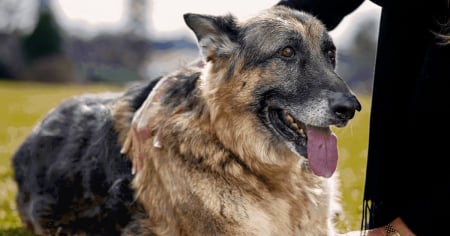
The wave of deportations in the United States is not only leaving families shattered but also abandoned pets, as more and more dogs and cats end up in shelters in South Florida after their owners were deported or forced to flee.
This is one of the most invisible, silent, and painful consequences of immigration policies, rarely mentioned, but it is already overflowing the shelters, as reported by the Miami New Times.
These animals were not surrendered for common reasons such as behavioral issues or moving, but many arrived accompanied only by a note that said: “deported family”.
The case of Nino, a seven-year-old Pointer mix described as "the perfect dog," is one of the most illustrative.
He was returned to the same shelter from which he was adopted two years ago, when his family was deported without being able to take him with them.
The situation repeats itself time and again: Bruce, a five-year-old pit bull mix, arrived at the Broward shelter after the father of the family was deported and the mother had to leave with her children, unable to take him along, highlighted the news portal.
Margot, a tabby cat, was given to us by a family friend who tried to take care of her but turned out to be allergic.
Janet Steele, director of the Palm Beach County shelter, stated that at least 19 animals were surrendered this year as a direct result of immigration arrests.
One of them was an 11-year-old poodle, sick and partially blind, who ended up in a shelter after a neighbor reported his owner's deportation.
Organizations like Good Karma Pet Rescue and Lady Luck Animal Rescue are trying to fill the gap by taking in pets that urgently need homes. However, capacity is limited and resources are scarce.
The situation is worsening at a time when shelters in South Florida are already facing an overcrowding crisis, reported Miami New Times.
The Doral center, for example, has been operating above its capacity for years, accommodating almost double the number of dogs it was designed for.
The excess of animals has increased the risks of diseases and limits the resources available to provide adequate care.
Mylena González, spokesperson for the Miami-Dade County Animal Services, acknowledged the rise in surrenders for personal reasons and explained that, although they do not keep specific statistics on cases related to deportations, the effects are evident.
The migration crisis affects not only those who cross borders but also those who walk on four legs and do not understand why they were left behind.
In this story, the animals also lose families, safety, and love.
Paradoxically, this wave of abandonment occurs in an increasingly strict legal context. In May, Florida enacted a law imposing fines of up to one thousand dollars on those who abandon animals, even in emergency situations.
Days later, it was announced that the penalties would become even stricter if abandonment occurs during hurricanes or climate disasters.
These regulations have raised concerns among animal advocates, who acknowledge the need for regulation but also demand that the social and migratory context of the affected families be taken into account.
In contrast to this picture, there are also stories that showcase the more human side. Like that of a Latino who adopted an abandoned puppy in the United States and completely changed his life.
Cases like this demonstrate that, even in the midst of uncertainty, there are those who are willing to provide home and affection to animals that have lost everything.
Frequently asked questions about pet abandonment in Florida due to deportations
How many pets have been abandoned due to deportations in Florida?
At least 19 animals have been surrendered to shelters this year in Florida as a direct result of immigration detentions, according to statements made by Janet Steele, director of the Palm Beach County shelter.
Why do deported families not take their pets with them?
Deported families often cannot take their pets due to travel restrictions and a lack of resources or time to arrange their transport. Furthermore, deportation frequently happens suddenly, leaving families without options for the care of their animals.
What organizations are helping with the problem of abandoned pets?
Organizations like Good Karma Pet Rescue and Lady Luck Animal Rescue are trying to fill the gap by taking in pets that urgently need homes, although they face limitations in capacity and resources.
How does overcrowding in Florida shelters affect animals?
Overcrowding in Florida shelters increases the risks of diseases and limits the resources available to provide adequate care. The Doral center, for example, has been operating for years above its capacity, housing almost twice the number of dogs it was designed for.
What impact do deportations have on the pets of the affected families?
Deportations affect not only human families but also pets, who lose their homes, security, and love, being left behind in shelters or in abandoned situations.
Filed under: