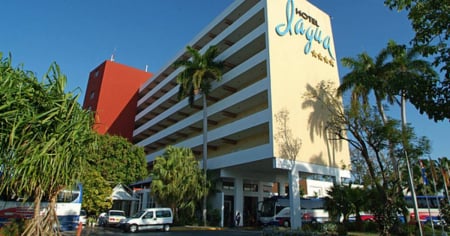
The Cuban regime reinforced its alliance with the Spanish group Ávoris Corporación Empresarial and the hotel chain Meliá Hotels International. The announcement was made public this week and has generated debate on social media.
The aim of the Cuban government is to reverse the collapse of the tourism industry on the island, characterized by shortages, power outages, and an increasingly negative international image. The project with Spanish companies is associated with a contest for travel agencies, under a suggestive title: “Selling Cuba has rewards”.
What does this strategic alliance with European companies entail?
From September 12 to 19, more than 400 travel agents from Spain and Portugal will visit Cuba as part of an ambitious commercial initiative led by the tour operator Travelplan, which is part of Ávoris.
This collaboration will be directly with Gaviota S.A., part of the Grupo de Administración Empresarial S.A. (GAESA), the conglomerate of the Revolutionary Armed Forces (FAR) that controls over 70% of the dollarized Cuban economy.
This action is part of the VII Gaviota Destinations Tourism Fair and aims to promote travel to Cuba among industry professionals through direct flights from Madrid and Lisbon to Santa Clara.
The agents will stay at high-end resorts such as Paradisus Los Cayos and Meliá Trinidad Península, with a program that combines training with tourist activities.
Why is this project coming now?
The campaign arrives amid a deep political and economic crisis in Cuba, yet it perfectly aligns with the regime's intentions which, despite lacking medicine in hospitals and food for the people, prioritizes developing the tourism sector.
The contest “Selling Cuba Has Its Rewards” was launched by Travelplan in 2025 to encourage the promotion of the Cuban destination in the European market. The Spanish travel company asserts that this experience will enable agents to become “strategic promoters.”
The commitment to strengthen international tourism recalls the latest financial report from Meliá Hotels International, which highlights Cuba as its only destination with negative results globally.
The company attributes the collapse of the sector on the island to supply issues, power outages, and the impact of news reflecting the serious crisis in the country.
The report also mentions a 20.8% drop in revenue per available room (RevPAR), a hotel occupancy rate reduced to 40.5%, and a loss of five million euros in management fees. Additionally, there has been the cancellation of flights from key countries such as the United Kingdom, Belgium, and Argentina.
Despite the deterioration of the sector, the Cuban regime is betting on strengthening its international image through strategic alliances with foreign tour operators and hotel chains, while the internal reality reveals an increasingly evident collapse.
Frequently Asked Questions about the Tourism Situation in Cuba
Why is tourism in Cuba in decline?
Tourism in Cuba is declining due to supply issues, power outages, and negative news that have impacted the country's image as a tourist destination. This is compounded by unfavorable conditions such as food shortages, the deterioration of hotel infrastructure, and poor customer service, which have discouraged tourists from visiting the island.
What measures is the Cuban regime taking to revitalize tourism?
The Cuban regime has strengthened alliances with hotel groups and international tour operators, such as Meliá and Ávoris, to attract European tourists through promotional programs and visits by travel agents. However, these measures stand in stark contrast to the severe internal crisis and low competitiveness compared to other Caribbean destinations, which limits their effectiveness.
What is the economic impact of the decline in tourism in Cuba?
The decline in tourism has negatively impacted the sector's revenue, with a 20.8% drop in revenue per available room and hotel occupancy reduced to 40.5% in hotels managed by Meliá. This sector is crucial for the Cuban economy, and its deterioration exacerbates the already existing economic difficulties in the country.
How does the cancellation of international flights affect Cuba?
The cancellation of international flights has reduced air connectivity in Cuba, directly impacting the arrival of tourists. Airlines from countries such as the United Kingdom, Belgium, and Argentina have canceled their routes, while others have reduced flight frequency due to low demand and operational complications on the island.
How competitive is Cuba compared to other tourist destinations in the Caribbean?
Cuba is becoming less competitive compared to other Caribbean tourist destinations due to its deteriorating infrastructure, energy crisis, and issues related to security and supply. Countries like the Dominican Republic are experiencing a tourism boom thanks to the diversification of their offerings and the quality of their services, while Cuba is facing a sustained decline in tourism.
Filed under: