
Related videos:
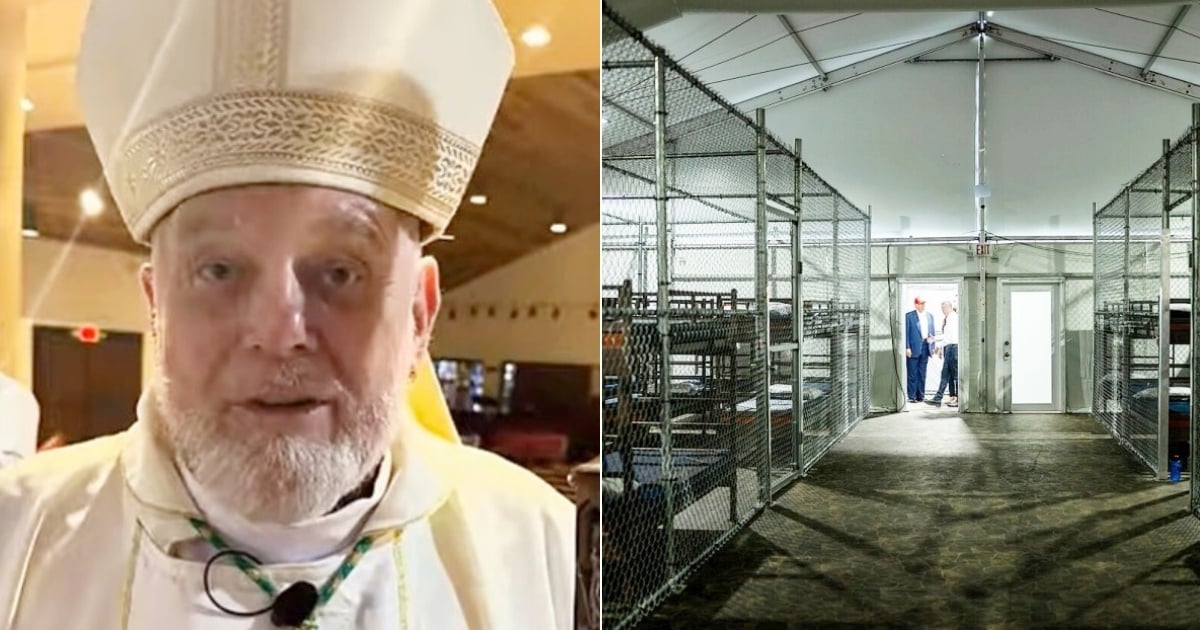
This Saturday, the Archdiocese of Miami celebrated, for the first time, a Catholic mass inside the controversial migrant detention center known as Alligator Alcatraz, located in the Florida Everglades.
The liturgical ceremony marked the official beginning of the Church's pastoral presence in a facility that had previously been closed to all spiritual attention, amidst growing complaints about inhumane conditions.
The mass, held after months of intense negotiations, symbolizes much more than a religious act.
It represents a pastoral and humanitarian achievement in one of the most criticized areas of the U.S. immigration system in recent weeks.
From now on, the Catholic Church will be able to regularly offer two liturgical celebrations and pastoral care to both detainees and the staff of the center, thanks to a formal agreement reached with state authorities, as revealed by the local press.
"I am pleased that our request to provide pastoral care to the detainees has been accepted.", stated the Archbishop of Miami, Thomas Wenski.
"We were also able to respond to the request to provide this service to the staff residing in the facility. The Church has no borders; we are all members of one human family," he added.
Un logro tras una larga resistencia
The entrance to the Church at Alligator Alcatraz was not immediate.
For weeks, the requests for access made by Archbishop Wenski were repeatedly denied, partly due to uncertainty about whether the jurisdiction of the center fell under state or federal authorities.
The resistance was such that even the entry of religious leaders and lawyers was prevented, which prompted the filing of a federal lawsuit.
As part of his campaign, Wenski organized a prayer vigil outside the center in July, accompanied by two dozen members of the "Knights on Bikes" group of the Knights of Columbus.
Being denied entry, the group prayed the rosary at the entrance of the center as a gesture of protest and spiritual perseverance.
"Cynically, it almost seems like a deliberate attempt to dehumanize these individuals," Wenski denounced in an interview with Florida Catholic.
"Offering Mass is an opportunity to humanize the detainee, elevate their dignity, and also assure them that God has not forgotten them," he stated.
Extreme conditions under scrutiny
The center, officially known as the South Florida Detention Center, was built in just eight days at the Dade-Collier airport.
It has a capacity of up to 3,000 people, although it could expand to 5,000. Its nickname, Alligator Alcatraz, refers both to its remoteness and the hostile environment that surrounds it, filled with alligators, pythons, and other wild animals.
The conditions within the center have been heavily criticized by religious leaders, human rights organizations, and Democratic lawmakers.
Extreme temperatures are being reported, a lack of showers for days, temporary tents, sanitation problems, and food allegedly infested with worms.
Some detainees are on a hunger strike in protest of the treatment they have received.
"The fact that the deterrent value of alligators and pythons was mentioned is inappropriate for public officials and corrosive to the common good," the archbishop Wenski had warned in previous statements.
Sustained pastoral presence and challenge to immigration policy
With the new agreement, the Archdiocese of Miami—serving nearly 900,000 Catholics and one of the largest in the country—aims to establish a continuous and organized presence in the downtown area.
To achieve this, it will coordinate the work between clergy and committed volunteers, ensuring a stable schedule for sacramental care and spiritual support.
The pastoral operation takes place within the context of a migration strategy led by Governor Ron DeSantis, who inaugurated the center as part of a mass deportation policy aligned with President Donald Trump.
The estimated cost of the operation exceeds 450 million dollars annually, and deportation flights have already begun from the facility.
Wenski has been critical of these policies.
"President Trump says he wants to control the borders, and he has done so; he wants to eliminate the bad actors, and he is doing it," he said in an interview.
"Pero también dice que quiere la mejor economía del mundo, y eso no se logra sin la participación laboral de los inmigrantes. El sur de Florida ha demostrado que la inmigración, en última instancia, beneficia a la comunidad en general; los inmigrantes no son un problema, son una oportunidad", añadió.
Frequently Asked Questions about the "Alligator Alcatraz" Detention Center
What did the Catholic Church achieve in "Alligator Alcatraz"?
The Catholic Church succeeded in securing the allowance for regular masses and pastoral care at the detention center. This achievement was announced by the Archdiocese of Miami after weeks of efforts and symbolizes a pastoral and humanitarian victory in an environment criticized for its inhumane conditions.
What are the conditions at "Alligator Alcatraz"?
The conditions in "Alligator Alcatraz" have been criticized for being inhumane. Detainees face extreme temperatures, lack of showers, sanitation issues, and poor food conditions. Moreover, the center is situated in a hostile environment with wild fauna, leading to reports of human rights abuses.
What has been the response of the authorities to the criticisms of the detention center?
The authorities have defended the center, arguing that it meets the minimum standards. However, Governor Ron DeSantis and other political figures have downplayed the criticisms, while human rights organizations continue to denounce the conditions and environmental impact of the center.
Why is the location of "Alligator Alcatraz" in the Everglades criticized?
The location of "Alligator Alcatraz" in the Everglades is criticized for its negative environmental impact. The center was constructed in an ecologically sensitive area without a prior environmental impact assessment, raising concerns among scientists and environmental groups about the effects on protected species and the local ecosystem.
Filed under: