
Related videos:
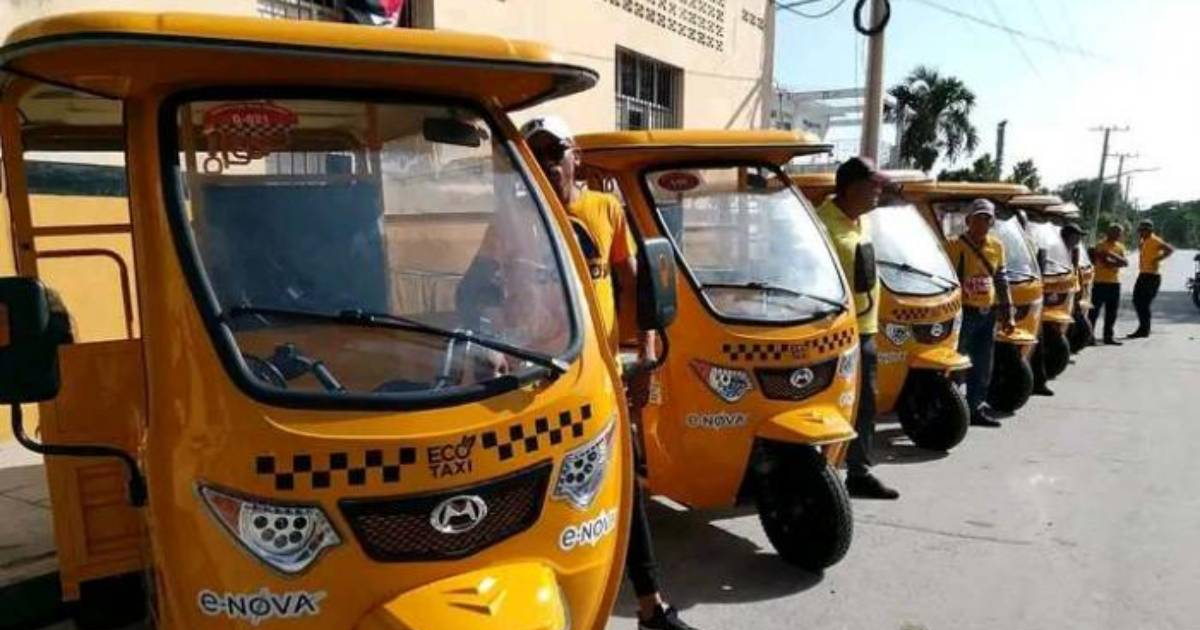
The official Cuban press enthusiastically announced the addition of 35 electric ecotaxis in the province of Granma, of which 20 will operate in Bayamo and 15 in Manzanillo, as part of a state project for "sustainable" transportation.
Vehicles, according to the newspaper Granma, offer an economical service (10 pesos per passenger), have low operating costs and zero emissions, and their implementation responds to the national strategy to "relieve the public transport situation."
However, the announcement comes at a time of maximum energy tension. This Wednesday, it was reported that Cuba is left with only one operational Turkish barge and is facing daily blackouts exceeding a deficit of 2,000 megawatts (MW).
The definitive disconnection of the Suheyla Sultan, the most powerful floating power plant operating in the country, marks a critical point in the collapse of the national electrical system.
In this context, the use of electric vehicles—which require four hours of overnight charging—seems more like a publicity act than a real solution to the public transportation crisis.
The director of the Taxi Agency in Granma, José Rafael Maceo Rivero, acknowledged that the service has experienced interruptions due to the instability of the electrical supply, which delays the daily departures of the tricycles.
Official data indicates that more than 3,500 passengers travel daily on these units between the two cities. In Bayamo, the routes connect points such as the train station with the cemetery, the Pediatric Hospital, and the Old Airport. In Manzanillo, they operate between the shoe factory, Nuevo Manzanillo, and the Bus Terminal, with routes of up to 5 km.
The commitment to these ecotaxis is part of an official narrative that seeks to position the regime as a promoter of “green mobility,” while the majority of the country endures prolonged blackouts, lacking a clear strategy to restore electricity generation.
While the government boasts about 35 electric tricycles, the national reality remains characterized by darkness, the collapse of the electrical system, and the lack of structural solutions.
Frequently asked questions about the implementation of electric taxis in Cuba
Why is the Cuban government promoting electric taxis in the midst of an energy crisis?
The Cuban government is promoting electric taxis as part of a strategy for sustainable mobility, despite facing a severe energy crisis. This initiative aims to project an image of commitment to eco-friendly transportation, although the reality of prolonged blackouts raises questions about the feasibility of these projects in the short term.
How do power outages affect the operation of electric taxis in Cuba?
Power outages significantly affect the operation of electric taxis, as these vehicles require a stable charging regime that cannot be guaranteed in the current context. Electrical interruptions delay service and complicate the daily deployment of the vehicles, limiting their effectiveness as a transportation solution.
What is the fare for electric taxis in Cuba and what routes do they cover?
The fare for electric taxis in Cuba is 10 Cuban pesos per passenger. In the province of Granma, the ecotaxis cover important routes in the cities of Bayamo and Manzanillo, connecting key locations such as hospitals, bus terminals, and other areas of local interest.
What is the impact of renewable energy projects on the electricity crisis in Cuba?
Renewable energy projects, such as solar parks, aim to partially alleviate the electricity crisis in Cuba, but their impact is limited due to the obsolescence of the current electrical system. Until the structural problems of the system are addressed, renewable energies will not be able to eliminate power outages or guarantee the stability needed for new electrical projects.
Filed under: