
Related videos:
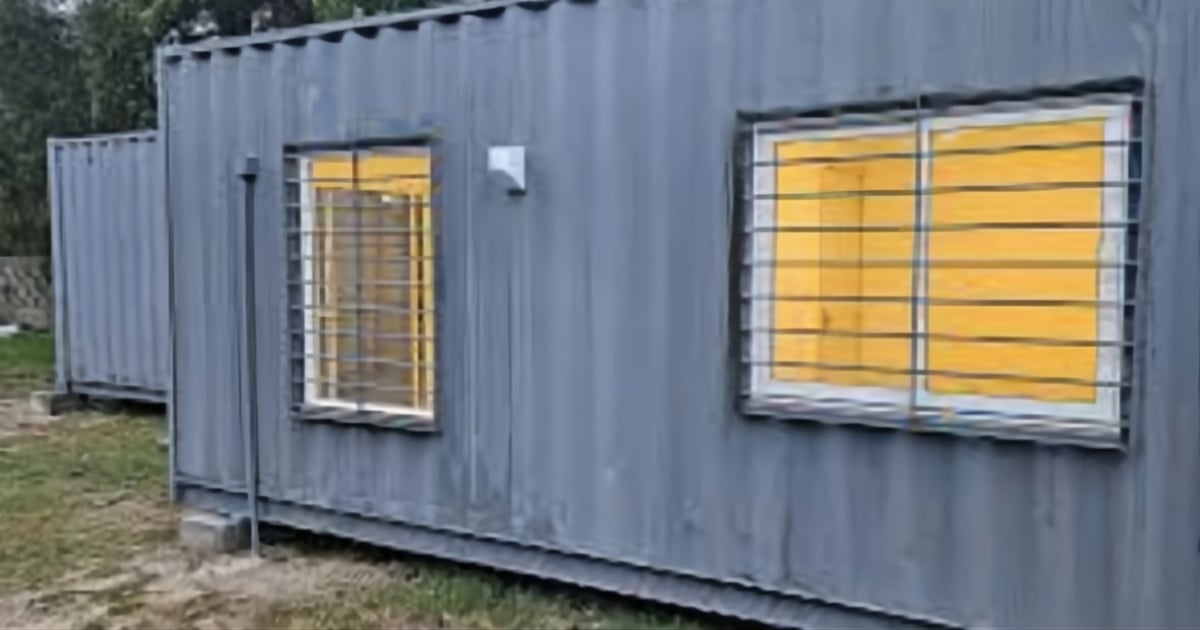
The Cuban government announced that it will incorporate homes made from shipping containers in Las Tunas, presenting it as an “innovative solution” to the housing deficit.
The measure comes after decades of failures in official housing construction plans and at a time when more than 10,659 families in Las Tunas live in precarious wooden houses with dirt floors.
Granma reported that the first homes, of type 3, will be installed in micro-localized areas of the municipalities of Manatí, Puerto Padre, Jesús Menéndez, Majibacoa, and the provincial capital.
The provincial director of Housing, Héctor Rodríguez Espinosa, detailed that 46 containers will be used, 18 of which will be converted into homes for workers of the Electric Company, and 28 will be distributed through the Popular Councils.
The authorities assure that heat will not be an issue because thermal-insulating elements will be used in the interior walls, and an additional roof will be installed to improve ventilation. Furthermore, the containers will be anchored on concrete piles to prevent moisture from corroding the metal.
The houses will range from 32 to 70 square meters and will include a kitchen, bathroom, dining room, and bedrooms according to the number of residents, along with a 150 square meter plot for future expansions.
The problem of heat and insufficient insulation
In a country with average temperatures close to 30°C and peaks exceeding 35°C, an iron container without proper insulation becomes an uninhabitable oven. Without adequate ventilation and climate control, the interior can reach extreme temperatures, leading to heat strokes and health issues, particularly in children and the elderly.
The thermal insulation and separated roofs can mitigate the problem, but international experience shows that this type of housing requires investments in insulation that increase project costs. If the goal is to "reduce costs" —as seems to be the case here— the quality of life for its inhabitants will be called into question.
An old debt to the population
The regime has been decades without fulfilling housing construction plans. There are no consequences for this, and they have kept the same Minister of Construction for over two decades, focused on building hotels while hundreds of residential buildings are collapsing in Havana.
The regime usually blames the housing problem on the U.S. embargo, the rising costs of construction materials, and more recently, on issues at the Cienfuegos cement factory.
As the country's housing stock deteriorates, thousands of families are surviving in shored-up buildings and houses, in makeshift shelters, or in overcrowded conditions.
CiberCuba reported in June that the Government is promoting similar projects in Holguín and other provinces, utilizing containers, prefabricated modules, and buildings without steel or cement inspired by colonial techniques.
All these initiatives are presented as creative and sustainable, but in practice, they are low-cost solutions that evade the real issue: the lack of a comprehensive housing policy and sufficient resources to build durable properties.
In countries like Spain, container houses have become popular as a sustainable alternative, but they come with standards for insulation, living permits, and structural guarantees.
In Cuba, the context is radically different. The chronic shortage of materials, inflation, and low wages make even these "affordable solutions" inaccessible to the majority.
Frequently asked questions about container homes in Cuba
Why is the Cuban government using containers to build housing in Las Tunas?
The Cuban government is using shipping containers as an "innovative solution" to address the housing deficit in Las Tunas, after decades of unmet housing construction plans. More than 10,659 families in the province live in substandard housing, which has led to the search for faster and more cost-effective alternatives, although this does not solve the underlying issue of the lack of a comprehensive housing policy.
What are the characteristics of container houses in Las Tunas?
Container houses will range from 32 to 70 square meters and will include a kitchen, bathroom, dining area, and bedrooms according to the number of residents. It is planned that each house will have a plot of 150 square meters for future expansions. Although it is assured that thermal-resistant materials will be used to combat the heat, the effectiveness of these measures is called into question due to the high temperatures in the region.
What challenges do container homes face in Cuba?
Container homes in Cuba face challenges such as insufficient thermal insulation, as without adequate ventilation and air conditioning, the interior can reach extreme temperatures. Additionally, chronic shortages of materials and inflation make even these budget-friendly solutions inaccessible to most of the population. There are also concerns about the durability and quality of life that these homes can provide.
What is the general context of the housing crisis in Cuba?
Cuba faces a housing deficit exceeding 800,000 homes, exacerbated by a paralyzed construction industry and a government that prioritizes investment in tourism over addressing the basic needs of the population. Despite promises of housing plans, the regime has failed to deliver, blaming the U.S. embargo and other internal challenges, while thousands of families live in precarious conditions.
Filed under: