
Related videos:
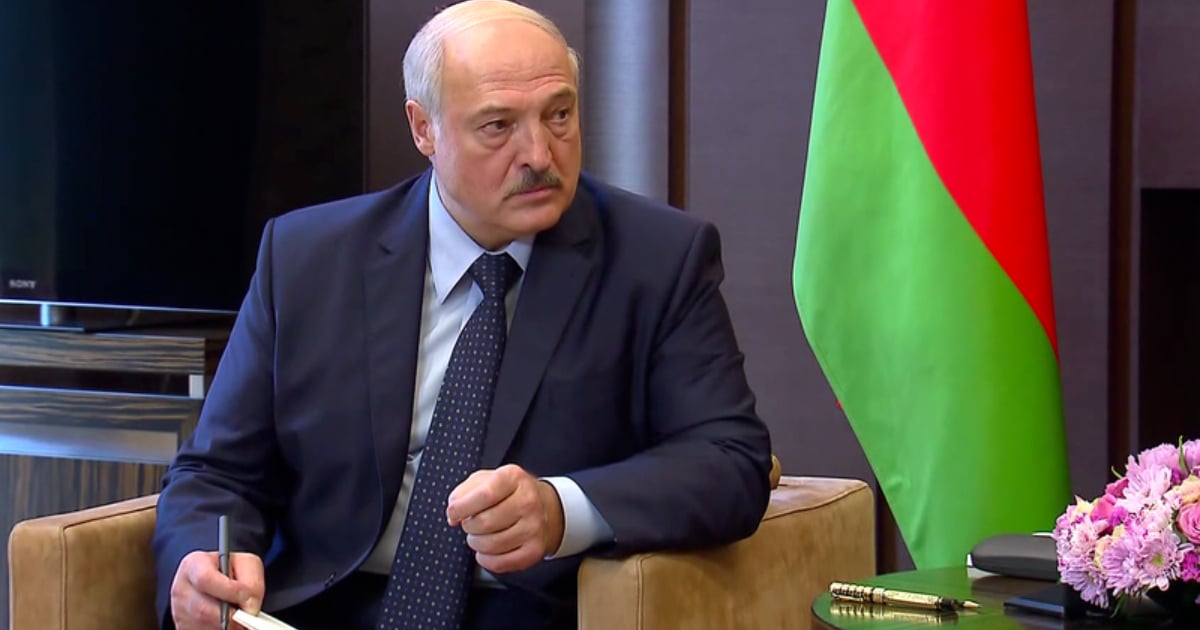
The dictator Alexander Lukashenko, who has ruled Belarus for over three decades, stated in an interview with the American magazine Time that he does not plan to run for president again, while also denying that his youngest son, Nikolái, could be his successor.
The message comes just days before the five-year anniversary of the massive protests that erupted in August 2020 against the electoral fraud that kept him in power.
During the conversation broadcast on state television, Lukashenko insisted that whoever succeeds him should maintain the political and economic structure established during his tenure, avoiding any “revolutionary break.”
According to his words, the new president should rely on "the shoulders of the strong" and develop the country in an "evolutionary and peaceful" manner, and only after that, if he manages to persuade society, should he initiate changes towards "another state."
The leader firmly rejected the speculation about a dynastic succession. “No, he is not the successor. I already knew you were going to ask that. No, no, no. You could even deeply offend him by asking that question,” he responded in reference to his son.
The presidential elections in Belarus were held on January 26, 2025, according to the terms of the Constitution, and Lukashenko extended his mandate for another five years.
In the same interview, Lukashenko reaffirmed his alliance with Russia and emphasized the strategic importance of Belarus for Moscow.
In this regard, he stated that, unlike countries like Iran, North Korea, or Armenia, his nation would indeed justify a potential confrontation between nuclear powers, highlighted a report from the agency EFE.
The media outlet recalled that, at the end of June, Minsk released opposition leader Serguéi Tijanovski and 13 other political prisoners following the visit of U.S. envoy Keith Kellog.
Tijanovski, imprisoned in 2021, was accused of organizing riots and promoting actions that severely disrupted public order during the protests of 2020, which demanded the electoral victory of his wife, Tatiana Tijanóvskaya.
Those protests were suppressed with the support of Russian security forces, highlighting the decisive role of the Kremlin and President Vladimir Putin in Lukashenko's political survival, the source indicated.
On June 25, the Cuban leader Miguel Díaz-Canel began an official visit to Belarus, where he was received by Lukashenko.
Both governments share not only a political closeness to Moscow but also a authoritarian view of power and a documented history of repression by international organizations.
Lukashenko stated that both nations, united by Western sanctions and authoritarian governance perspectives, identify "promising" areas for cooperation, including the food industry, joint agricultural machinery production, biotechnology, mining, energy, and the health sector.
According to the state agency BELTA, cited by EFE, the Belarusian ruler also proposed to supply raw materials and share technology for the production of dairy and meat products in Cuba.
As part of the visit to Minsk, Díaz-Canel gifted cigars, rum, and personalized t-shirts to Lukashenko, who in turn offered him flowers and traditional sweets.
During the two-day stay, the Cuban leader participated in the summit of the Supreme Council of the Eurasian Economic Union (EAEU), a regional bloc comprising Russia, Belarus, Armenia, Kazakhstan, and Kyrgyzstan.
In 2020, Cuba was accepted as an observer country of that regional bloc, which the regime in Havana touts as a geopolitical achievement, although the actual benefits for the population have yet to materialize.
Frequently Asked Questions about Lukashenko's Exit and Its Impact on Belarus
Why has Alexander Lukashenko decided not to run for another presidential term?
Lukashenko has announced that he will not run for the presidency of Belarus again, in an interview with Time magazine, although he insisted that his successor must maintain the current political and economic structure without revolutionary breaks.
What impact will Lukashenko's departure have on Belarus's relationship with Russia?
Lukashenko has reaffirmed his strategic alliance with Russia, emphasizing that Belarus holds strategic importance for Moscow. The close relationship between both countries is likely to continue, as a strong bond has been established with the Kremlin, particularly in the context of military and political cooperation.
Could Lukashenko's son, Nikolai, become his successor?
Lukashenko has strongly denied speculation about a dynastic transfer to his youngest son, Nikolái. He has stated that his son is not the successor and has dismissed that possibility during the interview.
What is the situation of political opponents in Belarus?
Belarus has recently released several political prisoners, including Siarhei Tsikhanouski, following a visit from U.S. envoy Keith Kellogg. However, the country continues to face criticism for its repression of the opposition and human rights violations.
Filed under: