
Related videos:
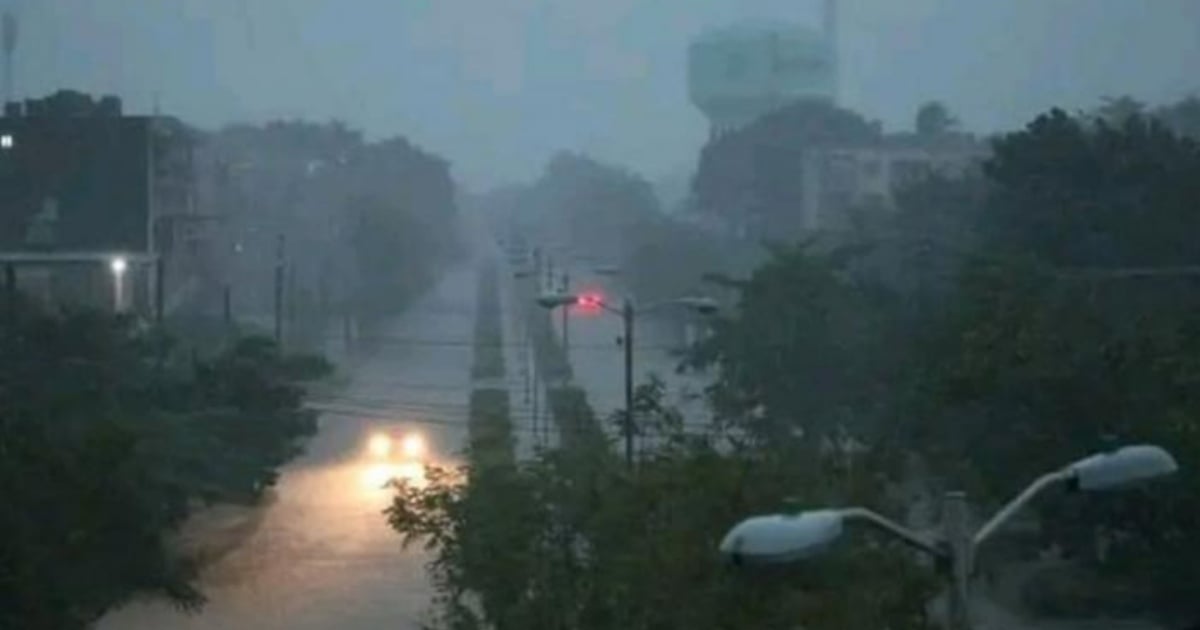
Las Tunas reached a record for rainfall within 24 hours for the month of August this Friday, August 8.
That day, an unprecedented 118.4 millimeters (mm) were recorded at the Meteorological Station of this city, reported the Cuban News Agency (ACN).
The total exceeds that of 1998, when rain gauges recorded 111 mm, specified Alexei Moreno, the technical director of that Meteorological Station.
After the rainfall, several locations in low-lying areas were flooded on Camilo Cienfuegos, René Ramos, José Martí, and Joaquín Agüero streets, a place that locals used to identify as Ahogapollos.
The rainfall, which benefits the province that receives the least precipitation in Cuba with an average of 1,038 mm annually, does not represent a solution to the extreme drought the province is experiencing.
Despite the revitalization of the reservoirs that feed into the city's aqueduct network, whose frequent disruptions complicate the lives of around 80,000 people who do not have regular access to running water, the main reservoirs in the area remain in a critical situation.
According to ACN, the El Rincón dam, the main source of supply with a capacity of 20 million cubic meters, is currently pumping only 250 mm per second, out of the planned 500. Similarly, the smaller Cayojo is also experiencing a decline, as is the La Cana underground aquifer.
The drought in Las Tunas complicates the lives of its residents for months, compounded by outdated infrastructure.
In May, Piedad Herrera Núñez, the municipal director of Aqueduct and Sewerage, acknowledged that the situation was "tense" and urged savings in every home, workplace, and service.
That same month, severe local storms in the early days of May brought rainfall, hail, and strong gusts of wind to various points in the province. This occurred on May 3 in a locality of the municipality of Puerto Padre, where the bad weather caused significant damage to homes and the electrical system.
Frequently Asked Questions about the Water Crisis in Las Tunas and Other Cuban Provinces
What rainfall record was recorded in Las Tunas in August 2025?
Las Tunas recorded a record 118.4 millimeters of rain in 24 hours on August 8, 2025, surpassing the previous record of 111 mm set in 1998.
How does the water crisis affect the population of Las Tunas?
The water crisis in Las Tunas affects about 80,000 people who do not have regular running water. Despite the recent rains, the main reservoirs in the area remain in critical condition, complicating access to drinking water due to outdated infrastructure.
What measures are the authorities taking to address the drought in Cuba?
The authorities in Cuba are attempting to implement emergency measures such as repairing pumping equipment and installing floating intakes in reservoirs. However, the lack of resources and outdated infrastructure hinder these actions, leaving the situation without a short-term solution.
What impact does the drought have on other Cuban provinces like Holguín and Ciego de Ávila?
The drought has severely impacted provinces such as Holguín and Ciego de Ávila, with rainfall deficits that have led to extended water distribution cycles. In Ciego de Ávila, the cycle has been extended to nine days, while Holguín is facing a 22% deficit in precipitation.
Filed under: