
Related videos:
Cuban prisons accumulated 91 reports related to incarcerated individuals in July, of which 68 involved violations of rights and two resulted in deaths, a balance that reveals a consistent decline in a penitentiary system marked by repression and institutional neglect.
The monthly report from the Cuban Prison Documentation Center (CDPC), based in Mexico, documented 77 complaints from prisons and detention centers across the country.
Among the deceased is Yan Carlos González, 44 years old and originally from Manacas (Villa Clara), who died after more than a month on a hunger strike while in provisional detention accused of sabotage, an accusation he denied.
According to the NGO, days before his death, the precautionary measure was altered to prevent the death from being recorded as having occurred under custody.
The second death was that of Jimmy Gerardo Castrillo, a 51-year-old Costa Rican, in the La Condesa prison in Mayabeque. According to Cuban authorities, he died of bronchopneumonia, but his aunt claims that the real cause was anemia and a late-diagnosed tuberculosis, which the report presents as evidence of the precarious sanitary conditions in the prisons.
Highlights the report that in July, at least 11 inmates declared a hunger strike, mostly to protest against arbitrary deprivation of liberty and to demand medical attention.
The documented abuses affected 51 prisoners —10 women and 41 men— and eight complaints had a collective scope.
Among the most harassed are the political prisoners José Daniel Ferrer García, Roberto Pérez Fonseca, Juan Enrique Pérez Sánchez, Duannis Dabel León Taboada, and Maykel Castillo Pérez.
The NGO identifies the most vulnerable groups as opponents, political prisoners, and individuals of African descent.
The highest number of violations was recorded in prisons in Havana, Mayabeque, and Santiago de Cuba.
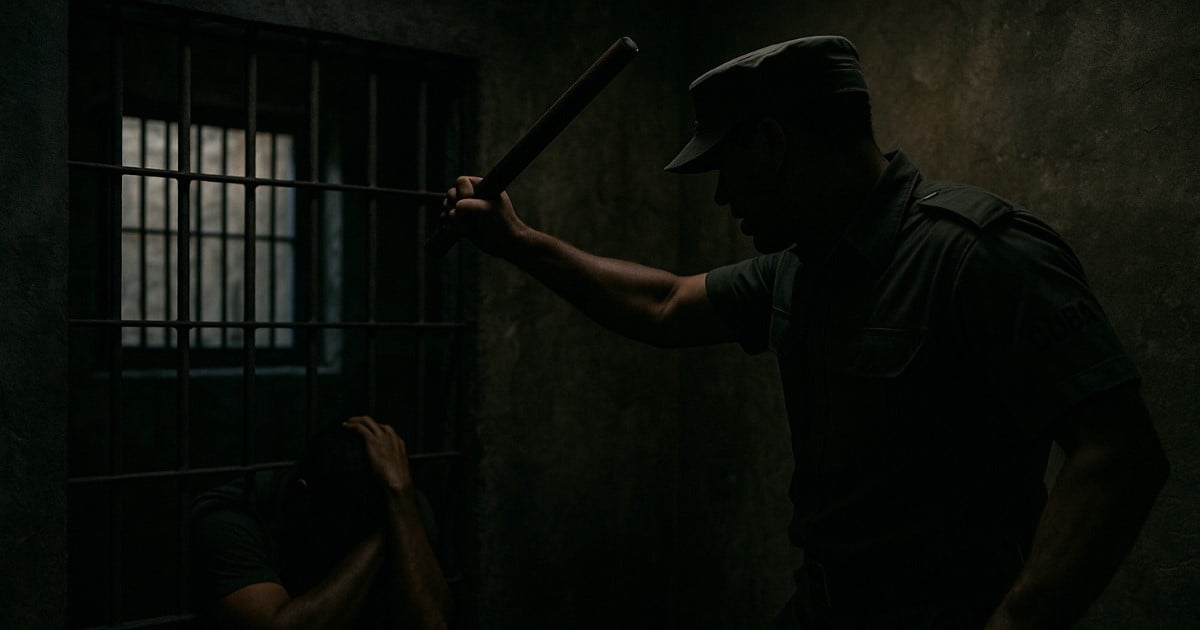
The most frequent incidents were harassment and repression (55), denial of medical attention (23), communication restrictions (11), and beatings or physical torture (10).
The text criticizes the "critical" material conditions characterized by poor nutrition, lack of medications, contaminated water, and overcrowding—factors that promote the spread of diseases such as tuberculosis, hepatitis, influenza, and scabies.
The CDPC is a program of the nonprofit organization Iniciativa para la Investigación y la Incidencia A.C., based in Mexico.
It was launched as a digital platform in August 2023 with the purpose of monitoring incidents of human rights violations within detention and correctional centers in Cuba, and of systematizing information about the penitentiary system after 1959.
It seeks to highlight through data and testimonies the extreme vulnerability faced by incarcerated individuals on the Island, and to counter the official narrative that presents a positive and unrealistic image of the Cuban prison system.
Their databases serve as a reference source for various media outlets, both from the independent Cuban press and international ones.
A previous report from the entity detailed that, from January to June 2025, at least 24 people died while in state custody in Cuba and documented 160 reports of torture.
The report mentioned 45 complaints of beatings and physical torture, 104 cases of deliberate denial of medical care—considered a form of torture—and 11 episodes of psychological torture, in at least 43 prisons across the country.
Eight of the 24 reported deaths would be directly related to the lack of medical attention, he emphasized.
The Initiative for Research and Advocacy and the CDPC urgently called on the international community to demand the opening of Cuban prisons to independent observers, the investigation of reported cases, and the immediate adoption of measures to eradicate torture and other inhumane treatment.
Frequently Asked Questions about Human Rights Violations in Cuban Prisons
How many human rights violations were recorded in Cuban prisons in July 2025?
In July 2025, 91 reports of human rights violations were recorded in Cuban prisons, of which 68 involved direct violations of rights and two resulted in deaths. These figures reflect a consistent decline in the Cuban penitentiary system, marked by repression and institutional neglect.
Who were the deceased individuals in Cuban prisons and what were the causes?
In July 2025, the reported deaths were those of Yan Carlos González, who died following a hunger strike, and Jimmy Gerardo Castrillo, who passed away due to inadequate sanitary conditions. Yan Carlos González died while protesting against an unjust sentence, while Jimmy Gerardo Castrillo succumbed to health issues that were not properly addressed. These cases reflect a serious medical negligence and precarious conditions in Cuba's prisons.
What factors contribute to the spread of diseases in Cuban prisons?
Factors such as overcrowding, unsanitary conditions, lack of medical care, and poor nutrition contribuyen significativamente a la propagación de enfermedades en las prisiones cubanas. Estos problemas son responsables de brotes de enfermedades como tuberculosis y hepatitis, poniendo en riesgo la vida de los reclusos.
How does political repression affect prisoners in Cuba?
Political prisoners in Cuba are particularly vulnerable to repression and harassment. The report highlights that opposition members, prisoners for political reasons, and those of Afro-descendant descent are the most affected groups. The repression includes the use of imprisonment as a tool to silence dissenters, and the conditions in prisons reflect a strategy of political punishment by the Cuban regime.
Filed under: