
Related videos:
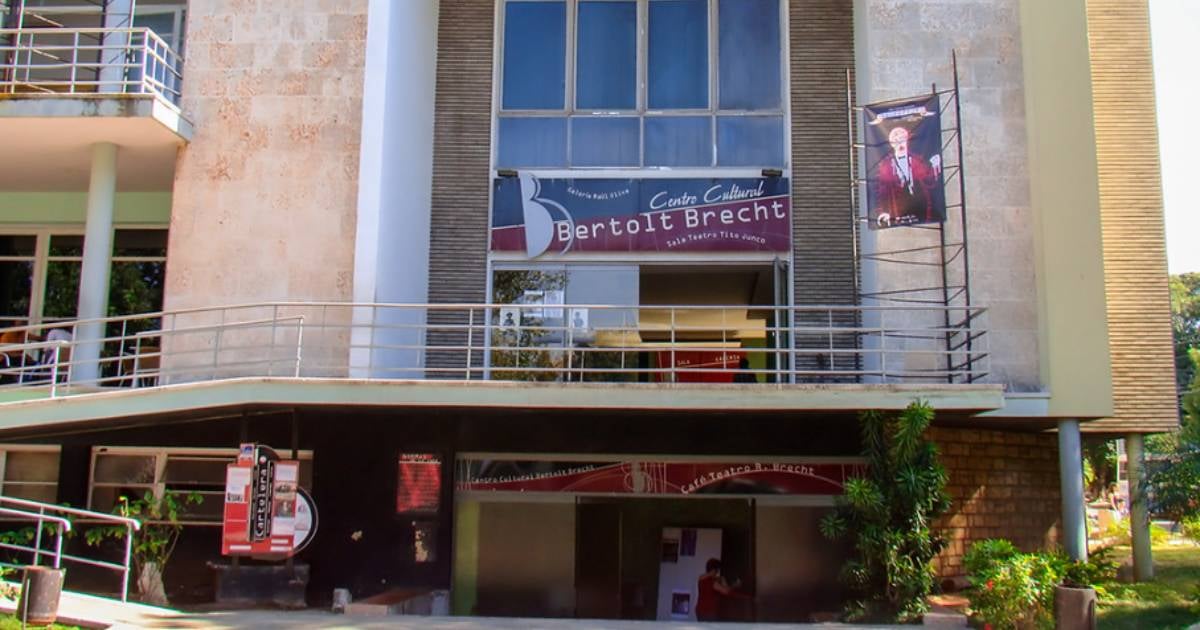
The Bertolt Brecht Cultural Center, one of the most iconic venues in Havana's cultural life, is facing a critical situation that threatens to extinguish its stage. Since June, the theater has been operating under severe limitations due to the explosion of the electrical transformer that powered it, and to date, no solution has arrived.
The Cuban actor Hamlet Paredes Grau reported on his social media that only one of the two theaters in the complex remains operational, under conditions he described as “inhuman” due to the oppressive heat that both artists and audiences must endure. The programming has had to be readjusted, and the theater is struggling to avoid permanently closing its doors, despite the situation being unsustainable.
The Brecht is more than just a space; it is the home of important theater and dance groups in the city, a cultural pillar where works that inspire us and make us dream are premiered,” Paredes wrote in an urgent call to Empresa Eléctrica de La Habana to address the emergency. “The theater cannot be turned off,” he warned.
The current crisis of the Bertolt Brecht revives a precedent that occurred in 2023, when comedian Rigoberto Ferrera reported that the Government of Havana cut off electricity to the theater after taking the transformer to supply a community.
At that moment, Ferrera openly questioned whether the authorities care about culture and warned that the lack of respect towards artists was destroying the passion of an entire generation.
Two years later, the same scenario is repeated in the same cultural space, as it becomes ensnared in the web of the Cuban electrical crisis, with artists being forced to endure even under conditions of extreme hardship.
The complaint arises in a national context marked by a deficit of over 1,700 MW in the National Electric System, just on Friday, leading to prolonged blackouts across the island. Constant breakdowns, lack of fuel, and outdated technology have turned power outages into a routine for millions of Cubans.
While the authorities promise a swift transition to renewable energy, the reality is that Cubans are finding "not even a slight improvement."
The blackout threatening to silence the Bertolt Brecht symbolizes, for many, something more than a technical failure; it is a metaphor for a country where culture, much like everyday life, gradually fades amidst official neglect and an endless crisis.
Frequently Asked Questions about the Electricity Crisis at the Bertolt Brecht Cultural Center and in Cuba
What is the current situation of the Bertolt Brecht Cultural Center in Havana?
The Bertolt Brecht Cultural Center is facing a critical situation due to the explosion of its electric transformer, which has left the theater operating with limitations since June. Only one of its two halls is active, and the conditions are difficult for both artists and audiences due to the heat. The programming has been adjusted to avoid a permanent closure, but a solution has yet to arrive.
How does the energy crisis in Cuba affect the cultural sphere?
The energy crisis in Cuba has severely impacted the cultural sector, leading to the suspension of events and activities due to prolonged blackouts. Examples include the cancellation of Frank Delgado's concert and the difficulties faced by the Bertolt Brecht Cultural Center. Culture, which has traditionally been a space of relief for Cubans, is compromised by the lack of electricity.
What actions has the Cuban government taken to resolve the electrical crisis?
The Cuban government has promised a transition to renewable energy, but the implementation has been insufficient to solve the electricity crisis. The lack of fuel and outdated infrastructure continue to be significant issues. Despite some investments in solar parks, the generation capacity remains inadequate to meet national demand.
What is the impact of blackouts on the daily lives of Cubans?
Power outages in Cuba severely impact the daily lives of its citizens, interrupting essential activities such as food preservation, the operation of hospitals, and education. Furthermore, the lack of electricity contributes to a climate of despair and general discontent among the population, exacerbated by high temperatures and water shortages.
Filed under: