
Related videos:
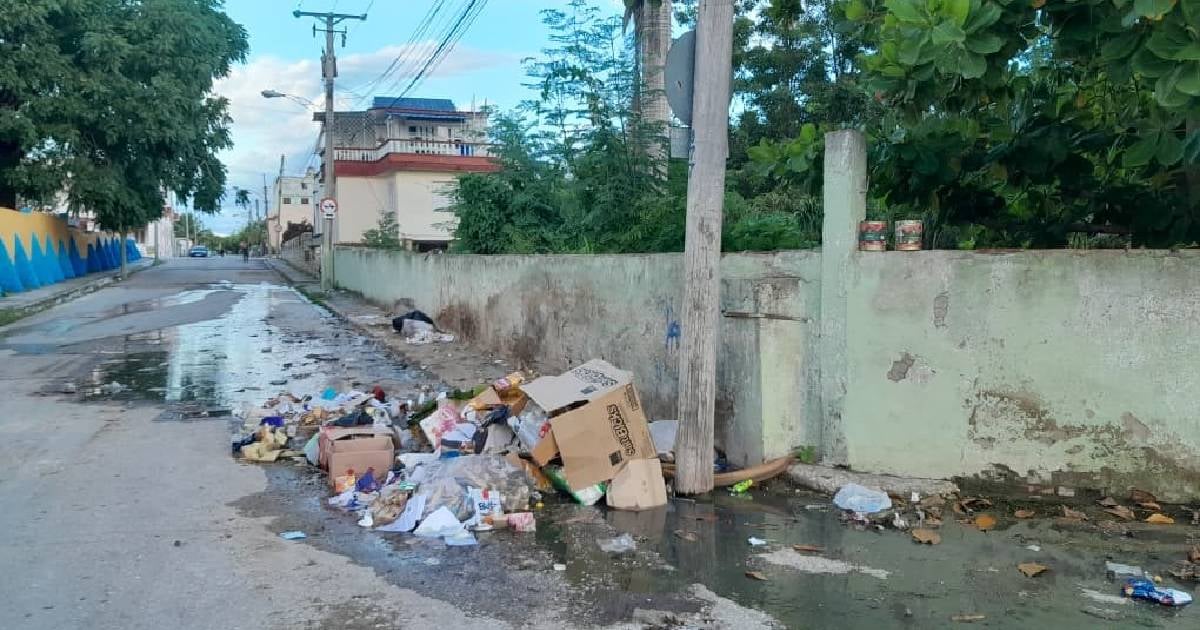
A garbage dump that has accumulated for years at a central corner of the city of Sancti Spíritus, along with a pit that drains foul-smelling waters, reflects the lack of oversight and management by the authorities, while social indiscipline perpetuates a source of pollution that degrades the city.
The microdump is located at the intersection of Carlos Roloff and Tello Sánchez, a crucial point in the capital of Sancti Spíritus that is currently marked by solid waste and sewage, which poses a threat to public hygiene and the image of the urban environment, described a photo report from the official newspaper Escambray.
Residents of the area have normalized the practice of depositing garbage right in the street, in a space that has gradually turned into an improvised dump.
The situation is worsened by the presence of a pit that adds an additional source of pollution and foul odors.
Although the media acknowledges citizens' responsibility for the accumulation of waste, the problem highlights the lack of an effective collection system and adequate alternatives for garbage disposal, turning indiscipline into routine and disorder into a daily landscape.
The persistence of the micro-dump, despite being located in a central and visible area, directly calls into question the management capabilities of the local authorities, who have allowed dirt to become part of the daily life of the people of Sancti Spíritus.
While there is talk of "legalizing" the dumping site through a supiadero—an informal landfill or temporary collection point for waste—and of encouraging reports against those who dispose of waste in public spaces, the reality is that the landfill continues to grow, becoming a symbol of abandonment and official negligence.
Recently, a Cuban denounced on social media the conditions of neglect and unsanitary living in rural areas of Cuba, where, according to her account, residents are forced to live daily with sewage, destroyed streets, and accumulated waste.
Another complaint in Matanzas showed how garbage is "taking over the most beautiful places" in the province, such as Vía Blanca and parks by the sea. Residents claim they are forced to burn waste due to the lack of collection, a dangerous practice that highlights the absence of state management.
In Cienfuegos, historically regarded as the cleanest city in the country, garbage has started to take over the streets and public spaces, especially following events like the La Calzada fair. Critics point to both the lack of waste collection and the low civic awareness, along with a lack of government oversight.
In Havana, one of the most impressive dumps has gone viral on social media as a testament to the decline of the once splendid Cuban capital.
Located on Virtudes Street, between Consulado and Industria, next to the site of the former Musical Theater of Havana, the trash dump overflows into a corner and extends for a block on either side.
The accumulation of garbage is spreading throughout the city, raising concerns about an evident public health crisis that is spiraling out of control, for which the government has not found a solution.
Recently, it was reported that the uncontrolled accumulation of garbage at several corners of Vedado has raised concerns among residents of the central Havana neighborhood, who have reported the prevailing unhealthy conditions and warned of the dangers this situation poses with the imminent start of the hurricane season.
In streets like 25 and H, 17 and 10, or 13 and 10, the images depict an alarming reality: overflowing garbage bins, makeshift dumps in the middle of public roads, and waste accumulating for days without being collected.
The accumulation of garbage in the Cerro municipality in Havana has once again sparked the anger of residents who report unsanitary conditions and government inaction, while living amid flies, unpleasant odors, and the fear of diseases.
Similarly, the railway construction company “Comandante Tony Santiago” reported the in the country, a practice that seriously compromises operational safety, public health, and the resilience of a system that, on its own, is barely sustainable.
Frequently Asked Questions about the Health Crisis and Waste Management in Cuba
What is the main problem at the corner of Carlos Roloff and Tello Sánchez in Sancti Spíritus?
The corner of Carlos Roloff and Tello Sánchez in Sancti Spíritus has become a micro-dump due to the accumulation of garbage and a pit that releases foul-smelling waters. This problem reflects the lack of oversight and management by local authorities, as well as the social indiscipline that perpetuates a source of contamination.
What measures have the Cuban authorities taken in response to the garbage crisis?
Cuban authorities have discussed "legalizing" informal trash disposal and encouraging reporting against those who litter in public spaces. However, these measures have not succeeded in stopping the accumulation of garbage, which continues to be a growing issue in several cities, including Havana and Santiago de Cuba.
How is the accumulation of garbage affecting public health in Cuba?
The accumulation of garbage in Cuba is causing a public health crisis, with unsanitary conditions creating foul odors, the proliferation of vectors, and risks of diseases. The lack of timely waste collection and the burning of garbage as a desperate measure exacerbate this situation, exposing the population to significant health hazards.
Why is it considered that the waste problem in Cuba has spiraled out of control?
The waste problem in Cuba has spiraled out of control due to ineffective management and the government's inability to implement sustainable solutions. The accumulation of garbage has taken over public spaces, railway lines, and entire neighborhoods, becoming a symbol of neglect and official apathy, which has sparked outrage among the population.
Filed under: