
Related videos:
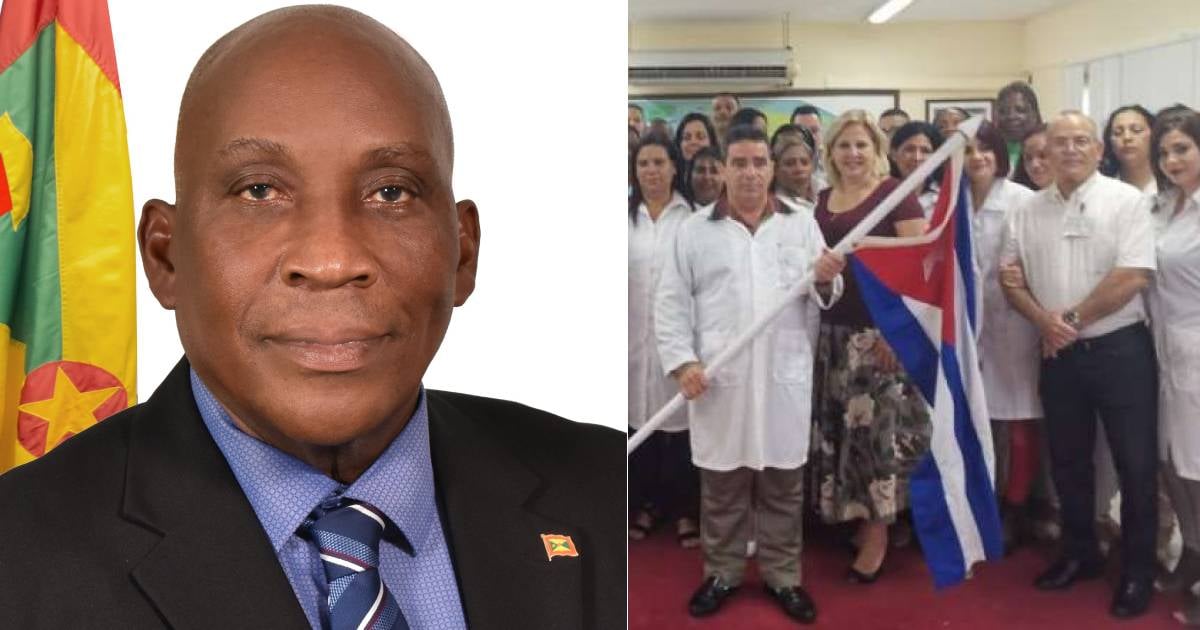
The Finance Minister of Grenada, Dennis Cornwall, has become the first official from his country to lose all of his U.S. visas, following the decision by Washington to sanction Caribbean leaders involved in the agreements regarding Cuban medical brigades.
The measure directly impacts one of the key figures in the government of Prime Minister Dickon Mitchell and sets a precedent in the Caribbean.
According to the local media The New Today, the State Department revoked Cornwall's three visas (B1, B2, and A1), which will prevent him from attending meetings of the International Monetary Fund and the World Bank. His ex-wife, Ophelia Cornwall, also lost her visa.
In March of last year, Cornwall publicly declared, alongside Chancellor Joseph Andall, that he was willing to lose the privilege of traveling to the United States rather than renounce his support for Cuba and the continuation of medical brigades in Grenada. "I would rather be without a visa than turn my back on the Cuban people," he stated at that time in Parliament.
Cornwall studied on the island in the 1980s, during the government of Maurice Bishop, and has since maintained a close connection with Havana. This past explains, in part, his strong defense of Cuban medical cooperation, despite increasing international pressures.
The weight of Washington's sanctions
The Cornwall case falls under the new policy of the Department of State, announced by Secretary Marco Rubio, which aims to penalize officials from Cuba, Africa, and the Caribbean for what it deems a global scheme of "forced labor" in Cuban medical missions.
“Visiting the United States with a visa is a privilege, not a right. We are committed to combating human trafficking, including forced labor,” Rubio stated in his official message.
Washington and human rights organizations are denouncing that the Cuban government withholds a significant portion of the salaries of doctors sent abroad and subjects them to coercive working conditions. Havana, on the other hand, defends these missions as a gesture of "solidarity" and a legitimate source of income to support its healthcare system.
According to The New Today, there is unconfirmed information that the government of Grenada directly hands over 65% of doctors' salaries to the Cuban regime, while the professionals receive 35% in their accounts.
Until now, the government of Dickon Mitchell has not issued an official statement regarding the visa revocation for Cornwall and his ex-wife. However, the sanction strikes at one of the key figures in his cabinet and sends a clear message to other allies of Havana in the region.
Cornwall, who represents the rural district of St. Patrick East, will not be able to set foot on U.S. soil while the restrictions remain in place. However, instead of appearing affected, he seems to have honored his word to sacrifice a personal privilege in the name of his political loyalty to Cuba.
Frequently Asked Questions about U.S. Sanctions on Officials for Cuban Medical Brigades
Why did the United States sanction the Minister of Finance of Grenada?
The United States has sanctioned Dennis Cornwall, Finance Minister of Grenada, revoking his visas due to his involvement in the agreements regarding Cuban medical brigades, which Washington views as part of a forced labor scheme. This action is part of a broader policy to pressure governments that support Cuban medical missions, which are considered by the U.S. as a form of labor exploitation.
What are the implications of U.S. sanctions for Cuban doctors abroad?
The sanctions aim to restrict international collaboration with Cuban medical missions, as they argue that doctors work under coercive conditions and that a large portion of their salaries is withheld by the Cuban government. This could hinder the continuity of these brigades, affecting both Cuban professionals and the countries that rely on them to address deficits in their healthcare systems.
How has the Cuban regime responded to the sanctions from the United States?
The Cuban regime has rejected the allegations of forced labor and defends medical brigades as solidarity missions and a legitimate source of income. Cuban officials have described the sanctions as part of a U.S. aggression policy and have stated that they will continue to send doctors abroad, emphasizing the importance of these missions for international health.
What impact do these sanctions have on the relations between Cuba and Caribbean countries?
Sanctions strain diplomatic relations between Cuba and Caribbean countries that rely on Cuban medical brigades. Some Caribbean leaders have expressed their support for Cuba, preferring to maintain medical cooperation despite the visa restrictions imposed by the U.S., reflecting a challenge to Washington's influence in the region.
Filed under: