
Related videos:
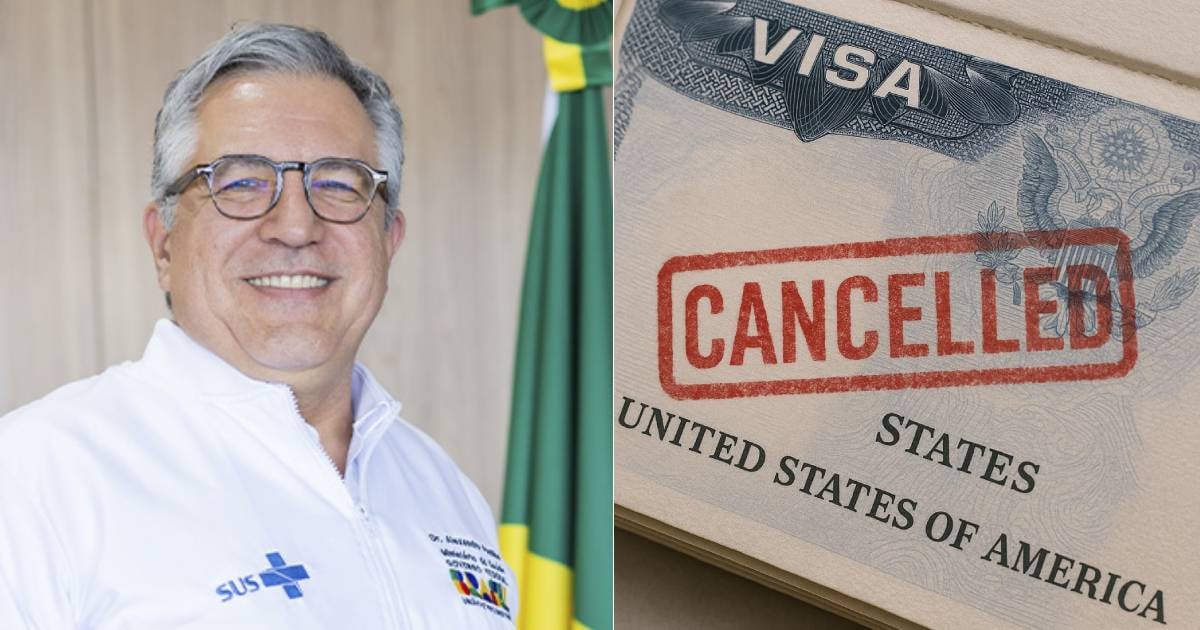
The government of Donald Trump revoked the visas of the wife and 10-year-old daughter of Brazil's Minister of Health, Alexandre Padilha, in retaliation for his role in the creation of the Mais Médicos program, which involved thousands of Cuban doctors.
Padilha was not directly sanctioned because his U.S. visa had expired in 2024, but he is barred from applying for a new visa. The measure, confirmed by BBC Mundo, triggered the indignation of the minister, who described it as a "cowardly" punishment against his family.
I am absolutely outraged. It is a cowardly act that affects a ten-year-old girl, that affects my wife, Padilha declared to the Globo News channel. “The people who do this, the Bolsonaro clan, have to explain to the world what risk a child might represent for the U.S. government,” he added.
Padilha rejected the accusations and defended the health policy as "the largest medical provision program in the world", with 28,000 professionals currently in service, the majority being Brazilians.
He recalled that in the past, Cuba had doctors deployed in more than 60 countries and that other governments still maintain agreements with the island without facing sanctions. “What is the explanation for the lack of sanctions against those countries while there are sanctions against Brazilian officials and the family of the Health Minister?”, he questioned.
The decision falls within the framework of the migration restriction policy against Brazilian officials and the Pan American Health Organization (OPS) due to their involvement in Mais Médicos, a program launched in 2013 by the government of Dilma Rousseff to address the shortage of professionals in remote and peripheral areas.
The Secretary of State, Marco Rubio, accused Padilha and other officials of facilitating what he described as a “scheme of forced labor export” by the Cuban regime. Washington maintains that Havana exploited its professionals by withholding a significant portion of their salaries and restricting their mobility.
“The complicity with the Cuban regime enriched a corrupt government and deprived the Cuban people of healthcare”, said Rubio while announcing the measure.
Furthermore, there have been sanctions, announced on August 13, against Mozart Sales, currently the Secretary of Specialized Attention in Brazil, and Alberto Kleiman, a former official linked to the program. Both have been accused of facilitating the mediation of the PAHO with the Cuban government.
One day later, the U.S. Office of Western Hemisphere Affairs reaffirmed that it will continue to act against “all those responsible for the coercive scheme of medical labor export” and described Mais Médicos as “a diplomatic scam”.
On its part, the Cuban regime defends its brigades as "supportive" and "life-saving", but is facing a drain of professionals. In 2023 alone, more than 13,000 doctors left the healthcare system on the island, according to official figures.
The loss of personnel exacerbates the internal health crisis, with hospitals overwhelmed and thousands of Cubans reporting a lack of specialists. Meanwhile, the Brazilian program keeps 2,659 Cuban professionals active, despite international criticism and sanctions.
Frequently Asked Questions about U.S. Sanctions on Brazil's Mais Médicos Program
Why did the United States revoke the visas of Brazil's Minister of Health and his family?
The United States revoked visas in retaliation for Alexandre Padilha's role in the creation of the Mais Médicos program, which involved the participation of Cuban doctors under conditions that Washington considers forced labor. The sanctions fall under a broader policy against officials who collaborate with the Cuban regime in the export of medical services.
What is the Mais Médicos program in Brazil and why has it been sanctioned?
The Mais Médicos program was created to address the shortage of healthcare professionals in remote areas of Brazil. The United States believes that the program operated under a scheme of forced labor, as Cuban doctors were subjected to restrictive conditions and their salaries were partially withheld by the Cuban government. This situation has led Washington to impose sanctions on those involved in its implementation.
What is the position of Brazil and Cuba regarding the U.S. sanctions?
Brazil, under the leadership of Luiz Inácio Lula da Silva, defends the Mais Médicos program as a legitimate form of cooperation and rejects the sanctions imposed by the United States. For its part, Cuba maintains that its medical brigades are "solidarity missions" and not a form of labor exploitation, despite the international accusations and sanctions.
How does the loss of doctors due to the Mais Médicos program affect Cuba?
The loss of doctors exacerbates the internal healthcare crisis in Cuba, where the shortage of specialists is an increasing problem. In 2023, more than 13,000 doctors left the Cuban healthcare system, leaving hospitals overwhelmed and increasing complaints from citizens about the lack of medical attention.
Filed under: