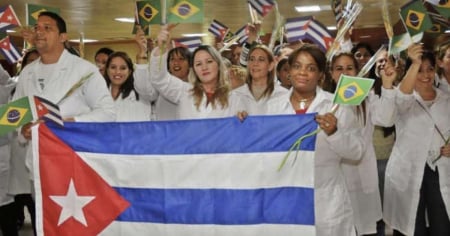
In hospitals and health centers in Angola, Cuban doctors live under a regime of control that begins the moment they sign a contract in Havana and lasts until the last day of their mission.
The evidence is found in an internal document from the state corporation ANTEX S.A., obtained by Martí Noticias, which describes a system of wage withholding, document confiscation, and surveillance of private lives that experts have characterized as labor exploitation.
The contract, currently in effect and signed with a healthcare professional, sets a monthly salary of 598 dollars, but on the ground only 200 in kwanzas (the official currency of Angola) is delivered, at an exchange rate imposed by the company itself, while the rest remains in an account in Cuba under the control of ANTEX.
That money can be deducted to pay for "compensations" or "disciplinary measures," and it is only received in full at the end of the mission if there are no pending sanctions.
The regulations also govern the most intimate matters, such as cooperants must submit their passport two months before the visa expires, request permission to travel within Angola, refrain from getting married or acknowledging children in the country, and report any "stable" relationship with locals or foreigners.
In section 13.1.b, according to Martí Noticias, the signatories must commit to “maintain revolutionary ethical, political, social, labor, and moral behavior” and to “contribute to the prestige of the Revolution”, turning the labor agreement into a declaration of political loyalty.
According to jurists and experts, the contract meets several indicators of forced labor defined by the International Labour Organization, which could be considered human trafficking for the purpose of labor exploitation, journalist Annarella Grimal said to Mario J. Pentón of Martí Noticias.
It is not the first time that the conditions in Angola have sparked outrage. In February, Cuban doctors reported to CiberCuba that ANTEX had cut their monthly stipend in half for food "due to lack of liquidity," leaving them with barely 100 dollars in hand to live on, while their mission leaders were staying in hotels and had all their needs met.
However, this leak comes just as the United States has intensified its offensive against Havana's medical services export program.
On Wednesday, the Secretary of State, Marco Rubio, announced immigration sanctions against officials from Cuba, Brazil, African countries, Grenada, and former executives of the Pan American Health Organization, accused of being involved in a global forced labor scheme.
Rubio described programs such as Mais Médicos in Brazil and other brigades as “diplomatic scams” and warned countries that hire personnel under these conditions that “they should think twice.”
Washington and international organizations have been denouncing for years that the Cuban regime withholds a significant portion of its professionals' salaries, restricts their mobility, and uses them as a tool for political influence.
Despite the criticism, Foreign Minister Bruno Rodríguez asserted that Cuba will not give up on these missions, which currently employ more than 24,000 workers in 56 countries, and defended them as "supportive" and "life-saving."
For those affected, like the doctors in Angola, those words contrast sharply with a reality of strict control, precariousness, and unfulfilled promises.
Frequently Asked Questions about the Exploitation of Cuban Doctors in International Missions
How are Cuban doctors on international missions monitored?
Cuban doctors are under a strict control regime that includes the retention of passports, mobility restrictions, and the obligation to maintain a political behavior in line with the Cuban regime. Furthermore, a significant portion of their salary is withheld by the state corporation ANTEX S.A.
How much money do Cuban doctors in Angola actually receive?
Although the contract stipulates a salary of 598 dollars per month, doctors only receive 200 dollars in local currency, while the remainder is held in an account in Cuba under the control of ANTEX. This amount may further decrease due to deductions for "compensations" or "disciplinary measures."
What effects do the United States sanctions have on Cuban medical missions?
The United States has imposed immigration sanctions on Cuban officials and those from other countries involved in these missions, accusing them of participating in a forced labor scheme. The sanctions aim to pressure the Cuban regime to put an end to these practices and ensure fair labor rights for professionals.
How does the Cuban regime respond to accusations of labor exploitation?
El régimen cubano defiende las misiones médicas como life-saving and supportive programs. A pesar de las críticas y sanciones internacionales, el gobierno cubano afirma que continuará con estas misiones, que considera una fuente importante de ingresos y proyección internacional.
Filed under: