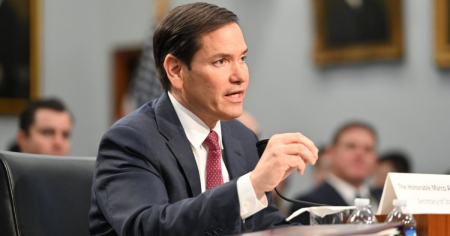
The United States Secretary of State, Marco Rubio, announced on Wednesday that Washington will impose migration sanctions against several officials of the Brazilian government and former executives of the Pan American Health Organization (PAHO) for their involvement in the Mais Médicos program, which operated with Cuban personnel under what Washington describes as a scheme of forced labor.
In a message posted on the social media platform X, Rubio stated that the State Department is taking steps to revoke visas and impose travel restrictions on those involved, whom he referred to as "accomplices of the Cuban regime" in the coercive export of medical services.
The secretary described Mais Médicos as “an unacceptable diplomatic scam of foreign ‘medical missions’”, asserting that the program exploited thousands of Cuban professionals under restrictive conditions that violated their labor and mobility rights.
Washington has accused the Cuban regime for years of sent on missions abroad and imposing movement restrictions on them, which international organizations and former collaborators have denounced as forced labor.
The Mais Médicos program, launched in Brazil in 2013 by then-President Dilma Rousseff, was one of the largest destinations for Cuban medical brigades, and the PAHO acted as an intermediary between the Brazilian government and Havana.
The organization has been named in lawsuits in the United States for its role in the contract that governed the participation of Cuban doctors in the plan.
In this post, Rubio recalled another made in February, just a few days after taking office as Secretary of State, in which he announced the expansion of the visa restriction policy related to Cuba.
He then stated: “The State Department has taken steps to restrict the issuance of visas to Cuban officials and complicit third-country nationals, as well as to individuals responsible for the Cuban regime's forced labor export program. We will promote accountability for the regime for oppressing its people and for those who benefit from forced labor.”
Sanctions against Brazilian officials and former executives of the OPS are in addition to those announced this Wednesday against representatives from Africa, Cuba, and Grenada, as part of what the Department of State describes as a strategy to eradicate international networks that facilitate the labor exploitation of Cuban doctors.
Frequently Asked Questions about U.S. Sanctions on the Mais Médicos Program and Cuban Medical Missions
Why has the United States imposed sanctions on Brazilian officials and those of the OPS?
The United States has imposed immigration sanctions on Brazilian officials and former executives of the OPS for their involvement in the Mais Médicos program, which, according to Washington, operated with Cuban personnel under conditions of forced labor. These sanctions aim to revoke visas and restrict travel for those whom the United States considers complicit in the Cuban regime's coercive export of medical services.
What is the Mais Médicos program and why is it controversial?
The Mais Médicos program was launched in Brazil in 2013 to improve medical coverage in underserved areas, primarily using Cuban doctors. It is controversial because the United States and other organizations accuse the program of operating under a scheme of forced labor, where Cuban doctors work under restrictions of movement and a significant portion of their salaries is withheld by the Cuban government.
What is the position of the United States on Cuban medical missions?
The United States considers Cuban medical missions a form of labor exploitation and modern slavery. It accuses the Cuban regime of using these missions as political and economic instruments, imposing coercive working conditions on doctors, such as passport retention and withheld salaries. Washington has implemented visa restrictions for officials from countries that collaborate with these missions.
How has Cuba responded to the sanctions from the United States?
Cuba has rejected the accusations from the United States, defending its medical missions as solidarity and international cooperation programs. The Cuban regime has criticized the sanctions as unjustified aggressions and highlights the support from several countries, especially in the Caribbean, that view Cuban medical assistance as essential for their health systems.
Filed under: