
Related videos:
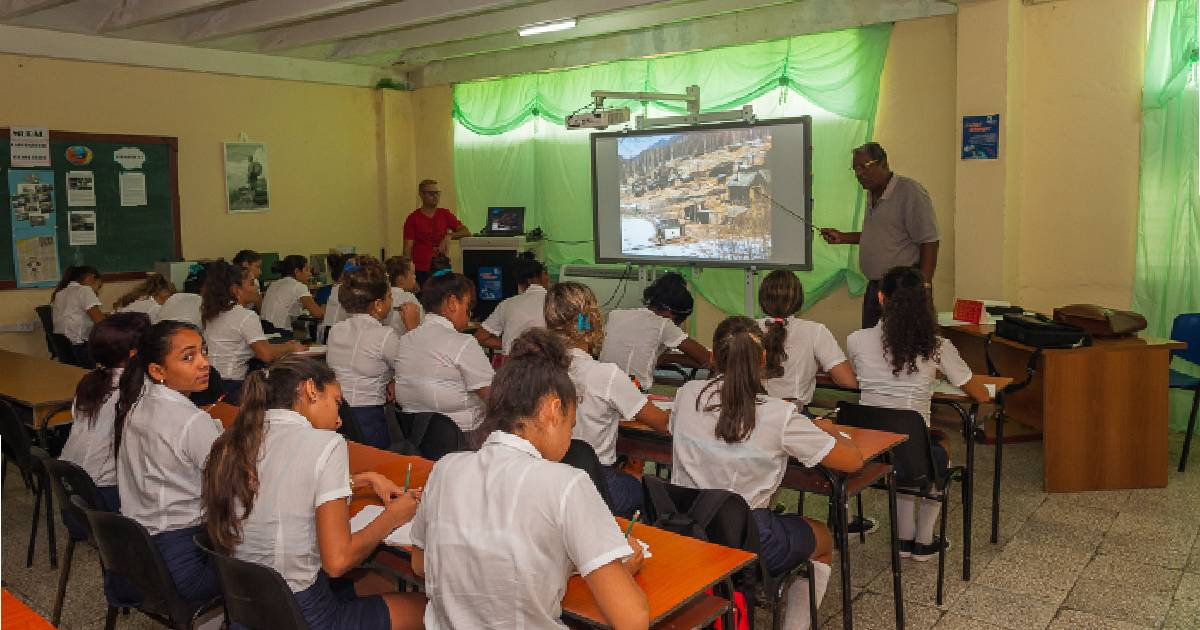
The province of Camagüey faces the beginning of the 2025-2026 school year with a deficit of over 2,000 teachers, a critical situation that highlights the system's inability to ensure all classes for approximately 98,000 enrolled students.
According to official figures, coverage barely reaches 75.5%, which means that a quarter of the student body will not have guaranteed full teaching, confirmed the official newspaper Adelante.
The most affected levels are Technical and Vocational Education, with a coverage of 51%, and pre-university, with 62.9%, while the subjects with the greatest difficulties are Mathematics, Physics, English, and Political Culture.
Provincial authorities acknowledged that the deficit is related to the migration of professionals to the private sector and the low enrollment in pedagogical careers.
Among the measures announced to address the issue are over 1,000 hourly contracts and the ratification of those who were already working in educational institutions under that modality.
In addition, a special call was announced to place graduated professionals in other organizations and engage them in the teaching process, even if only temporarily.
The strategy aims, as they stated, to "place the province in a better scenario," although it involves temporary solutions that do not address the root of the problem.
The Minister of Education, Naima Ariatne Trujillo Barreto, recently visited several schools in Camagüey, where she emphasized the need for support from institutions, families, and communities to address material and organizational shortcomings.
He also spoke about the need for "transparent communication" between the education authorities, schools, and families, aiming to explain the situation and justify the restructuring measures.
In the case of Sancti Spíritus, the teacher coverage for the upcoming school year is at 68.2%, making it one of the most affected territories in the country, with a student enrollment of just over 60,000, reported the official newspaper Escambray.
Weeks ago, a dozen teachers from the mixed center Alberto Fernández Montes de Oca, in the municipality of Jagüey Grande, expressed the faculty's dissatisfaction with the failure to pay the corresponding compensation for excessive workload.
The situation confirmed a glaring contradiction: the system demands that teachers work more hours to fill vacancies, but denies them the compensation that the very regulations acknowledge, while the responsible institutions choose evasion and silence.
Cuba began the 2024-2025 school year with a deficit of 24,000 teachers, amid a significant migratory exodus, rampant inflation, and low salaries and pensions, as part of the multisystemic crisis that the island is currently facing.
The shortage of teachers is mainly concentrated in secondary education and in pre-university programs for exact sciences, both in Havana and in other provinces in the western and central regions of the country.
The government approved the Labor Code in 2014, which authorizes the modality of multiple jobs to supposedly mitigate the effects of an aging population, stimulate work, and enable people to earn more money.
In recent years, hundreds of Cuban teachers who had left the classrooms have returned to teaching, as well as retired professionals who, in addition to continuing to receive their pensions, are taking advantage of the new payment modalities.
Months ago, the Cuban content creator Sheyla Reyes (@sheyreyes03) showcased in a video posted on TikTok what a teacher in Cuba can purchase with their monthly salary received for their work.
Reyes explained that the average salary of a teacher ranges between 2,500 and 3,000 Cuban pesos, a figure that has been severely impacted by the uncontrolled inflation and the devaluation of the CUP in recent years.
In April, the Ministry of Labor and Social Security of Cuba announced a salary increase aimed at strengthening the stability and retention of staff in educational institutions and the National Health System.
In recent years, the education system has deteriorated due to the shortage of teachers, the decline in the quality of teaching, and the material deterioration of infrastructures.
Frequently Asked Questions about the Teacher Shortage in Camagüey and the Educational Crisis in Cuba
How many teachers are missing in Camagüey for the 2025-2026 school year?
Camagüey faces a deficit of over 2,000 teachers, which represents a teaching coverage of only 75.5% for the 98,000 students enrolled in the province.
What subjects are most affected by the lack of teachers in Camagüey?
The subjects most affected are Mathematics, Physics, English, and Political Culture, with particularly low levels of coverage in Technical and Professional Education and at the pre-university level.
What measures is the Cuban government taking to address the shortage of teachers?
The government has implemented relief measures such as over 1,000 hourly contracts and the ratification of teachers who were already working under that modality. A special call has also been launched to attract professionals from other sectors temporarily to the educational field.
How does the educational crisis in Camagüey affect the quality of education in Cuba?
The educational crisis in Camagüey, reflected in the lack of teachers and low coverage of educators, seriously affects the quality of education. The situation is exacerbated by the migration of professionals to the private sector and the low enrollment in pedagogical programs, particularly impacting secondary and pre-university education in exact sciences throughout the country.
What is the connection between Cuba's economic crisis and the shortage of teachers?
The economic crisis in Cuba, characterized by inflation, low wages, and migratory exodus, has significantly contributed to the shortage of teachers. Many individuals leave the profession in search of better opportunities in other sectors or outside the country, exacerbating the educational challenges.
Filed under: