
Related videos:
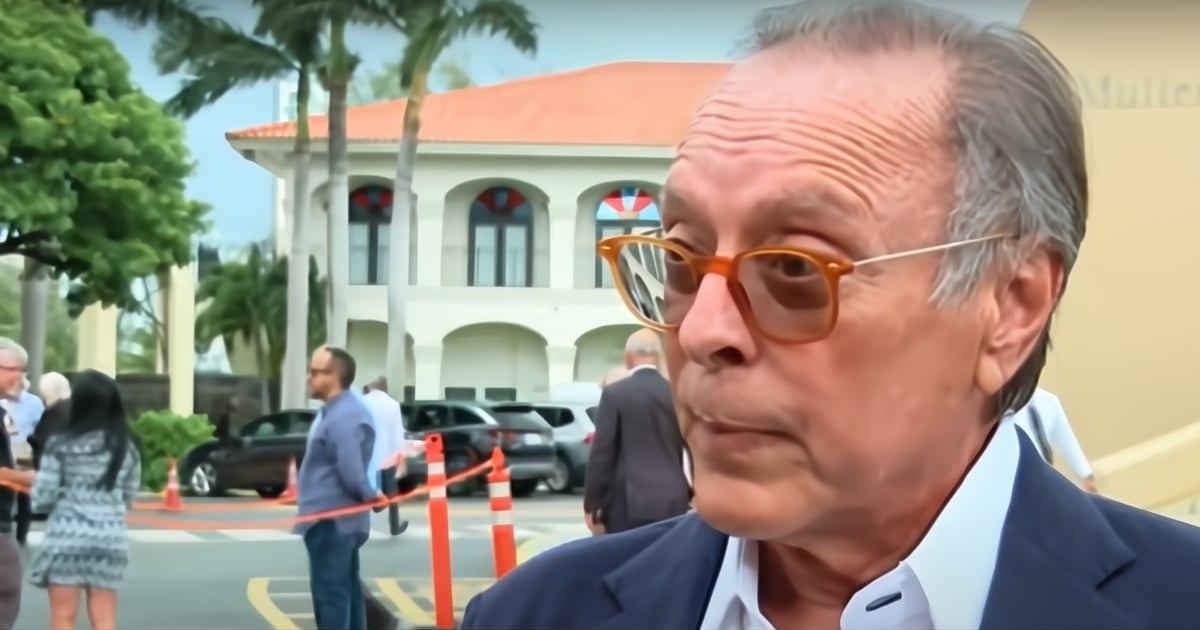
Michael B. Fernández (Mike Fernández) is the Cuban-American billionaire behind the controversial billboards that label South Florida congressmen as "traitors."
Mike has been anonymously funding the billboards against the silent stance taken by Cuban-American Republican congressmembers regarding the migration agenda of the Trump Administration for months.
The millionaire businessman recently made statements to Univisión Miami to explain the reasons that drive him to promote this campaign.
“Cruelty does not deserve to be in this fight, and it is the only weapon this government has,” declared the Cuban-American in reference to the immigration policies promoted by the Donald Trump administration.
The billboards have generated controversy, especially one of the signs placed on the Palmetto highway, which labels President Trump as an "aspiring dictator."
Fernández shattered the myth that behind the barriers there were interests of the Democrats. "I am a Republican," he said, adding that he had the support of more than 30 people to keep the signs standing.
Who is Mike Fernández?
Michael B. Fernández is originally from Manzanillo, Granma province, Cuba. He emigrated with his family to the United States in 1964 and has built a fortune estimated at over a billion dollars. He is a businessman in the healthcare sector.
In a letter made public in April, it stated: “Our four representatives are simply kneeling before the presidency because they fear for themselves and their jobs. They will be remembered for turning their backs on their community.”
Since then, Fernández has devoted part of his resources to a cause he considers moral: holding accountable the politicians who represent the Cuban or Latino community in the United States.
“They have not spoken up to defend this people. They can tell stories about what they say, but they say it in Washington, not what they say here,” he reproached, pointing directly at congress members such as Mario Díaz-Balart, Carlos Giménez, María Elvira Salazar, and the Secretary of State, Marco Rubio.
Fernández did not stop at the billboards. Last weekend, he donated two sculptures to the city of Miami in honor of immigrants and their legacy. The works were unveiled at the Ermita de la Caridad.
"One of the greatest betrayals of politicians towards voters has been our representative in Miami," he declared, referring to Díaz-Balart.
Regarding the permanence of the posters, Mike Fernández assured that they will be visible until the next elections in the United States.
The billboard that ignited the debate in Miami-Dade
The campaign began in April, with the placement of a billboard on the Palmetto highway, featuring the faces of the mentioned Republican politicians, alongside the word “TRAITORS” and the message: “To immigrants. To Miami-Dade. To the American Dream.”
The initiative was driven by the Hispanic Democratic Caucus of Miami-Dade County, which accuses Republican politicians of remaining silent in the face of attacks on the immigrant community.
Chain Reaction: Response Barriers and Narrative Warfare
Shortly thereafter, a new billboard in defense of the congress members emerged, funded by a group of over 180 Cuban migrants with I-220A status, and it was placed in Hialeah.
In that poster, the faces of dictators such as Fidel Castro, Nicolás Maduro, Hugo Chávez, and Daniel Ortega are displayed, under the message “The real traitors – To their people. To freedom. To human rights.”
Paradoxically, the community of Cubans with I-220A faces the danger of deportation every day due to Trump's immigration policies, and despite the supportive rhetoric from Republican representatives, assistance is not materializing, making it increasingly difficult to regularize their status in the United States.
In April, Congresswoman María Elvira Salazar celebrated the emergence of the billboards that support her. She also reaffirmed her support for Cubans with I-220A and criticized the Democrats: “That's cheap propaganda in the Castro style,” she declared.
For his part, Mario Díaz-Balart responded to Fernández's campaign with irony: “It is a source of pride for me that the extreme left criticizes and accuses me.”
However, Fernández's recent words reopen the controversy because the Cuban-American millionaire insists: "I am a Republican".
Frequently Asked Questions about the Fence Controversy in Miami
Who is Mike Fernández and what is his role in the fence controversy?
Mike Fernández is a Cuban-American billionaire financing an advertising campaign that criticizes Cuban-American congress members for their silence regarding Trump's immigration policies. Fernández, who emigrated from Cuba to the United States in 1964, has built a fortune in the healthcare sector. Through his advertisements, he accuses politicians like María Elvira Salazar, Mario Díaz-Balart, and Carlos Giménez of betraying the immigrant community. Although he was a Republican, he is now distancing himself from the party due to his dissatisfaction with Trump's immigration stances.
What message do the billboards funded by Mike Fernández convey?
The banners accuse Cuban-American lawmakers of being "traitors" for not defending the immigrant community and for supporting Trump's immigration policies. One particular sign describes Trump as a "would-be dictator." These messages aim to pressure politicians to use their influence in favor of immigrants, especially those with temporary protected status or in precarious legal situations.
What has been the response of Cuban-American congress members to these accusations?
Congress members, such as María Elvira Salazar, have defended their actions by asserting that they work diligently for immigrants and criticize the barriers as propaganda. Salazar has emphasized that her commitment to immigrants is strong and has highlighted her efforts to legalize Cubans with the I-220A status. Other Congress members, like Mario Díaz-Balart, have taken a more ironic stance, viewing the criticisms as a source of pride for their alignment with the party.
What are the political implications of this advertising campaign?
The campaign has sparked an intense debate about immigration policies and political representation in Miami. It has also highlighted the divisions within the Cuban-American community regarding the Republican response to immigration issues. Polarization has intensified, and Fernández's actions have mobilized both critics and supporters of current policies, impacting the local and national political discourse.
Filed under: