
Related videos:
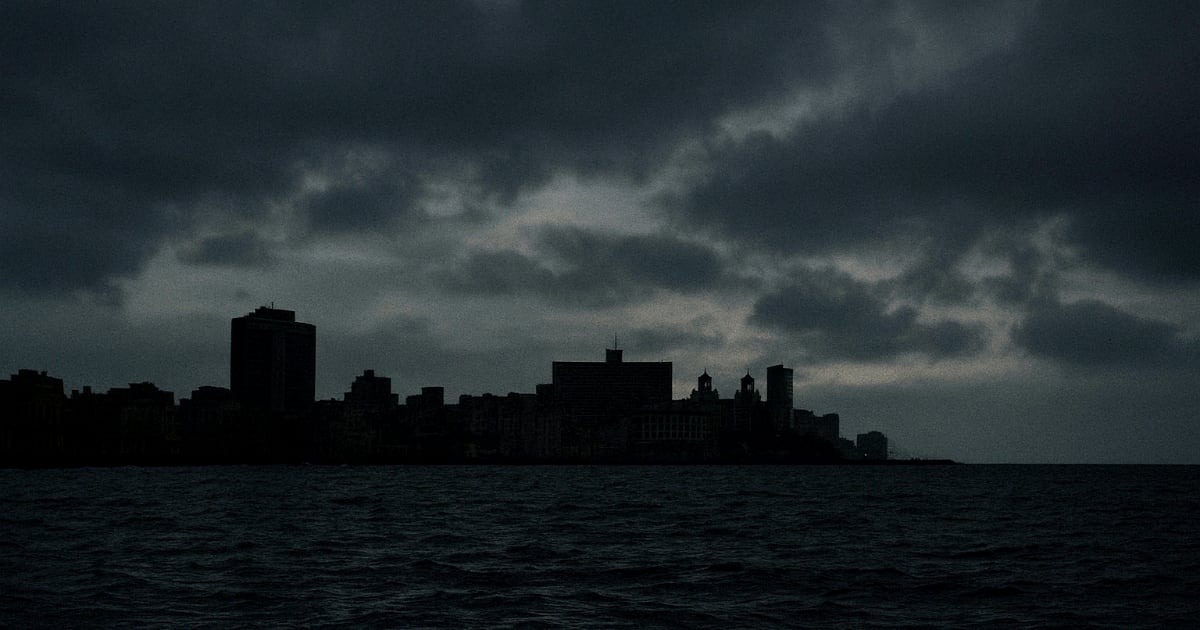
The energy crisis affecting Cuba continues with long power outages across the country. This Wednesday, the Electric Union (UNE) reported that the impact on the service resulted in a generation capacity deficit of 1,746 MW at 10:00 PM on Tuesday, coinciding with the peak national demand hours.
The UNE explained in its statement that the situation was more critical than expected due to the outage of unit 8 of the Mariel Thermoelectric Power Plant (CTE) and a demand higher than forecasted.
At 6:00 AM this Wednesday, the availability of the National Electric System (SEN) was only 2,080 MW, compared to a demand of 3,225 MW, resulting in a shortfall of 1,220 MW due to capacity deficit. It is estimated that by noon, the shortfall will be around 950 MW.
Main causes of the electrical crisis
The official report details multiple technical and structural incidents:
- Units out of service due to malfunction: Unit 3 and 6 of CTE Renté, and Unit 2 of CTE Felton.
- Units under maintenance: Unit 2 of the Santa Cruz thermal power plant, Unit 4 of the Carlos Manuel de Céspedes thermal power plant in Cienfuegos, and Unit 5 of the Renté thermal power plant.
- Thermal limitations: 427 MW out of service.
- Deficit due to lack of fuel: 38 distributed generation plants not operating, resulting in a loss of 140 MW.
Forecast for peak hours
For the nighttime peak hours, the UNE anticipates the addition of 80 MW from distributed generation engines that are currently offline due to lack of fuel, but also a decrease of 100 MW from the Fuel Mariel site due to scheduled maintenance.
If this situation persists, the electricity availability would be 2,080 MW, against an estimated maximum demand of 3,780 MW, which would create a deficit of 1,720 MW. The actual impact on the service, according to the report, could reach 1,790 MW during the night.
Situation in Havana
In the capital of the country, the Electric Company of Havana (EELH) reported that the service was interrupted since 2:00 p.m. on Tuesday, with a maximum impact of 99 MW at 10:00 p.m.
The service was fully restored at 2:56 a.m. this Wednesday. While outages had been scheduled for several time blocks, it ultimately wasn't necessary to implement the blackouts in all the planned sectors, including the reserve block.
Solar energy: still insufficient contribution
Despite the growth of renewable sources, and the government claiming that 26 solar parks are performing better than expected, the production barely reached 2,949 MWh, with a peak capacity of 562 MW at noon. This figure is insufficient considering the magnitude of the overall deficit.
The energy crisis in Cuba has now lasted five years without a structural solution, directly impacting citizens' quality of life, who are facing constant power outages, with repercussions for health, water supply, education, transportation, and economic activity in general.
While the government attempts to alleviate the situation with planned maintenance and alternative energy sources, the deterioration of the national system continues to cause widespread blackouts day after day.
Frequently Asked Questions about the Energy Crisis in Cuba
What is the main reason for the massive blackouts in Cuba?
The main reason for the widespread blackouts in Cuba is the shortage of electric generation, which reaches values close to 1,800 MW. This deficit is due to multiple factors, such as breakdowns in thermoelectric plants, scheduled maintenance, and the lack of fuel affecting distributed generation facilities.
How does the lack of fuel affect electricity generation in Cuba?
The lack of fuel has forced the suspension of operations at numerous distributed generation plants, resulting in a significant loss of generation capacity. This contributes to the energy deficit and, consequently, to the prolonged blackouts affecting the entire country.
What measures has the Cuban government taken to address the energy crisis?
The Cuban government has attempted to alleviate the situation by means of the planned maintenance of power plants and the increase of renewable energy, such as solar. However, the deteriorated electrical infrastructure and the fuel shortage exacerbate the crisis, making these efforts insufficient to effectively resolve the problem.
How do power outages impact the daily lives of Cubans?
Power outages directly affect the quality of life for Cubans, impacting health, water supply, education, transportation, and economic activity in general. Constant interruptions in electricity service create difficulties in daily activities and increase social unrest.
Filed under: