
Related videos:
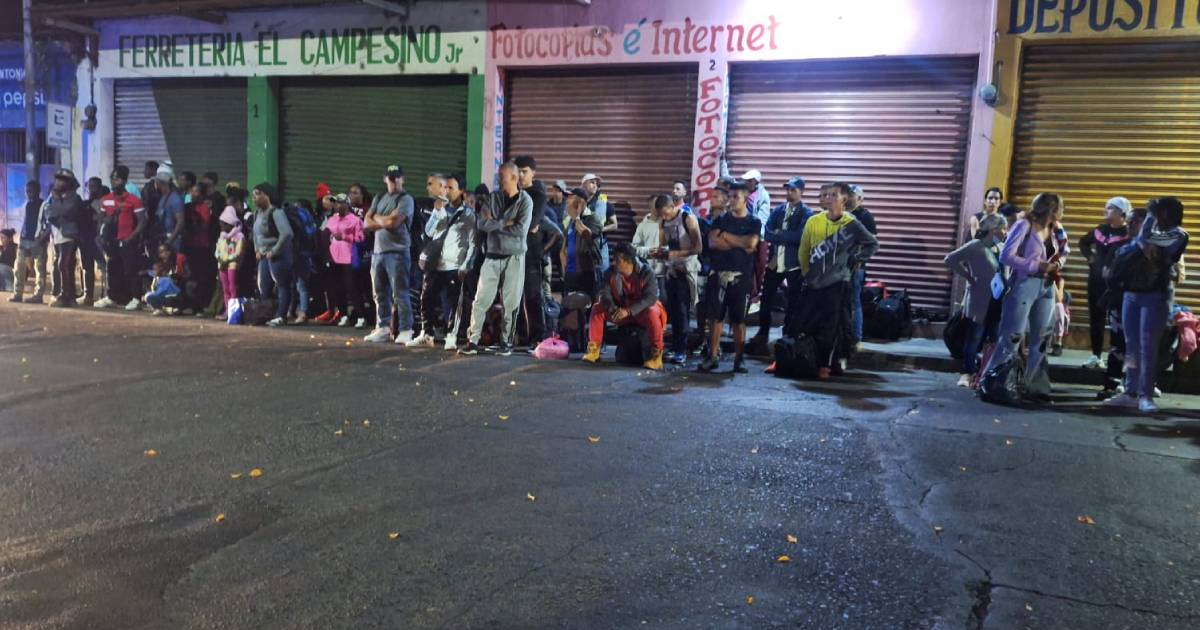
More than 21,000 migrants in vulnerable situations entered Honduras between January and July 2025 on their way to the United States, with the vast majority being Cubans, according to a report by the International Organization for Migration (IOM).
According to data published by the agency EFE, the IOM study indicates that during that period, 21,617 migrants entered Honduran territory, of which 83% were Cuban citizens.
The rest was made up of Ecuadorians (5%), Chinese (3%), and people of other nationalities (9%).
The migration flow reflects a diverse pattern: 53.8% moved from north to south, while 46.2% traveled from south to north.
In addition, more than half of the migrants (54%) traveled alone, mostly young men aged between 18 and 35 years.
The main reasons for embarking on this journey remain the search for employment and better living conditions (55.7%), as well as family reunification (32%).
Other reasons include the return to the place of origin, targeted persecution or violence, and, to a lesser extent, asylum requests.
The report also highlights that 29% of migrants stated they had experienced discrimination, primarily due to their nationality, while 15% reported having been detained by non-state actors during their journey.
Meanwhile, the IOM reported that 18,291 migrants, mostly Venezuelans, returned to South America during the same period, and that 20,362 Hondurans were repatriated, primarily from the United States (73%) and Mexico (23%).
The head of the Program Support Unit of the IOM in Honduras, Ismael Cruceta, emphasized that this phenomenon demands greater international cooperation.
“It is essential to guarantee humanitarian assistance to all individuals, regardless of their immigration status, because human rights are universal and everyone has the right to basic and dignified living conditions,” he stated.
The latest report from the IOM confirmed that Cubans lead the migratory flow through Honduras to the United States. However, at the beginning of the year, it was reported that the number of migrants in the region had decreased, yet the so-called “Cuban route” never stopped and intensified again in the summer.
In January, the magnitude of the phenomenon had already been noted, when 60,000 Cubans crossed Honduras on their way north.
This transition is also reflected in Guatemala, where authorities intercepted 88 migrants, including Cuban citizens, highlighting the risks of the journey.
At the same time, governments in the region have tightened requirements. Recently, Panama extended the transit visa requirement for Cubans, further complicating the options for those seeking to reach the United States through irregular means.
Frequently Asked Questions about Cuban Migration to the United States and Other Destinations
Why do Cubans lead the migration flow to the United States in 2025?
Cubans are leading the migration flow to the United States in search of employment and better living conditions, as well as family reunification. The economic and political crisis in Cuba is a key factor driving its citizens to emigrate. Furthermore, the route through Nicaragua and Honduras remains active, facilitating the transit of Cubans heading north.
How have U.S. immigration policies affected Cubans in 2025?
The immigration policies of the United States, especially under the administration of Donald Trump, have significantly tightened border controls, restricting irregular entry options for Cubans. This has led to a drastic decrease in border crossings and has forced many Cubans to reconsider their migration strategies, opting in some cases to settle in Mexico instead of continuing to the United States.
What risks do Cuban migrants face during their transit through Central America?
Cuban migrants face risks such as discrimination, detention by non-state actors, extortion, abuse, and arbitrary detentions. These dangers are common during their transit through Central American countries like Honduras and Guatemala, emphasizing the need for international cooperation and humanitarian assistance to ensure their safety.
What alternatives are Cubans considering in light of the migration restrictions in the United States?
In light of the restrictions in the United States, many Cubans are choosing to settle in Mexico or seek asylum in Brazil. Mexico has become an appealing destination due to the opportunity to build a life and work, while Brazil has seen a significant increase in asylum requests from Cuban citizens, although with low acceptance rates.
Filed under: