
Related videos:
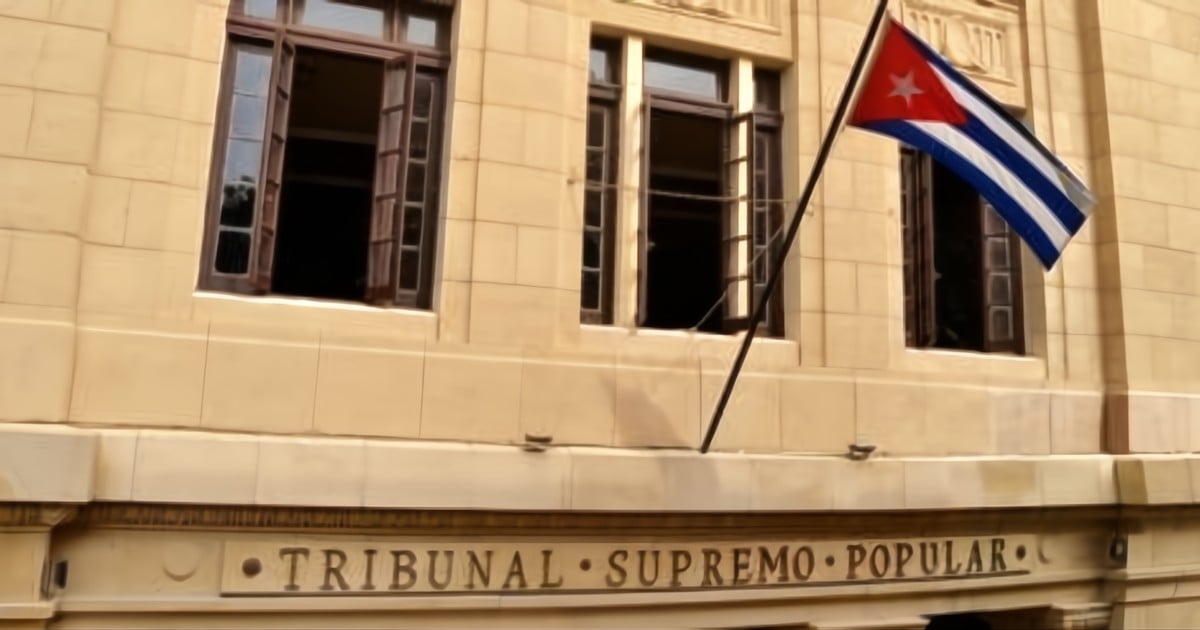
The Supreme People's Court of Cuba issued a serious warning regarding the rise in the consumption and trafficking of synthetic drugs on the island, particularly in Havana, and approved a ruling that strengthens the penal sanctions for those who possess or distribute these highly toxic substances, published this Thursday in the extraordinary Official Gazette number 52.
The so-called synthetic cannabinoids, popularly known as "the chemical" or "the little papers," mimic marijuana, but they are up to a hundred times more potent and have devastating effects on health.
According to experts cited in the Official Gazette, even in minimal amounts, they can cause seizures, heart attacks, psychosis, and multiple organ failure.
The Supreme Court clarified that it will no longer be necessary for a defendant to possess one pound (460 grams) of drugs to be prosecuted under the "relatively large quantities" article of the Penal Code.
In the case of synthetic cannabinoids, it will be sufficient to demonstrate, through toxicological and criminal forensic analysis, that the substance is highly toxic, how many doses could be derived from the seized material, and the potential harm to public health.
For the unlawful possession, the classification will be under Article 236 paragraph a), with penalties ranging from one to three years in prison or fines of up to a thousand quotas, similar to substances with the potency of cocaine.
The legal tightening is presented as a response to a phenomenon that overwhelms institutions and transforms synthetic drugs into a public health and national security issue.
The drug that destroys bodies and neighborhoods
Beyond the letter of the law, the drama unfolds in the streets. A young Cuban shook social media by showing her face marked by the use of "the chemical", a testament to how these drugs not only devastate mental and physical health but also disrupt the everyday lives of entire families. Another case that mobilized public opinion was that of a Cuban model addicted to these substances, whose struggle for survival sparked a wave of civic solidarity that contrasted sharply with institutional indifference.
In neighborhoods of Havana such as Centro Habana, Playa, and La Habana Vieja, police operations have resulted in dozens of arrests, including entire families involved in the trade. The “chemical” is sold in tiny pieces of paper soaked in spray, at a low cost and easily accessible, making it the drug of choice for many young people amid the economic crisis.
Meanwhile, drug trafficking is deploying increasingly sophisticated methods to smuggle drugs into Cuba. In recent weeks, Customs has seized cocaine hidden in wet wipes, cans of tuna, water motors, Eleguá dolls, gummy candies, and packs of cigarettes. Nonetheless, authorities insist that the island maintains a policy of "zero tolerance."
An out-of-control reality
Despite official speeches and exemplary punishments, which have reached up to 20 years in prison for drug trafficking, the proliferation of these substances shows that the government's strategy is insufficient.
In the neighborhoods, drugs spread faster than state responses. On social media, victims reveal the devastation caused by "the chemical" without filters. And in the courts, efforts are being made to rein in a phenomenon that, more than legal, is social, with a Cuba battered by the crisis, where drugs find fertile ground amid despair and a lack of future.
Frequently Asked Questions about the Rise of Synthetic Drugs in Cuba
What measures has the Supreme Court of Cuba taken against synthetic drugs?
The Supreme People's Court of Cuba has intensified criminal penalties by approving Opinion 476 for those who possess or distribute synthetic drugs such as synthetic cannabinoids, known as "the chemical." These measures include prison sentences of one to three years or fines of up to a thousand quotas, aiming to curb the rising consumption and trafficking of these substances on the island.
Why are synthetic drugs known as "the chemical" dangerous in Cuba?
Synthetic cannabinoids, or "the chemical," are highly dangerous because they are up to a hundred times more potent than marijuana and can cause seizures, heart attacks, psychosis, and multiple organ failure, even in minimal amounts. Their high toxicity and addictive effects make them a significant threat to public health in Cuba.
How is the use of synthetic drugs affecting Cuban society?
The consumption of synthetic drugs in Cuba is destroying the physical and mental health of many young people, breaking down family and social structures, and fueling a public health and national security issue. Personal stories shared on social media illustrate the devastating impact of these substances on the lives of consumers and their families.
What challenges does Cuba face in controlling the trafficking of synthetic drugs?
Cuba faces a significant challenge in controlling synthetic drug trafficking due to the sophistication of the methods used by drug traffickers and the rapid spread of these substances in the country. Despite the regime's "zero tolerance" policy, the reality is that the institutional response capacity is insufficient to halt the advance of the problem.
Filed under: