
Related videos:
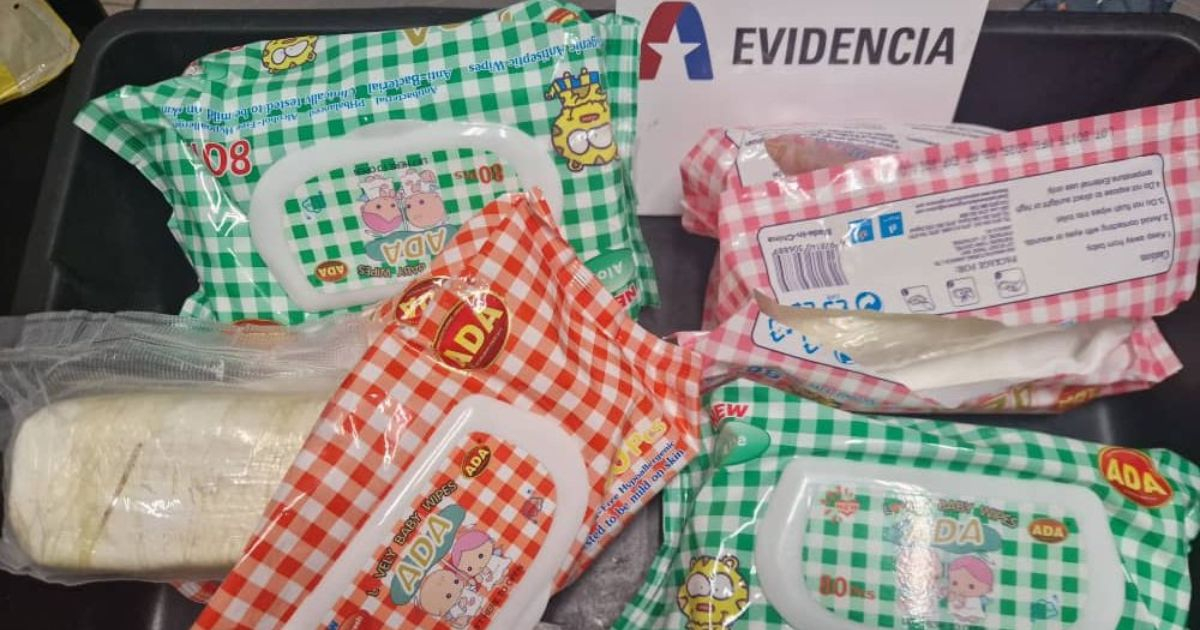
Cuban authorities reported an attempt to smuggle cocaine onto the island using packages of wet towels as camouflage, describing it as a new tactic in drug trafficking.
The fact was revealed by Wiliam Pérez González, the first deputy chief of the General Customs of the Republic, who wrote on the social network X that the drugs were detected at the international airport of Havana.
According to the report, the perpetrators used a third country to try to conceal the true origin of the shipment, but the operation was thwarted following border controls.
“Cocaine hidden in packages of wet towels was detected at Havana airport, they used a third country to conceal the origin and ran into a secure border in the fight against this scourge,” the official published on their official account, referencing the joint efforts of Customs and drug enforcement agencies.
Authorities did not provide details about the amount of drugs seized or the status of those involved, although they emphasized the importance of border controls and international cooperation in the fight against drug trafficking.
In recent months, several official reports have confirmed seizures of cocaine and marijuana at the country’s ports and airports, reflecting the use of Cuba as a transit route and the increasing ingenuity of drug traffickers in introducing illicit substances.
The Cuban government claims to maintain a policy of "zero tolerance" towards drugs, although independent organizations and experts have warned that the island is not exempt from being used as a drug trafficking corridor in the Caribbean, with the risk of increasing both entry attempts and domestic consumption.
Drug trafficking has deployed increasingly ingenious methods in Cuba to introduce cocaine and marijuana, using everything from hygiene products to food and religious items.
Weeks prior, authorities discovered cocaine hidden in tuna cans and, in another operation, detected attempts to smuggle drugs through electric showers and water motors.
In a particularly striking case, a passenger attempted to enter the island with a Eleguá doll filled with cocaine, highlighting the use of religious symbols as a disguise.
Other attempts included the transfer of drug packages adhered to the body of a traveler and the discovery of narcotics hidden in gummy candies and packs of cigarettes. In fact, in early June, a woman was arrested at the Havana airport with cocaine concealed among her belongings.
Frequently asked questions about drug trafficking in Cuba and concealment strategies
What is the new drug trafficking tactic detected in Cuba?
Cuban authorities have detected an attempt to smuggle cocaine into the island using packages of wet wipes as camouflage. This tactic represents a new strategy by drug traffickers to evade customs checks at José Martí International Airport in Havana. Furthermore, this case highlights the use of a third country to conceal the origin of the shipment, underscoring the sophistication of drug trafficking operations.
How is Cuba responding to the increase in drug trafficking attempts?
Cuba is intensifying its border and customs controls, employing both advanced technology and ongoing training for its staff. The authorities have declared a "zero tolerance" policy against drug trafficking and have strengthened international cooperation to combat this issue. Efforts are focused on detecting ingenious concealment methods used by traffickers, such as the use of everyday items and hygiene products.
What drug concealment methods have been recently detected in Cuba?
Multiple methods of drug concealment have been discovered, including the use of hygiene products such as wet wipes and shampoo bottles, as well as everyday items like tuna cans, backpacks, and appliances. Narco-traffickers are increasingly using sophisticated and creative methods to evade controls, prompting authorities to intensify their detection efforts at ports and airports.
What role does international cooperation play in the fight against drug trafficking in Cuba?
International cooperation is crucial in addressing drug trafficking in Cuba. Cuban authorities emphasize the importance of collaboration with other countries to track and stop the flows of narcotics attempting to enter the island. The use of a third country to conceal the origin of the shipment, as seen in the recent trafficking attempt, underscores the need for a coordinated and global response to combat this scourge.
Filed under: