
Related videos:
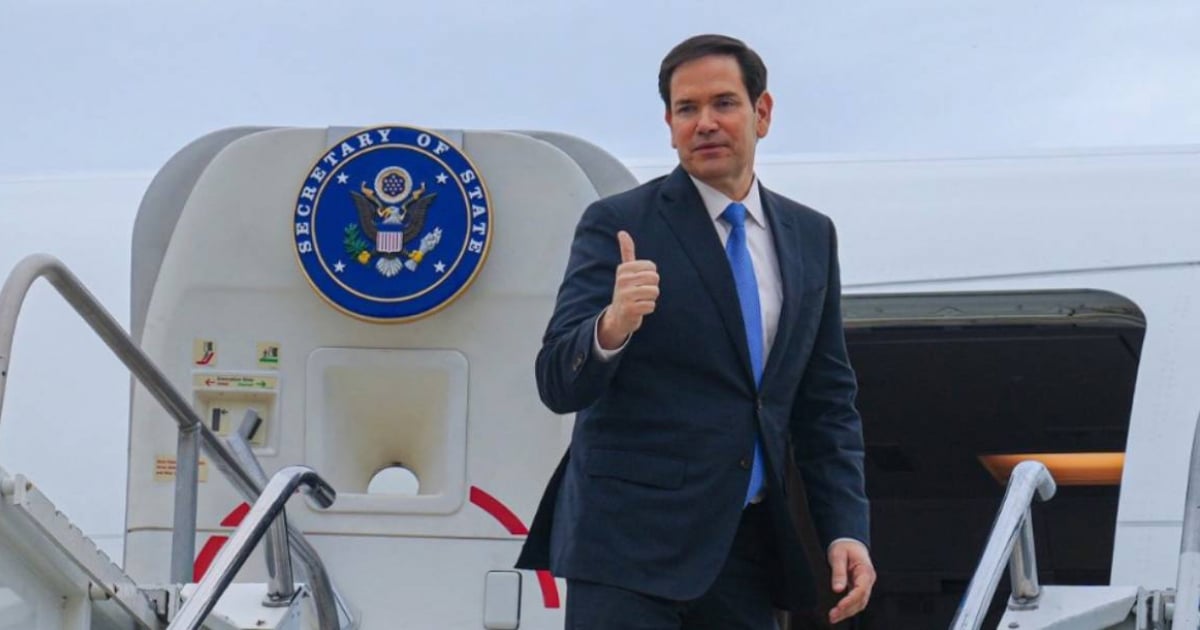
The United States Secretary of State, Marco Rubio, will embark on an official tour of Mexico and Ecuador next week, at a time marked by increasing tensions between Washington and Caracas and the strengthening of the U.S. military presence in the Caribbean.
The State Department reported this Thursday that the trip aims to make progress in key areas for the Trump administration, such as the fight against drug trafficking, illegal immigration, reducing the trade deficit, and strengthening alliances in response to China's growing influence in Latin America.
Rubio will arrive in Mexico City on September 2, where he is expected to meet with President Claudia Sheinbaum to work on a new bilateral security agreement focused on cutting the flow of fentanyl to the U.S. and arms into Mexican territory.
The immediate signing of an agreement is not expected, but new steps will be discussed to promote the agreements from February, based on respect for sovereignty and the strengthening of mutual cooperation.
In Ecuador, the Secretary of State will arrive on September 3 and will seek to strengthen collaboration in the face of what Washington refers to as "extra-continental malicious actors," in reference to the strategic commitments made by Quito with China during Rafael Correa's administration.
The White House wants to reduce that dependency and explore new cooperation schemes with the government of Daniel Noboa.
Marco Rubio defends the offensive against organized crime
The tour coincides with the deployment of a U.S. naval force in the Caribbean, which includes three guided-missile destroyers, a fast-attack nuclear submarine, and a guided-missile cruiser, in what the Pentagon has described as part of its anti-drug strategy.
Rubio recently defended at the White House the decision to "go on the offensive" against criminal organizations with transnational connections, such as the Cartel of the Suns, based in Venezuela, and the Tren de Aragua gang, both labeled by Washington as threats to hemispheric security.
"For the first time in the modern era, we are truly on the offensive against the organized cartels that are pumping poison—deadly poison—into our cities," stated the Secretary of State, who believes that this military effort is a fundamental part of President Trump's "America First" foreign policy agenda.
Caracas, Havana, and Bogotá react with concern
The increased military presence of the U.S. in the region has sparked strong criticism from allied governments of Venezuela. Cuban Foreign Minister Bruno Rodríguez described the move as a “serious threat to regional peace”, and accused Washington of promoting an interventionist escalation.
From Bogotá, President Gustavo Petro denied the existence of the Cartel of the Suns and defended Venezuelan leader Nicolás Maduro.
Despite the criticism, the U.S. administration insists that it will not allow Venezuela to become a "criminal sanctuary" at the doorstep of the continent. In response to diplomatic and military pressure, Caracas released 13 political prisoners this week, in a gesture that many interpret as a maneuver to alleviate tensions.
Frequently Asked Questions about Marco Rubio's Tour of Latin America and Tensions with Venezuela
What is the main objective of Marco Rubio's tour of Mexico and Ecuador?
The main objective of Marco Rubio's tour in Mexico and Ecuador is to advance in key areas such as the fight against drug trafficking, illegal immigration, reducing the trade deficit, and strengthening alliances against China's influence in Latin America. In Mexico, he will focus on a new bilateral security agreement to cut the flow of fentanyl to the U.S. and arms to Mexico. In Ecuador, he will seek to enhance collaboration against "malicious extra-continental actors," referring to Quito's strategic commitments with China.
What does the U.S. military deployment in the Caribbean mean?
The U.S. military deployment in the Caribbean is part of an anti-drug strategy by the United States, which includes the presence of guided missile destroyers, a nuclear submarine, and a guided missile cruiser. This deployment is seen as direct pressure on the regime of Nicolás Maduro in Venezuela, accused of connections with drug trafficking networks. The Trump administration aims through these actions to prevent Venezuela from becoming a "criminal sanctuary" on the continent.
How have Cuba and Venezuela reacted to the increase of U.S. military presence in the region?
Cuba and Venezuela have reacted with concern and criticism to the increasing military presence of the U.S. in the region. The Cuban government has described the move as a direct threat to regional peace, while Caracas perceives it as an interventionist maneuver. Both countries accuse Washington of attempting to impose its dominance in Latin America under the pretext of combating drug trafficking.
What implications does Marco Rubio's strategy for Latin America have?
The strategy of Marco Rubio aims to strengthen security and combat transnational crime in Latin America. This includes the fight against drug trafficking and illegal immigration, as well as reducing China's influence in the region. Furthermore, his critical stance towards the regimes in Cuba and Venezuela reflects an effort to politically isolate these governments and strengthen ties with democratic countries allied with the U.S.
Filed under: