
Related videos:
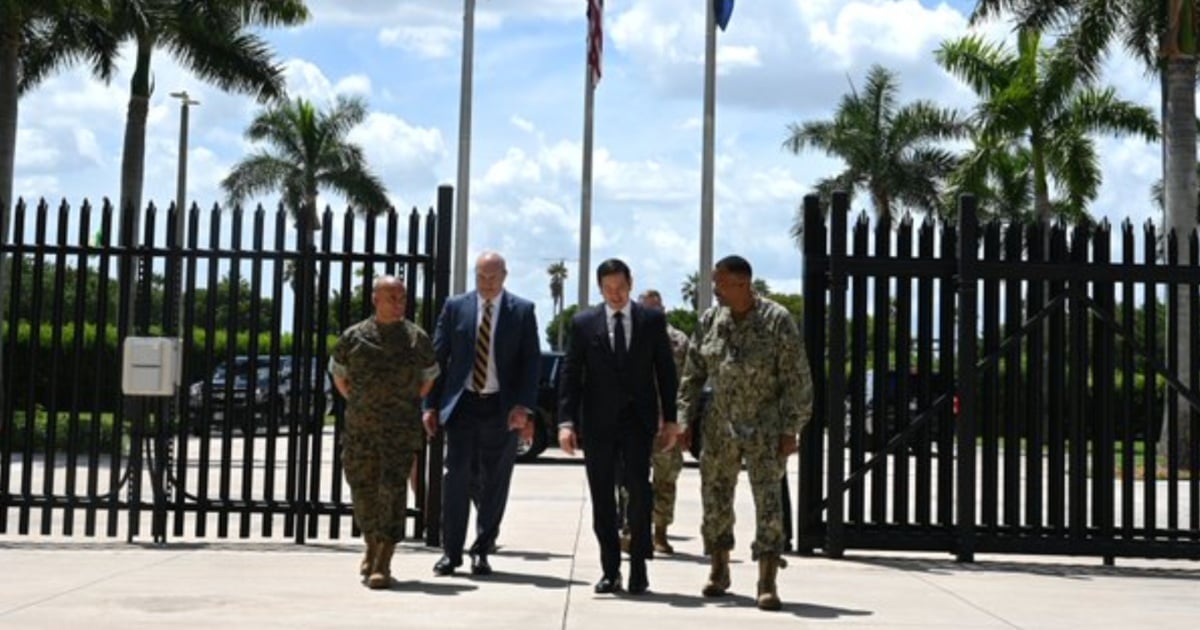
The Secretary of State Marco Rubio held a meeting with the Southern Command of the United States (SOUTHCOM) at its headquarters in Doral, Florida, where he discussed security in Latin America and the Caribbean with military leaders, as well as Washington's strategic priorities in the region.
The images released on the official government accounts show Rubio accompanied by Admiral Alvin Holsey, commander of SOUTHCOM, during his entrance to the headquarters this Friday.
The closed-door meeting focused on evaluating the security challenges facing the hemisphere, including drug trafficking, the operations of illegal armed groups, and the increasing influence of foreign powers in the region.
Rubio emphasized the importance of military and diplomatic cooperation to strengthen stability in key countries of Latin America.
Southern Command, responsible for U.S. military operations in the Western Hemisphere, plays a crucial role in coordinating with regional governments to address humanitarian crises, natural emergencies, and security threats.
Rubio's visit comes just days after the United States deployed eight warships in the waters of the Caribbean and the Pacific as part of an "enhanced anti-narcotics operation," which has been interpreted as a direct message against Maduro.
The fleet includes destroyers, an amphibious ship with 2,500 marines, a cruiser, and landing units, as well as helicopters and specialized agents in drug interdiction.
From the White House, Press Secretary Karoline Leavitt intensified the rhetoric by labeling the Venezuelan leader as "a fugitive head of narcoterrorism" and asserting that "Nicolás Maduro is not the legitimate president of Venezuela."
Meanwhile, Maduro ordered the deployment of 15,000 soldiers to the border with Colombia and called on the militias to be “ready to defend national territory” against what he referred to as a plan of foreign intervention.
The buildup of forces has sparked regional concern. Although the Pentagon stated that U.S. ships “are not near the Venezuelan coast”, their presence heightens the perception of an impending confrontation scenario.
Despite the rhetoric, U.S. diplomats have clarified that Washington "is not seeking a U.S.-led regime change."
Frequently Asked Questions about Marco Rubio's Meeting with Southern Command and Tensions in Venezuela
What was the purpose of Marco Rubio's visit to Southern Command?
The Secretary of State Marco Rubio visited Southern Command to discuss security in Latin America and the Caribbean with senior military officials, as well as the strategic priorities of the United States in the region. The meeting focused on assessing security challenges, such as drug trafficking and the influence of foreign powers.
How has Venezuela reacted to the U.S. military deployment in the Caribbean?
The government of Nicolás Maduro has ordered the deployment of 15,000 soldiers to the border with Colombia and has called on the militias to be prepared to "defend the national territory." This action is a response to what they perceive as a plan for foreign intervention by the United States.
What is the United States' stance on Nicolás Maduro and his government?
The U.S. administration, under the leadership of Donald Trump, does not recognize Nicolás Maduro as the legitimate president of Venezuela and accuses him of leading the "Cártel de los Soles," a criminal organization involved in drug trafficking. The United States has intensified sanctions and military operations to pressure Maduro's government.
What role does Southern Command play in the United States' strategy in Latin America?
The Southern Command is responsible for U.S. military operations in the Western Hemisphere. Their role is crucial in coordinating with governments in the region to address humanitarian crises, natural emergencies, and security threats.
Filed under: