
Related videos:
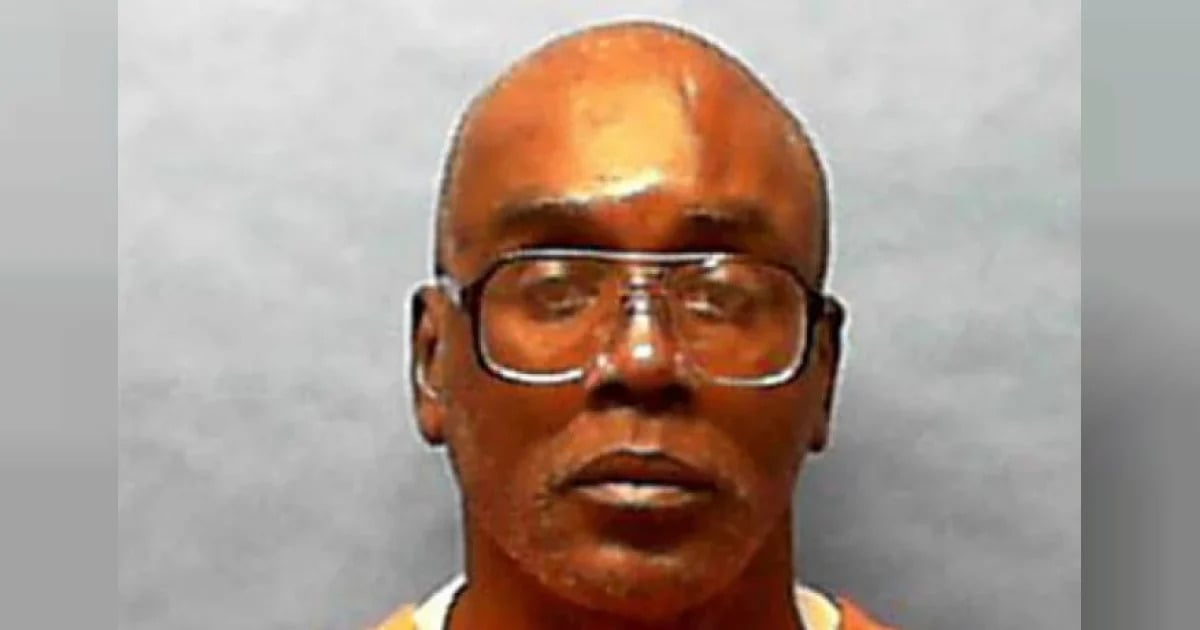
Florida continues to set an unprecedented pace in the implementation of the death penalty. Governor Ron DeSantis has ordered the execution of Victor Tony Jones, a confessed murderer, for September 30.
Jones, 64 years old, was convicted for the murder of a couple during a robbery in December 1990 in Miami-Dade.
The victims, Matilda and Jacob Nestor, were the owners of the business where Jones worked, and he stabbed them to rob them. The attacker was later arrested with the money and personal belongings he took from the couple.
Jones was sentenced to death in 1993 after being found guilty of two counts of first-degree murder, and two counts of armed robbery.
Despite attempts to appeal the ruling, the case moves forward, with a possible appeal pending before the Florida Supreme Court. An appeal could also be filed with the United States Supreme Court.
Its execution will be the thirteenth in Florida so far in 2025, a figure that places the state at the forefront of death penalty cases in the country. It has surpassed Texas and South Carolina, both of which have executed four people each.
Since the Supreme Court reinstated the death penalty in 1976, the Sunshine State had never executed so many people in a single year. The numbers for 2025 have already surpassed the historical maximum of executions from 2014, which was eight.
Last Thursday, the execution of Curtis Windom took place, a 59-year-old man who murdered his girlfriend, her mother and a man in 1992 in Orlando.
The next one will be for David Joseph Pittman, 63 years old, scheduled for September 17th.
In total, there have been 30 executions this year across the United States, compared to 25 last year. The year 2014 currently holds the record, with 35 individuals executed nationwide.
A persistent debate about the death penalty
This rise in executions in Florida occurs against a backdrop of increasing polarization regarding the use of the death penalty.
His critics continue to raise concerns about its implementation, especially regarding the humanity of the process, the potential for judicial errors, and the physical suffering that comes with lethal injection.
The method used in Florida, through lethal injection, is a subject of controversy. It is noted that this method may not be as "humane" as claimed, due to the risks of physical suffering or errors in the administration of the drugs.
As the year progresses, the southern state remains a focal point in the discussion about the death penalty in the United States.
The case of Jones, along with the pending appeals, keeps the attention of the public and human rights advocates, who oppose what they consider an inhumane and irreversible practice.
Frequently Asked Questions about Executions in Florida and the Case of Victor Tony Jones
Why has the number of executions in Florida increased in 2025?
The increase in executions in Florida in 2025 is due to more aggressive state policies regarding the use of the death penalty, driven by Governor Ron DeSantis and supported by legislators and prosecutors of the same party. These policies have expedited judicial and appeal processes, allowing for more death sentences to be carried out in a reduced timeframe. This approach has led Florida to surpass its historical record of executions in a single year.
Who is Victor Tony Jones and why will he be executed?
Victor Tony Jones is a 64-year-old man convicted of the murder of a couple during a robbery in December 1990 in Miami-Dade. Jones was arrested after killing Matilda and Jacob Nestor, with whom he worked, and was found guilty of two counts of first-degree murder and two counts of armed robbery. Despite his attempts to appeal, the execution is scheduled for September 30, 2025.
What methods of execution are used in Florida and why are they controversial?
Florida uses lethal injection as its primary method of execution, consisting of a sedative, a paralytic agent, and a substance that stops the heart. This procedure has been the subject of controversy due to the risks of extreme suffering if not administered correctly. Medical experts and human rights organizations question its humanity and ethics, arguing that it may violate international human rights standards.
What is the stance of the public and organizations on the death penalty in Florida?
The death penalty in Florida is a polarizing topic of debate. While some political sectors and citizens support it as a measure of justice, civil organizations, religious activists, and human rights defenders strongly oppose it, deeming it inhumane and irreversible. The organization Floridians for Alternatives to the Death Penalty and religious leaders, such as the Archbishop of Miami, have expressed their opposition to executions, advocating for severe penalties that respect human dignity, such as life imprisonment without parole.
Filed under: