
Related videos:
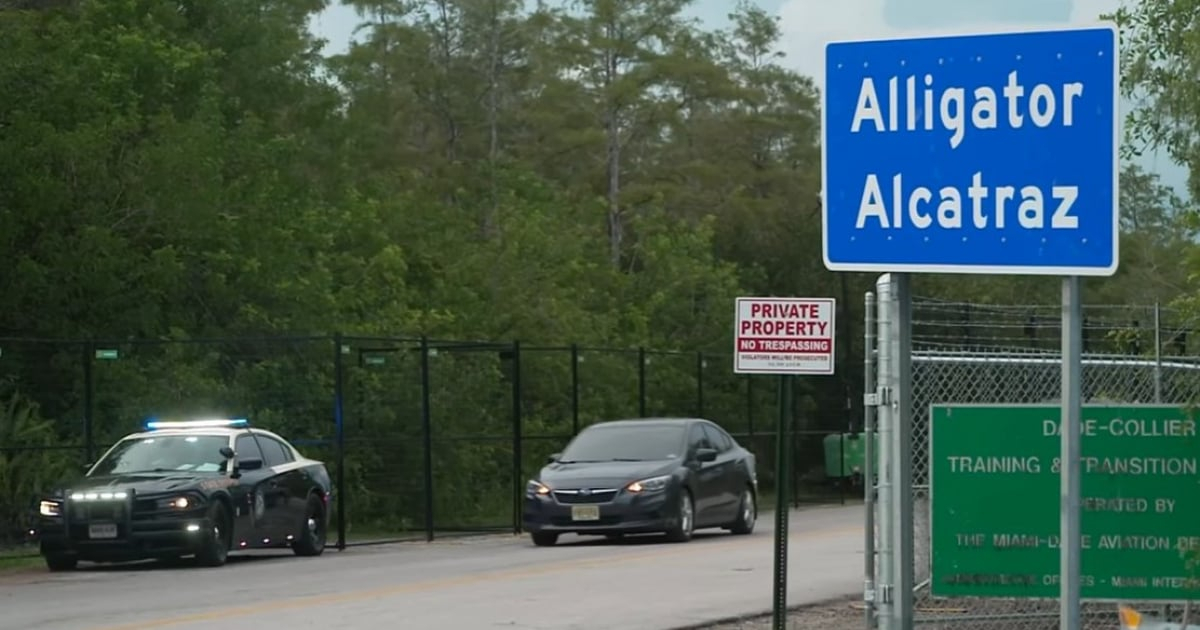
The controversial detention center for migrants in the Florida Everglades, known as “Alligator Alcatraz”, faces a crucial moment following the hearing that began this Thursday in a federal court in Fort Myers.
According to the site Local 10 News, the case combines two legal fronts: an environmental lawsuit mandating the closure of the facility and another that reports violations of detainees' rights.
Two parallel lawsuits
In July, Federal Judge Kathleen Williams issued a preliminary closure order for the center by the end of October, concluding that the state of Florida and the federal government violated the law by not conducting an environmental study before constructing the facility in a protected wetland area. The order requires the transfer of detainees, as well as the dismantling of equipment and fences.
Meanwhile, immigrant lawyers claim that the center violates the First Amendment by preventing detainees from holding private meetings with their attorneys or communicating properly via phone and videoconference. They point out that, despite the closure order, the facility remains operational and housing migrants, which keeps the allegations of rights violations alive.
Arguments in court
During the hearing this Thursday, the lawyers for the detainees insisted that the environmental order does not resolve the issues of legal access, as the center remains in operation.
For their part, the state and federal governments asked the court for a stay of Williams' order, which would allow them to keep "Alligator Alcatraz" open while the appeal progresses, according to the outlet.
The control of the facility is another point of contention. Florida asserts that the center is state-managed and, therefore, not subject to federal regulations. The federal government, on the other hand, claims that it has no responsibility since it has not allocated funds for its construction or operation, even though ICE maintains a presence with only four agents per shift.
Political and environmental context
The center was hastily established in June, under the administration of Governor Ron DeSantis, as part of President Donald Trump's plans to strengthen deportations.
Located in a remote airfield surrounded by swamps, it was presented as a "leak-proof" place, hence the nickname "Alligator Alcatraz," in reference to the famous prison in California.
The installation also faces criticism from organizations like Friends of the Everglades and the Miccosukee tribe, who accuse the state of overlooking environmental laws in an area of significant ecological sensitivity.
What's coming
If the closure order is confirmed, the detainees would be transferred to other facilities, and the case regarding rights could potentially become moot. However, if the court grants the suspension, Florida plans to continue receiving migrants at the center, which would prolong the legal battle.
In any scenario, the fate of “Alligator Alcatraz” has become a symbol of the tension between restrictive immigration policies, respect for fundamental rights, and environmental protection.
“Alligator Alcatraz” falls short: Now immigrants will be taken to one of the most feared prisons in the United States
In its effort to take a hard stance against migration, the Donald Trump administration decided to transfer undocumented immigrants to one of the most feared and violent prisons in the United States.
According to a report from the AP, a complex within the Louisiana State Penitentiary, known as Angola, has been set up to house more than 400 ICE detainees.
The location is already housing 51 people and was chosen deliberately for its reputation as a tough prison, as confirmed by the Secretary of Homeland Security, Kristi Noem.
Governor Jeff Landry assured that the facility, renamed “Louisiana Lockup,” will fill up in the coming months as Trump promotes a plan for mass deportations.
Angola is a maximum-security prison with over 6,000 inmates, including more than 50 on death row.
The Trump administration has announced plans to build five new mega detention centers for immigrants following the model of "Alligator Alcatraz."
These facilities are designed to increase detention capacity and expedite mass deportations. The strategy includes collaboration with states governed by Republicans and the use of funds from FEMA's Shelter and Services Program, which has sparked criticism for using resources intended for emergencies.
Frequently Asked Questions about the "Alligator Alcatraz" Detention Center
Why was the closure of "Alligator Alcatraz" ordered?
The closure of the detention center "Alligator Alcatraz" was ordered by a federal judge due to violations of environmental laws, as the facility was built without the necessary studies in a protected wetlands area. Additionally, it faces allegations of inhumane conditions and violations of the rights of detainees.
What are the main criticisms of the functioning of "Alligator Alcatraz"?
The “Alligator Alcatraz” detention center has been criticized for inhumane conditions, such as unventilated tents, collapsed bathrooms, mosquito infestations, and restrictions on detainees' access to legal assistance. Furthermore, its construction has been questioned for not meeting environmental regulations.
What will happen to the detainees in "Alligator Alcatraz" after its closure?
The detainees at "Alligator Alcatraz" will be transferred to other facilities, both inside and outside the state of Florida, prior to the dismantling of the center. The Department of Homeland Security is in charge of these transfers.
What legal challenges does "Alligator Alcatraz" face?
“Alligator Alcatraz” faces multiple legal challenges, including one for environmental violations and another for civil rights violations alleging unlawful detentions, lack of access to attorneys, and inhumane conditions. There is also a lawsuit concerning the lack of state jurisdiction to operate the facility.
Filed under: