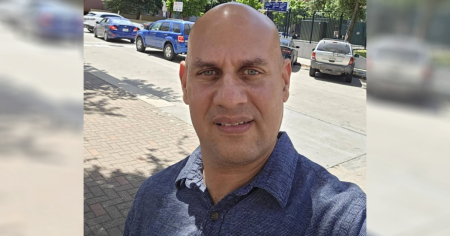
The Cuban boxer Julio César La Cruz, a double Olympic champion and five-time world champion, once again made clear his closeness to the regime of the island by stating that his only idols are Fidel Castro and his mother, Ana de la Caridad La Cruz Peraza.
The statement was made during an interview with the Venezuelan influencer Jesús Cazorla, known for his affinity with figures of communism and who has already hosted Sandro Castro, the grandson of the late dictator.
During the conversation, Cazorla mentioned Raúl Castro and Miguel Díaz-Canel, but the Camagüey boxer was emphatic: only Fidel and his mother hold that place in his life.
A brilliant and controversial sports history
Julio César La Cruz, currently participating in the world event held in the city of Liverpool, is regarded as one of the most decorated boxers in the history of Cuban sports: two Olympic gold medals (Rio 2016 and Tokyo 2020), five world titles, and multiple Pan American and Central American crowns.
However, his closeness to the regime has made him a highly controversial figure, even among former teammates on the national team who have openly criticized him.
His position as a deputy in the National Assembly of People's Power (ANPP) and a member of the Communist Party of Cuba (PCC) contrasts with his statements that “he is not a politician”.
The regime has rewarded their loyalty with privileges, including a Mercedes-Benz automobile, in a country where most athletes and citizens face serious material shortages.
The memory of Tokyo 2020: “Homeland or Death, We Will Overcome!”
The interview also revisited the most controversial moment for La Cruz at the Tokyo 2020 Olympics, when after defeating the Spanish-naturalized Cuban Emmanuel Reyes, he shouted in the ring: “Patria y Vida no! Patria o Muerte, Venceremos!”.
The boxer explained that that slogan was his response to the political environment surrounding the fight: “If he beat me, he would shout ‘Homeland and Life.’ That will go down in history,” he commented.
That statement sparked criticism both inside and outside of Cuba, as it coincided with the rise of the song “Homeland and Life”, the anthem of the Cuban opposition and a symbol of the protests on July 11th.
A boxer caught between glory and controversy
Despite his status as a sports idol, Julio César La Cruz is regarded as one of the athletes closest to political power on the island, and his name divides opinions: for the establishment, he represents a symbol of loyalty and sporting glory; for many others, a reminder of how elite sport in Cuba remains deeply tied to the ideological discourse of the regime.
Frequently Asked Questions about Julio César La Cruz and His Relationship with the Cuban Regime
Who are Julio César La Cruz's idols?
Julio César La Cruz, a prominent Cuban boxer, has declared that his only idols are Fidel Castro and his mother, Ana de la Caridad La Cruz Peraza. This statement reinforces his closeness to the Cuban regime, which has sparked controversy both in Cuba and internationally.
Why is Julio César La Cruz a controversial figure?
Julio César La Cruz es considerado controvertido debido a su cercanía al régimen cubano y su papel como diputado en la Asamblea Nacional del Poder Popular de Cuba. His loyalty to the Cuban government has granted him privileges, como un automóvil Mercedes-Benz, en un país donde la mayoría enfrenta carencias materiales. Esta relación ha generado críticas tanto dentro como fuera del ámbito deportivo.
What happened to Julio César La Cruz at the Tokyo 2020 Olympics?
In the Tokyo 2020 Olympics, Julio César La Cruz made headlines during a controversial moment when he shouted in the ring: “Homeland and Life no! Homeland or Death, We Will Overcome!”, after defeating the Spanish-naturalized Cuban Emmanuel Reyes. This statement was a response to the political climate surrounding the match, and it drew criticism due to its alignment with the rise of the song “Patria y Vida,” a symbol of protests in Cuba.
What is Julio César La Cruz's relationship with the Communist Party of Cuba?
Julio César La Cruz is a member of the Communist Party of Cuba (PCC) and a deputy in the National Assembly of People's Power (ANPP). Although he claims not to be a politician, his involvement in these structures strengthens his connection to the Cuban regime, which has been the subject of criticism and questioning regarding his role in the sports and political arenas.
Filed under: