
Related videos:
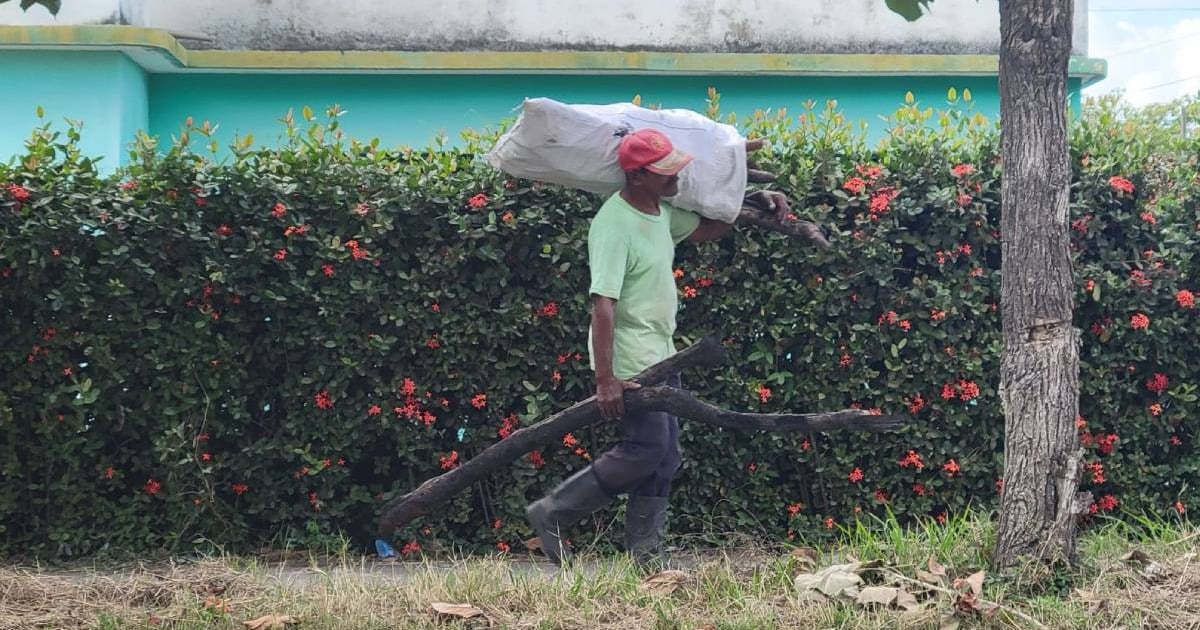
The energy and food crisis affecting Cuba has forced thousands of families to cut down trees for cooking, due to power outages of up to 20 hours a day and the extended suspension of liquefied gas supply.
According to documentation from Food Monitor Program (FMP), many households have resorted to makeshift cooking setups using old furniture or directly turning to tree cutting, a practice that has spread in rural and peri-urban areas.
The price of coal, which exceeds a minimum pension, has made it unfeasible for many to access that fuel.
The observatory warns that this dynamic, driven by the urgency of survival, is leaving a significant environmental impact: loss of biodiversity, soil erosion, prolonged droughts, and increased pollutant emissions.
"How can we demand that a family not cut down a tree if the alternative is not eating?" questions the report, which raises an ethical dilemma linking food insecurity and environmental devastation, deforestation.
FMP reminds that this pattern is not exclusive to Cuba. In Venezuela, during the shortages of gas and electricity, massive deforestation was documented even in watersheds.
In the Cuban case, the situation threatens forest reserves and fragile ecosystems, in a country with high levels of endemism in its flora and fauna.
The organization also criticizes the government's inaction and recalls that back in 2019 the authorities promoted cooking with firewood as a "patriotic solution."
Today, this practice has become normalized and represents a setback in the quality of life for millions of Cubans, in addition to a challenging environmental risk that is difficult to reverse.
Cuban mothers, amid the crisis, are demanding solutions from the government and, overwhelmed by the weight of daily life, are facing wood-burning stoves. They assert that their children cannot go without food.
MP urges the government to implement policies that ensure access to clean energy and reforestation programs, warning that a society that consumes at the expense of its environment undermines the foundations of its future.
Frequently Asked Questions about the Energy and Food Crisis in Cuba
Why are Cubans chopping down trees to cook?
Cubans are cutting down trees for cooking due to the energy and food crisis the country is facing. Prolonged blackouts and the lack of liquefied gas supply have forced families to seek alternatives such as firewood in order to prepare their meals. This practice is creating a significant environmental impact, including loss of biodiversity and soil erosion.
What is the environmental impact of cooking with firewood in Cuba?
The environmental impact of cooking with firewood in Cuba is alarming. The cutting down of trees for firewood is causing deforestation, loss of biodiversity, soil erosion, and an increase in pollutant emissions. This situation exacerbates the country's vulnerability to meteorological phenomena and contributes to the deterioration of fragile ecosystems, especially in rural and peri-urban areas.
How has the Cuban government responded to the energy crisis?
The Cuban government has been criticized for its inaction in response to the energy crisis. Although in 2019 the use of firewood was promoted as a "patriotic solution," no effective policies have been implemented to ensure access to clean energy or to modernize the electrical infrastructure. The lack of structural reforms and the dependence on fossil fuels have kept the country in a critical situation with no signs of improvement.
What alternatives exist to solve the energy crisis in Cuba?
The alternatives to solve the energy crisis in Cuba include the implementation of renewable energies. The Food Monitor Program has urged the government to diversify the energy matrix with sources like solar and wind power, and to develop sustainable infrastructures such as biogas. However, these solutions require investment and political will, factors that have been insufficient so far.
Filed under: