
Related videos:
The official journalist Yirmara Torres Hernández exploded on social media by sharing an extensive and heart-wrenching testimony about her experience with chikungunya amid the collapse of basic services in Cuba.
Torres shared his experience with the illness in a public post on Facebook. In his message, he not only spoke about the physical symptoms but also criticized the unsanitary conditions, the shortage of medications, inadequate nutrition, and the power outages affecting his family environment and his province, Matanzas.
"I wouldn't wish this chikungunya on anyone... It took me down four days ago, and I still can't get up from bed," he wrote. He also mentioned that his mother, his nurse cousin, his doctor neighbor, and other close people are going through the virus.
The journalist described a persistent fever, intense joint pain, loss of appetite, general malaise, and skin rashes. She pointed out that only those receiving help from outside can access medications: “Blessed are those of us who have someone FROM OUTSIDE to help us with medications, because relying on private pharmacies is really tough.”
The publication was filled with irony directed at the official discourse. It criticized the absence of basic medications like salbutamol and paracetamol in state pharmacies and referred to the national diet with sarcasm: “Ground beef, chicken, eggs, and hot dogs, for those who can afford it.”
Torres also questioned the lack of water, the impossibility of maintaining hygiene during the illness, and the total deterioration of quality of life in Cuba. "Do you really believe that everything is fine? That everything is normal? Do you think there are no accounts to be rendered?" he wrote. "We are a people exhausted, tired, tortured (not being able to sleep well and living under constant stress is torture), but our patience has its limits."
Referring to the official narrative about the embargo, he added ironically that his 500 mg paracetamol was sent "from the tumultuous and brutal north," along with a rechargeable fan that he uses to cope with the blackouts. "Those who block our economy are the ones saving us this mere survival…," he pointed out.
The post was accompanied by a personal photo, where she appears visibly affected by the illness, lying down with a red fan over her face.
Three days before that message, Yirmara Torres had published another, shorter but equally critical text, focused on power outages and water shortages. “How do you live with 28 hours of blackout for just 2 hours of electricity? How do you live with trickles of water or without it? You can’t live!” she wrote at the time.
The recent writings of Yirmara Torres join other publications in which she has expressed concern about the country's direction.
In May of this year, she harshly stated: “In Cuba, many people are hungry. Yes, hunger, HUNGER.” She denounced that the food shortage is not about delicacies, but about bread, rice, milk, beans, or eggs —when they appear, at unaffordable prices—. She spoke of familiar faces with extreme thinness, of a “madness of life” that already recalls the “very-very” of the nineties.
Months before, he recounted with anguish how his home was robbed during a blackout. His son was alone. The thieves entered through the windows and stole appliances, microphones, documents, and even shoes. “What truly terrifies me is that we are not safe inside our homes,” he wrote. He criticized the police inaction and warned about the rise of gangs that operate with total impunity in Matanzas.
She has also been critical of the country's economic management. In April 2023, she wrote: “Our economy is a ship adrift.” In that reflection, she accused the Cuban leadership of being unable to accept uncomfortable truths. “Everything is diagnosed, we know what we must do, but nothing is done… mediocrity reigns,” she concluded.
After resigning from the presidency of the UPEC in Matanzas, she shared a feeling of institutional abandonment. In a text titled “Organizational Amnesias,” she lamented that she is not even recognized as a member of the organization she helped rebuild. “After 15 years dedicated to the work of the UPEC, I feel that they no longer consider me a member. It’s sad, isn’t it?”
Even before stepping down from her post, she was already speaking with disillusionment: “The Homeland is in danger”, “the Cuban people can’t take it anymore”, “everyone wants to leave, even the elderly.” She denounced that the official media “turn a blind eye” as if nothing were happening, and argued that those who emigrate “are still patriots.”
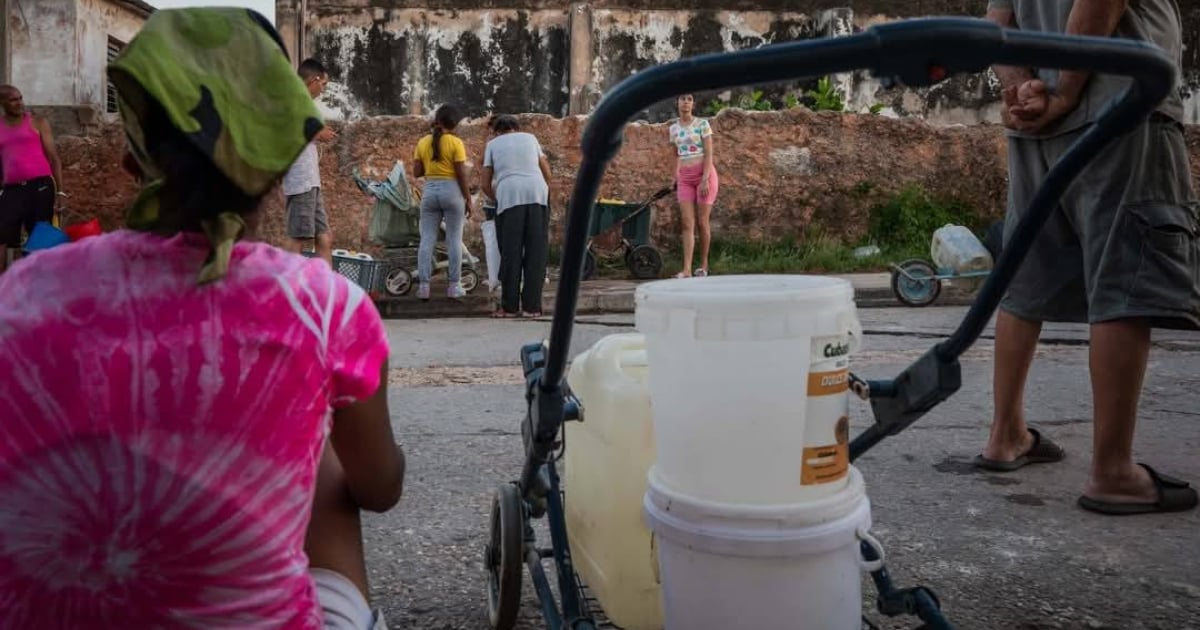
The experience recounted by Yirmara Torres is not an isolated case, but rather a reflection of a daily reality for millions of Cubans. Diseases without medical attention, power outages lasting over 20 hours, lack of water, medications that only arrive from abroad, rationed food, a collapsed transportation system, scarce bread, constant inflation, unbearable heat without ventilation, increasing insecurity, and the daily anxiety of surviving without answers or solutions.
For many, life in Cuba has become a series of resistances: resisting the mosquitoes, hunger, fever, blackouts, stress, frustration, and despair. And with each passing day, more voices like that of this journalist dare to ask it out loud: How much longer?
Frequently asked questions about the crisis in Cuba and its effects on daily life
What are the main criticisms of Yirmara Torres?
Yirmara Torres criticizes the unsanitary conditions, the shortage of medicines, poor nutrition, and blackouts in Cuba. She also questions the lack of water and the ineffectiveness of the system in addressing the basic needs of the population, reflecting a decline in the overall quality of life.
How is the economic crisis affecting public health in Cuba?
The economic crisis has led to a shortage of medications and a collapsed healthcare infrastructure. Reports include a lack of basic supplies such as blood test tubes, which hinders proper diagnoses and treatments, putting patients' lives at risk.
What impact do prolonged blackouts have on the daily lives of Cubans?
The blackouts of up to 20 hours a day are causing a deterioration in the quality of life for Cubans. This includes food loss, the inability to carry out daily activities, and an increase in stress and frustration among the population.
What challenges does the Cuban population face in accessing food and other basic resources?
The population faces shortages of basic foods and essential products. Access to items such as bread, rice, milk, and medications is limited, and when they are available, their prices are unaffordable for many Cubans.
How has the Cuban population reacted to the current crisis?
The Cuban population exhibits a widespread sense of exhaustion and hopelessness. Many individuals express their frustration through social media, denouncing the government's inaction and the lack of effective solutions to the crisis.
Filed under: