
Related videos:
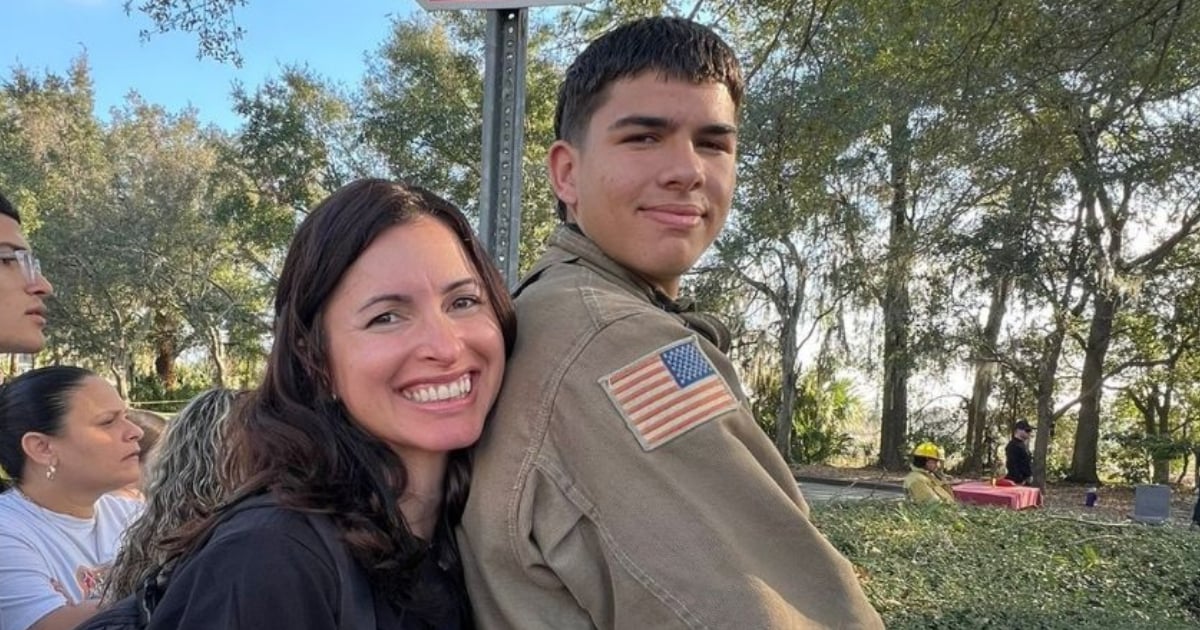
A case that has sparked outrage among families and advocates for migrants occurred on September 11 at the Immigration and Customs Enforcement (ICE) office in Miramar, Florida, where a young Cuban man who arrived in the country as a minor and was fully integrated into American society was detained.
According to what Suzel Araguez Cruz, the boy's aunt, told journalist Mario J, her nephew was summoned to the ICE office and, after more than five hours of waiting, they confirmed that he was in custody.
The young man, 18 years old and in his final year of high school in Miami, aspired to join the fire academy after being part of the Coral Gables cadet program for two years.
According to Araguez, the family had followed the legal steps to regularize their immigration status, first hiring a lawyer who asserted that ICE was not granting paroles, a prerequisite for benefiting from the Cuban Adjustment Act.
Later, with a second lawyer, they only obtained an I-220A document during a prior appointment in which, they claim, the ICE officer prevented the advocate from speaking.
In the meeting on Thursday, ICE did not evaluate the case or ask questions; they simply moved to detain him.
The aunt emphasized that her nephew has no criminal record and that they even submitted his passport during the appointment, unaware that it would expedite a deportation process.
"ICE is arbitrarily detaining people to meet quotas, without common sense or sensitivity," the woman stated in her message, published by Pentón on X.
"It cannot be treated as just another number in a statistic when all its effort and life are here."
The case raises concerns about immigration policy and the treatment of young Cubans who grew up in the United States and have shown a willingness to integrate.
Human rights organizations warn that these arbitrary detentions make no distinction between criminals and students with promising futures.
A repeating pattern
It is not an isolated incident.
On June 16th, the young Cuban Wendy Vega Lores, who turned 19 that same day, was arrested after attending an appointment at the Immigration Court in San Antonio, Texas.
Her asylum application had been pending for over two years, unresolved, but despite having met all legal requirements and having no criminal record, she ended up in the Karnes detention center.
Wendy, who dreams of becoming a pediatrician, completed high school in just two years, maintained an outstanding academic record, and did volunteer work to strengthen her application to a medical school.
Today, however, she lives in anxiety and panic attacks, far from her little brother, as she awaits a hearing to request her release on bail.
"It's very sad to see the situation we are in. There are people here who did nothing wrong, and yet they are locked up," he said in an interview with Univisión.
Her lawyers insist that the detention is not only unjustified, but also threatens the future of a young woman who represents, more than a risk, an opportunity for American society.
Open debate
Both cases, occurring in different states but following the same pattern, fuel criticism of a migration system that, under political pressure, seems to prioritize arrest statistics over justice and humanity.
While ICE asserts that its operations focus on individuals with criminal records, testimonies from people like Suzel and Wendy reveal a different reality: young individuals without any prior offenses, harboring legitimate aspirations and already establishing roots in the United States, who are treated as expendable in a process that overlooks their efforts and integration.
Frequently Asked Questions about the Detention of Young Cubans by ICE in the U.S.
Why was the young Cuban detained in Florida?
The young man was detained by ICE during an appointment at their offices in Miramar, Florida, despite having no criminal record and being integrated into American society. The family had attempted to regularize their immigration status, but ICE's policies complicated the process.
What is the I-220A form and what is its relevance in these cases?
The I-220A form is a document that certifies release from immigration custody under specific conditions, but does not grant legal status. Many Cubans have received it upon entering the U.S., leaving them vulnerable to detentions and deportations, especially under new, stricter immigration policies.
What is the pattern of ICE detentions in the U.S. for young Cubans?
ICE has been detaining young Cubans without criminal records during immigration appointments, using tactics such as dismissing cases to proceed with expedited deportations. This impacts those who have followed legal procedures but still do not have a defined immigration status.
What impact do these arrests have on Cuban migrant communities in the U.S.?
Detentions create fear and uncertainty among Cuban communities, as many fear being arrested during routine legal processes. This affects both individuals and their families, who face separation and the possibility of deportation.
Filed under: