
Related videos:
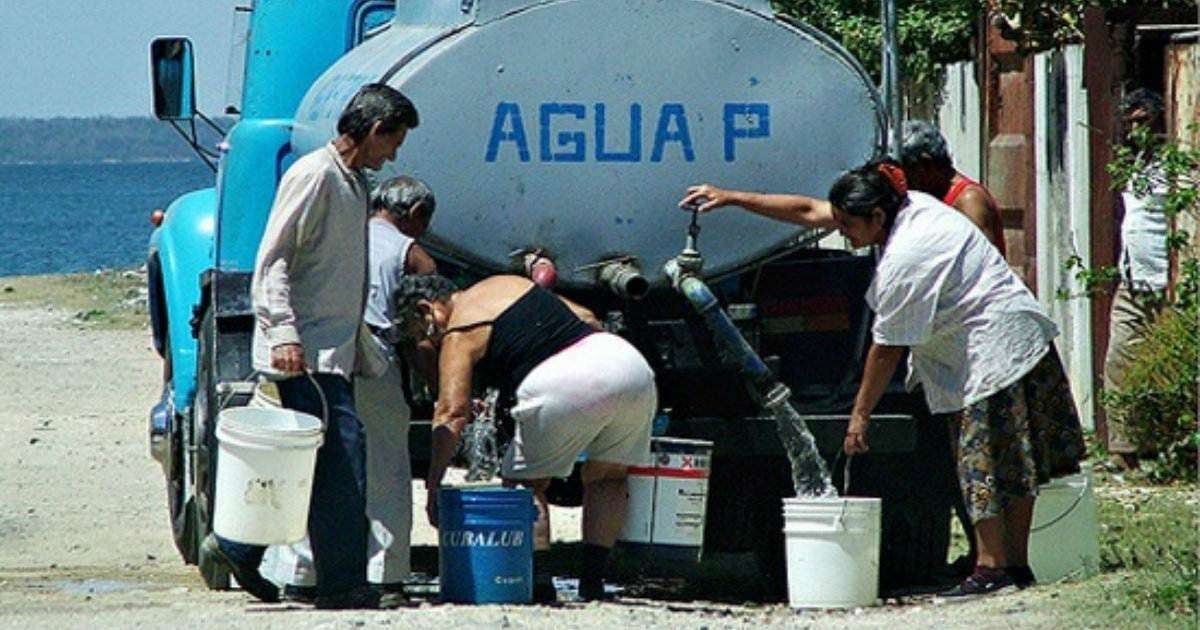
La Habana is suffering from a water shortage. Breakdowns and prolonged blackouts complicate the water supply to the capital.
This Saturday, the state-owned Aguas de La Habana announced that three reported breakdowns occurred in the 78-inch conduit of the Cuenca Sur, "caused by electrical instability in the area."
"This morning, water pumping to the hospitals has been ensured. Once the repair work on the source is completed, we will inform through our official channels about the operational adjustments that will be made to restore service to the population of the Central system, which includes the municipalities of Plaza de la Revolución, Cerro, Diez de Octubre, Centro Habana, and Habana Vieja," the statement explained.
In another informational note, Aguas de La Habana reported that “the filter plant system in Guanabacoa is out of service due to a broken impeller,” resulting in a water shortage in that municipality.
Similarly, they reported issues with the "impeller of the Diezmero that keeps the hydraulic parameters below what is required."
On Friday, the service was disrupted in the areas of Alamar, Camilo Cienfuegos, and Villa Panamericana due to "the electrical outages from the Aguacate and San José lines at the supply source."
The “San Francisco 2 and 2A” drivers are also affected by the breakdown of the San Francisco 2 equipment, which is impacting service to the higher areas of: El Paraíso, La Torre, San Pedro.
Water supply issues in the capital have persisted throughout the week amidst a national energy crisis.
On Friday, power outages, a storm, and the shutdown of a major generating unit in Cienfuegos are worsening the precarious water supply in several municipalities of Havana.
The company Aguas de La Habana reported on its official channels that the El Gato supply source operates with seven units from the San José line, but it has suspended operations since 4:00 p.m. due to a lack of electricity. Earlier, at 2:30 p.m., the Aguacate Line also went out of service due to a circuit trip.
The Cuban population, subjected to daily power and water cuts, increasingly perceives this situation as the result of decades of neglect, mismanagement, and lack of investment in the national energy system.
Frequently Asked Questions about the Water and Energy Crisis in Havana
What is the main cause of the water shortage in Havana?
The lack of water in Havana is mainly due to electrical instability, which has caused malfunctions in the pumping systems and in the equipment of Aguas de La Habana. The ongoing blackouts and the national energy crisis have exacerbated this situation, affecting several municipalities of the capital.
Which municipalities in Havana are most affected by the water crisis?
The municipalities most affected by the water crisis in Havana include Plaza de la Revolución, Cerro, Diez de Octubre, Centro Habana, Habana Vieja, Guanabacoa, and San Miguel del Padrón. These municipalities face constant interruptions in their water supply due to breakdowns in the pumping systems and electrical issues.
How are power outages impacting the water supply in Havana?
Power outages are paralyzing the water pumps, which prevents proper supply to the population. The lack of electricity halts pumping from the supply sources, causing many neighborhoods to be without drinking water for extended periods.
What solutions has the government proposed to address the water and energy crisis in Havana?
The government has promised a "viable strategy" to restore the electrical system and improve water supply. However, so far, no concrete solutions or timelines for restoring the service have been offered. The population continues to face water and electricity outages without clear or effective answers.
How does the Cuban population perceive the current situation regarding the energy and water crisis?
The Cuban population perceives the current situation as a result of decades of negligence, mismanagement, and lack of investment in the national energy system. Citizens express their discontent through social media, denouncing the inhumane conditions they face due to the lack of water and electricity.
Filed under: