
Related videos:
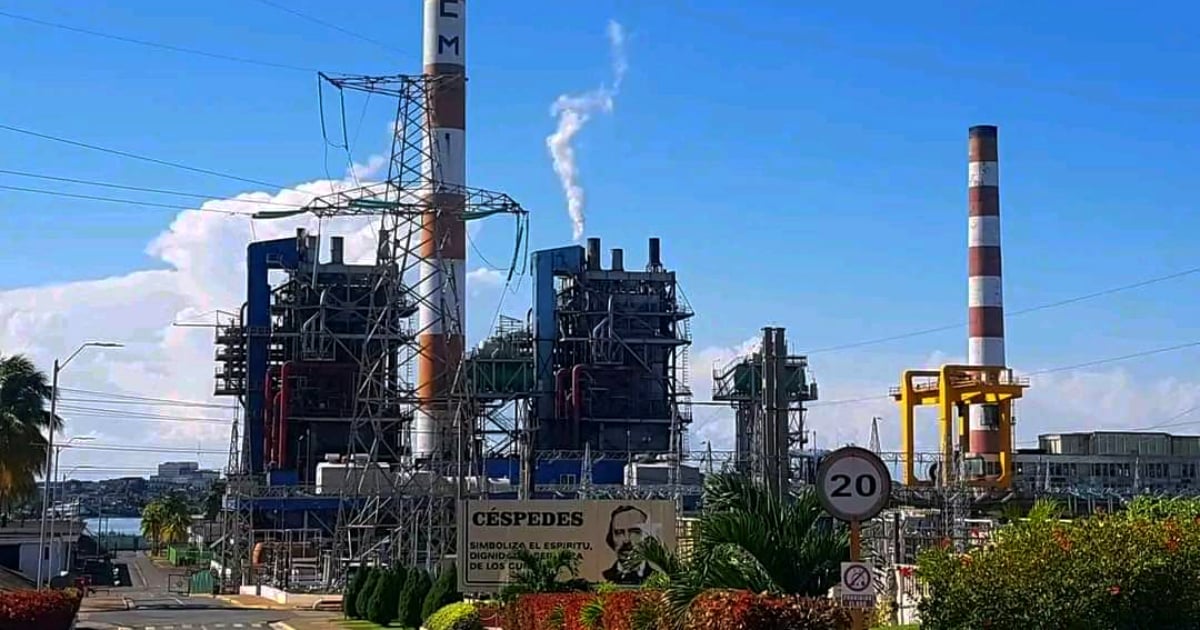
The shutdown today of unit 3 at the Carlos Manuel de Céspedes thermoelectric power plant in Cienfuegos further complicates the operation of the National Electric System (SEN), leading to an increase in the outages due to generation deficits that keep millions of Cubans facing constant blackouts with no solutions in sight.
Through its Telegram channel, the Electric Company of Havana explained that a malfunction in the condenser of unit 3 at Céspedes caused that unit to go out of service.
For this reason, blocks 3 and 5 (of reserve) in Havana are completely affected, and blocks 1 and 2 cannot be restored until the fault (triggered by DAF) is resolved, he noted.
By sharing the information on his Facebook account, the official journalist Lázaro Manuel Alonso noted that the breakdown complicates the operation of the SEN and increases the impacts nationwide.
"In Havana, four out of the six blocks that exist in the city are affected," emphasized Alonso.
In another post on Facebook, the Electric Company of Havana confirmed that, due to low generation availability, it was necessary to affect 30 MW due to an emergency with reserve block 5, and urged the public to stay informed through official channels and the Telephone Help Center 18888.
Hours earlier, the Electric Union of Cuba (UNE) denied that a new general blackout would occur for three days starting this Friday.
The company stated that this is false news and assured that the SEN was stable.
The situation confirms that temporary measures and quick fixes do not achieve stability, while the authorities have yet to announce concrete plans to restore generation capacity and prevent new widespread blackouts.
It also reinforces the perception that constant blackouts are now a structural consequence of the Cuban electrical system, with direct impacts on the daily lives of the population, while the authorities continue to manage the crisis with limited official information and temporary solutions that do not address the underlying problem.
For many, the electrical issue is not seen as a temporary situation, but rather as the result of decades of negligence, mismanagement, and lack of investments.
In this regard, a recent survey on the Facebook page of CiberCuba revealed that 83% of Cubans believe that the government should relinquish power due to its inability to resolve the electrical crisis.
The situation of the SEN is critical. The daily report from the UNE indicated that the highest impact due to generation capacity deficit in the previous day was 1,733 MW at 9:50 PM.
For the peak hours this Friday, a gradual entry of some generation blocks is expected, although an impact of 1,595 MW was forecasted, which is expected to increase with the shutdown of unit 3 at the Carlos Manuel de Céspedes power plant.
Frequently Asked Questions about the Energy Crisis in Cuba
Why is the Carlos Manuel de Céspedes thermoelectric plant in Cienfuegos out of service again?
Unit 3 of the Carlos Manuel de Céspedes thermoelectric plant suffered a failure in the condenser, which caused it to be disconnected from the National Electrical System (SEN) and further complicated electrical operations in Cuba.
What is the current situation of the National Electric System (SEN) in Cuba?
The SEN is facing a critical deficit in electricity generation. Daily impacts due to the lack of generation capacity exceed 1,500 MW, leading to widespread service outages across the country.
What measures is the Cuban government taking to address the energy crisis?
So far, the authorities have implemented temporary measures and patches that do not guarantee stability. No concrete plans have been announced to restore generation capacity and prevent further widespread blackouts, which has led to criticism and social unrest.
What is the perception of the Cuban population regarding the government's management of the electricity crisis?
The Cuban population is showing increasing discontent with the government’s management. 83% of Cubans believe that the government should relinquish power due to its inability to resolve the electricity crisis, according to a recent survey.
Filed under: