
Related videos:
In Cuba, micro, small, and medium enterprises (mipymes) have achieved in a very short time what the state has not accomplished in decades: filling shelves, revitalizing forgotten productions, and providing services that once seemed impossible on the island. Despite the obstacles, excessive taxes, and bureaucratic harassment, mipymes have become a true engine of hope and supply for the population.
While the Cuban government has increased the "convertible currencies" and foreign currency markets that marginalize the majority (CUC, MLC, and the return to the dollar), small and medium enterprises have chosen the opposite: to sell in Cuban pesos and do so throughout the national territory, despite inflation and the crisis. They have reintroduced a variety of products to the market that people had lost hope of seeing again, from basic foods to durable consumer goods.
They have even managed to rescue national productions that had been extinct for years: from small lines of footwear and clothing to manufactured goods and processed foods, as well as the production of packaging and labels, the launch of commercial brands, and much more. Where the State saw ruin and shortages, entrepreneurs saw opportunities.
Today in Cuba, an emerging market economy has surprised me from afar. The small and medium enterprises (mipymes) not only fill shelves: they have also multiplied services. Restaurants, workshops, technological services, messaging, transportation, logistics… everything that the State never managed to sustain now operates, with varying degrees of quality, thanks to the creativity and drive of these entrepreneurs. They have stimulated the local economy and created real jobs in a country where the inflated state payroll offered neither decent wages nor a future.
In the midst of the widespread crisis in Cuba, the small and medium-sized enterprises (mipymes) have shown that Cubans can indeed produce, organize, and thrive when given the opportunity.
The problem is that, although mipymes are a lifeline for the everyday Cuban, the government treats them as a threat. Absurd limits, excessive controls, and narratives that demonize them are imposed, as if independent prosperity were incompatible with the system.
It's true that the products and services they offer are not affordable for a Cuban with a state salary or pension, but is it the fault of small and medium-sized enterprises (mipymes) that the socialist economy has such low wages and nominal pensions? State salaries and pensions in Cuba are low due to structural causes. The productivity of the state is minimal: many state-owned enterprises produce little or even operate at a loss, which prevents the generation of the wealth necessary to pay decent salaries. Uncontrolled inflation—exacerbated after the monetary unification of 2021 with the so-called Tarea Ordenamiento—has further eroded the purchasing power of workers and retirees, whose compensation is constantly devalued in the face of rising prices.
Is it the fault of small and medium-sized enterprises that the socialist economy has such low wages and nominal pensions?
But the facts are clear: micro, small, and medium enterprises (mipymes) generate quality jobs. Although there are no official or independent statistics on the salaries they pay, there is specific evidence that many offer wages ten times higher than those of state companies, or even more. Furthermore, they pay taxes and are not designed to evade them, although irregular cases may exist, as in any system. Today, these micro, small, and medium enterprises employ more than 300,000 people in Cuba, according to official figures.
So, why not support a model in which the majority of Cuban workers are integrated into micro, small, and medium enterprises (mipymes) or other forms of private management? This would free up significant resources for the government that are currently used to subsidize inefficient state-owned enterprises, and would allow for more funds to be allocated to retirees and social services that are currently suffering due to the apathy of the leaders.
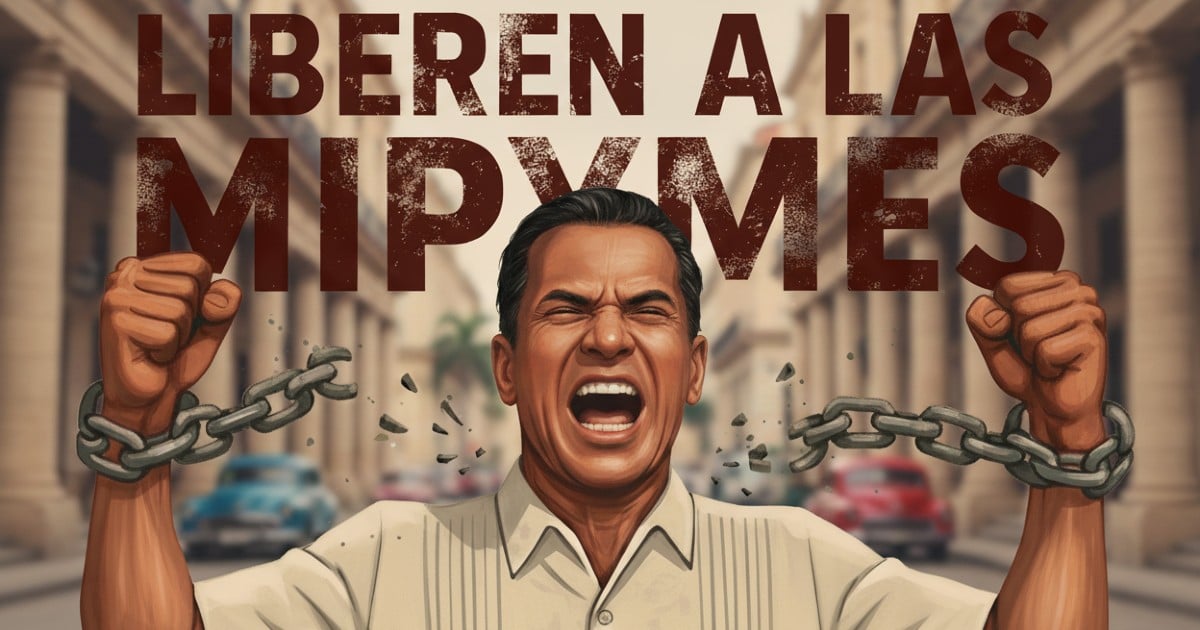
Cuba needs to free small and medium-sized enterprises (mipymes) from the bureaucratic and political chains that stifle them. They should be able to import and export with fewer obstacles, access financing, establish partnerships, and grow without fear of confiscation. It is essential to establish a solid legal framework that provides real guarantees to Cuban entrepreneurs. The country needs more entrepreneurs, more competition, and more creativity.
Micro, small, and medium enterprises have shown that Cubans know how to produce, organize, and thrive when given the opportunity. The future of Cuba relies on creating spaces for economic freedom, not closing them.
Filed under:
Opinion article: Las declaraciones y opiniones expresadas en este artículo son de exclusiva responsabilidad de su autor y no representan necesariamente el punto de vista de CiberCuba.