
Related videos:
A federal judge in Washington extended until September 16 the order preventing the Trump Administration from deporting hundreds of unaccompanied Guatemalan children.
The information was confirmed by the agency EFE, which detailed that the decision was issued this Saturday by Timothy James Kelly, a judge of the District Court for the District of Columbia.
The measure keeps the minors in custody until the details of the case are examined.
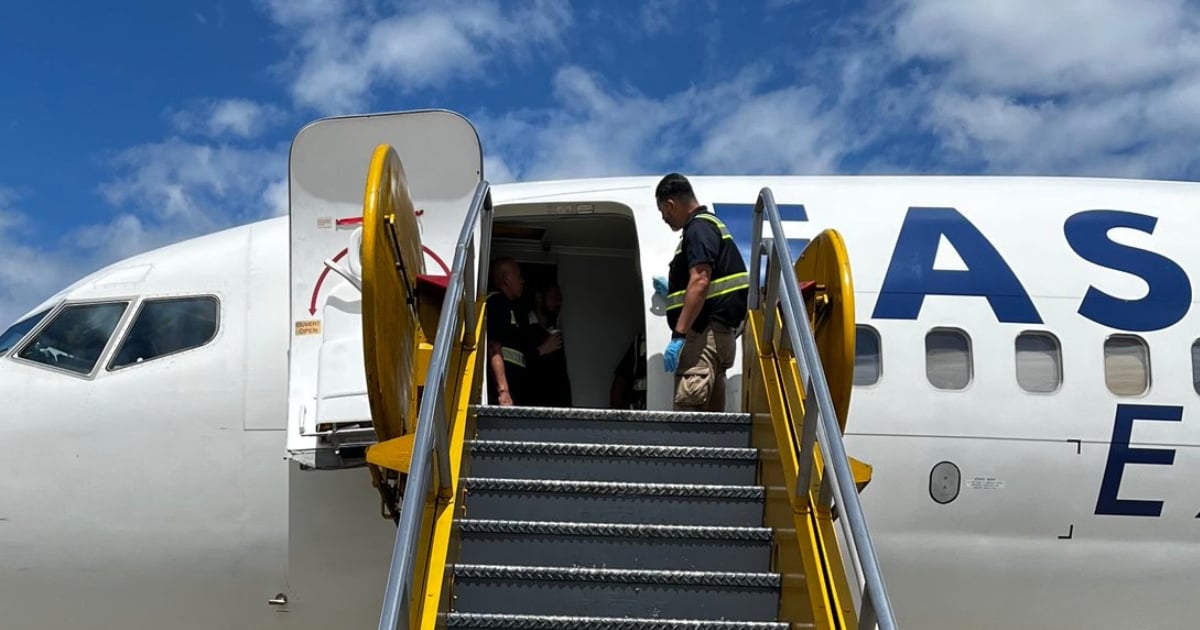
U.S. authorities had attempted to deport 76 minors in August who were already on a plane bound for Guatemala.
Additionally, there was a group of 327 children deemed "eligible for reunification with their parents or relatives" in the Central American country, according to court documents.
The lawyers representing minors aged 10 to 16 reported that the Government violated due process by ignoring pending cases in immigration courts and failing to uphold the special protections afforded to minors who crossed the border alone from Mexico.
"To be clear: the defendants are ordered not to transfer, repatriate, remove, or facilitate the transportation of any of the plaintiffs or members of said putative class from the United States," Judge Kelly emphasized in the ruling.
The president of Guatemala, Bernardo Arévalo, announced on September 1 that his government was prepared to receive up to 150 unaccompanied minors per week, in coordination with U.S. authorities, as reported by EFE.
In August, the Office of the Administration for Children and Families (HHS) under the Department of Health and Human Services had in custody 2,011 unaccompanied minors, although it did not specify their nationalities, the cited source emphasized.
The repatriation of migrant children has become a challenge for the Trump Administration due to the restrictions of the Flores Agreement, signed in 1997, which stipulates that undocumented minors cannot remain in detention centers for more than 20 days and must be provided with conditions that ensure their safety and well-being.
The extension of the court order provides a temporary reprieve for the affected minors while the U.S. justice system decides whether they will have access to protection mechanisms in the country or if they will face mass deportation to Guatemala.
Amid the tightening of immigration policy in the United States, over 3,700 students have disappeared from the Miami-Dade school system, an alarming number attributed to the fears of immigrant families about potential immigration raids.
This phenomenon, according to educators and community leaders, reflects the direct impact of the measures implemented by the Immigration and Customs Enforcement (ICE), which have created an atmosphere of anxiety and withdrawal in vulnerable communities.
A federal judge recently blocked the expansion of the accelerated deportation program promoted by the Trump administration, arguing that this practice violated the due process rights of migrants, including minors.
The decision prevents undocumented immigrants who have been in the country for up to two years from being deported without a judicial hearing, which represents a significant obstacle to efforts for mass deportation.
In that same context, another court ruling halted the immediate deportation of migrants with humanitarian parole, including thousands of children and adolescents who legally entered the country for humanitarian reasons.
The measure canceled three key orders issued by the Trump administration that facilitated the expulsion of these migrants, particularly those who had not yet completed a year of stay, which directly impacted those seeking to regularize their status under the Cuban Adjustment Act.
The issue of the deportation of minor citizens has sparked significant controversy. A 10-year-old American girl, receiving treatment for brain cancer, was deported to Mexico along with her family, after being detained during a medical trip. 7
The Trump administration argued that it was the parents' decision, which has been contradicted by testimonies gathered after the incident. This case sparked condemnation from human rights organizations and a federal investigation.
The Secretary of State, Marco Rubio, attempted to clarify that the children were not deported, but rather accompanied their mothers, while the DHS Secretary, Kristi Noem, insisted that the official policy is to keep families united.
However, reports of forced separations and wrongful deportations, including of minor citizens, continue to accumulate in the courts and in public opinion.
Frequently asked questions about the deportation of migrant children in the U.S.
Why was the order that prevents the deportation of Guatemalan children in the U.S. extended?
The order was extended to allow for a more in-depth analysis of the case and to ensure that the rights of minors are respected, amid allegations of violations of due process by the government of Donald Trump.
What is the Flores Agreement and how does it affect migrant children?
The Flores Agreement is a pact that regulates the detention of migrant minors and establishes minimum conditions for their custody, limiting their stay in detention centers to 20 days and ensuring their well-being. This agreement has been an obstacle for the Trump administration in its deportation policies.
What is the stance of the Guatemalan government on the deportation of migrant children?
The government of Guatemala, led by Bernardo Arévalo, has expressed a willingness to receive up to 150 unaccompanied minors per week, in coordination with U.S. authorities, to facilitate family reunification.
What role does the Trump administration play in the handling of unaccompanied migrant children?
The Trump administration has intensified immigration control measures and has unsuccessfully attempted to eliminate protections such as the Flores Agreement. Additionally, it has faced criticism for violating the due process rights of migrant minors.
Filed under: