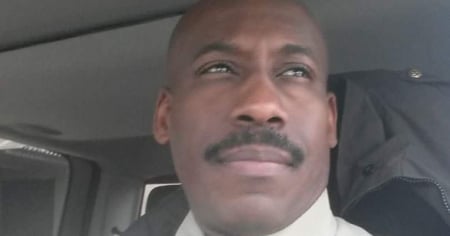
The Cuban user @el_pepe9o, known for sharing anecdotes from his life on social media, posted a video where he recounts his experience as a new teacher in Cuba at the age of 16.
"Long before wearing this uniform, at just 16 years old, I began my working life in Cuba. I was part of one of the many failed experiments of the dictatorship, an emerging teacher", he says at the beginning of the video. The narrative, filled with personal memories and criticism of the educational system, has gone viral due to the identification of many users who experienced similar situations.
“In 2007, at just 16 years old, this individual here became Professor Pepe, a teenager in charge of a second-grade classroom with 25 children under his care,” he recounted, adding that his training consisted of a “crash course lasting only 6 months with minimal resources and very little guidance.”
According to him, the incentives to join the program were to avoid mandatory military service and to gain access to a university education without having to take entrance exams. “Many young people, like me, ended up as teachers, not out of calling, but for their own benefit,” he said.
The young man recalls his parents' disbelief when they first saw him as a teacher. “The look of astonishment and uncertainty,” he mentions, was evident. His salary was “425 Cuban pesos a month, which at that time was approximately $17.”
The testimony concludes with a reflection on the long-term consequences of such policies: “If you wonder why the vast majority of today's Cuban generations cannot speak, lack formal education, cannot write, and cannot think, it is thanks to the revolution.”
Several comments on the post share similar experiences, such as having very young teachers or being emerging former teachers themselves. Other parents recounted how challenging it was to entrust their children's education to teenagers. “My son had a 16-year-old teacher from 1st to 3rd grade, and it was quite a challenge to make him understand that he had to listen to her,” wrote one user.
There were also those who appreciated the creator's sincerity, especially for his final words: “I want to take this opportunity to apologize to all my students for all the mistakes I know I must have made, even though despite all the bad, I loved watching you grow.”
Days before publishing this video, @el_pepe9o shared that he had been promoted to sergeant in the U.S. Army, where he was one of only two soldiers promoted this month within his specialty. “After months of effort, frustration, and a lot of patience… Finally SGT Avalo!” he wrote alongside a video of the moment he received the insignia.
Her story has resonated with many Cubans who emigrated, worked as emerging teachers, or experienced the educational crisis on the island in recent decades.
The figure of the emerging teacher arose in the context of the so-called Battle of Ideas and was one of the most controversial measures implemented by Fidel Castro's regime to address the shortage of educators. Young individuals, barely 16 or 17 years old, without adequate pedagogical training, were placed at the front of classrooms. The experiment had visible consequences on the educational quality of an entire generation.
During that period, many classrooms in Cuba turned into a real disaster. The poor preparation of teachers and their lack of experience led to total disillusionment among parents and students. The emerging teachers' program was part of a series of makeshift measures that negatively impacted the country's trajectory.
Frequently Asked Questions about the Emerging Teachers Program in Cuba
What is an emerging teacher in Cuba?
An emerging teacher in Cuba was a young person, usually 16 or 17 years old, who took on the responsibility of teaching in classrooms without sufficient pedagogical training. This program emerged during the Battle of Ideas to alleviate the shortage of teachers, and it is considered a failed experiment due to its negative impact on educational quality.
What were the incentives to become an emerging teacher in Cuba?
The young people who became emerging teachers did so mainly for two incentives: to avoid mandatory military service and to gain access to a university career without having to pass entrance exams. These incentives attracted many young individuals who had no passion for teaching.
How did the emerging teachers program impact education in Cuba?
The emerging teachers program had a significant negative impact on education in Cuba. The lack of preparation and experience among young teachers resulted in poor education, which has been identified as one of the reasons many generations of Cubans lack proper formal education.
What criticisms has the Cuban educational system received regarding the use of emerging teachers?
The Cuban educational system has faced severe criticism for the use of emerging teachers, as this improvisational measure is regarded as a failure that has negatively impacted the quality of education. Parents and students expressed disbelief and distrust upon seeing untrained teenagers in front of the classrooms, leading to widespread disillusionment.
Filed under: