
Related videos:
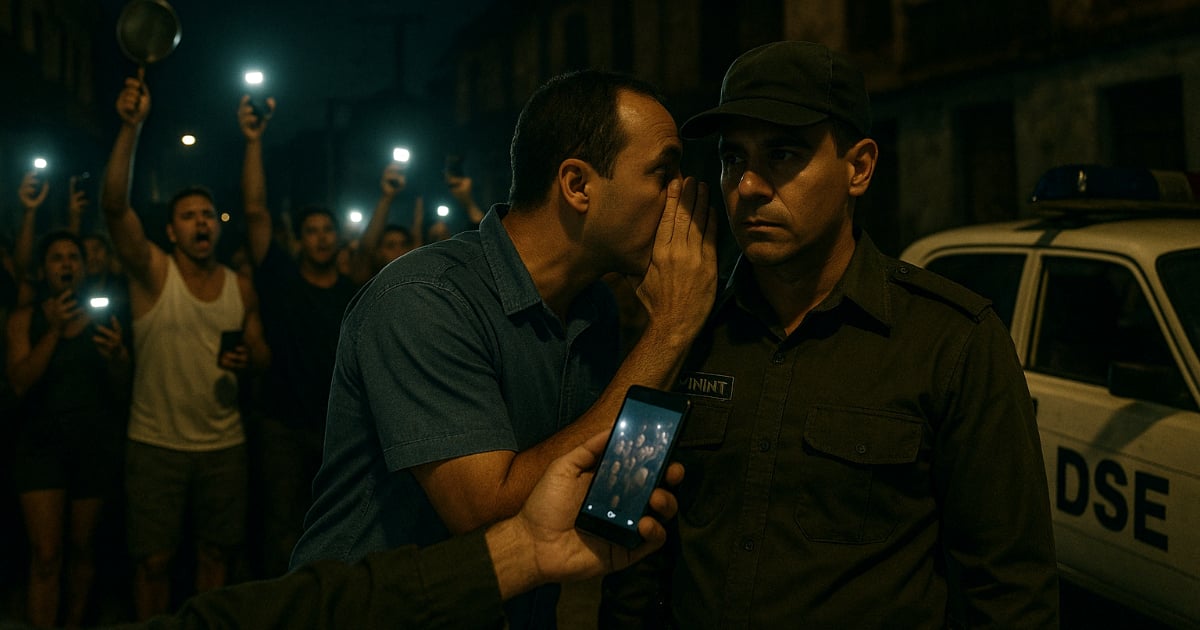
The recent publication by CiberCuba regarding two citizens from Holguín identified as informants for the Department of State Security (DSE) triggered a wave of reactions on Facebook, where thousands of Cubans expressed their strong rejection of the informers.
The comments collected on the media's profile reflect a widespread consensus: in Cuba, there is no worse stigma than being a "chivato" in service of a repressive and impoverishing regime that targets those who criticize it and demand their rights.
The original report, which revealed the alleged collaboration of Adrián Pupo Cuesta, known as El Mocho, and Wilder César Tejeda Ruiz in the detention of at least seven protesters in Gibara, sparked outrage among readers.
For many, these cases symbolize an open wound in Cuban society: denunciation as a tool of political repression.
"The lowest rung of humanity"
The initial reactions aligned on one point: being an informant is, for the majority, an unforgivable betrayal. Some described snitching as "the worst flaw a person can have" and "the lowest rung of humanity".
Others emphasized that denouncing carries a collective disdain and public shame. Some recalled that "it is sad and embarrassing to be a snitch for a government that has destroyed Cuba", while others pointed out that "they evoke more disgust and revulsion than the dictators themselves," recalling that those who collaborate with the DSE suffer the same hardships as the rest of the people.
Indignation and calls for social disdain
The tone of the comments shifted between moral condemnation and calls to remember the names and faces of the informants. "Never forget" was one of the most repeated phrases.
The disdain towards informants was also framed within the precarious situation the country is facing. Many lamented that, "with the hunger and need they are enduring", they would "support the dictatorship", and several referred to them as "starving dogs" who sell out for a bag of food or minor privileges.
“They used to charge 33.33 pesos, today it's free”, a user quipped, referring to the lack of real incentives to continue reporting.
Critiques of the regime's role and the culture of denunciation
Beyond the direct attacks, several comments pointed to the root of the problem: the very structure of power in Cuba.
It was said that "the country is filled with that" and that the informant "is wilder than purslane, typical of the crisis and misery, because values are lost, among them dignity."
Others reported the use of common criminals as informants and claimed that State Security also employs them to carry out acts of vandalism during protests with the aim of discrediting civic demonstrations.
Between hatred and distrust
The hostility towards informants reached extreme levels in some messages that called for direct retaliation. “If every time they found a snitch they crushed them, no one would do it anymore,” wrote a commentator, reflecting the accumulated burden of hatred.
These types of reactions, though violent in nature, illustrate the extent of social rejection. For many, the informant is not only seen as an accomplice of the regime but also as an enemy of the neighborhood, the neighbor, and the friend.
There were also ironic comments, such as the one that pointed out: “It’s the only thing we are efficient at in this country”.
A reflection of citizen frustration
The hundreds of comments on Facebook not only reflect the rejection of the informants but also the extent of social discontent. References to scarcity, endless blackouts, and lack of freedoms were evident in nearly every contribution.
"The people of Gibara are asking for what we all want", expressed a reader, connecting the local protest with the national outcry. Others warned about the possibility that "history could repeat itself" and that, as in other times, the informers may end up facing condemnation from their own community when the regime loses power.
“Rome pays traitors, but despises them”, another recalled, quoting an old saying that encapsulates the popular sentiment.
The post about the informants in Gibara became a reflection of the mood in Cuba: outrage, fatigue, and a strong rejection of the figure of the informant.
For most, being a snitch is not just a "flaw," but the most despicable betrayal against a people who, amidst the darkness of blackouts and shortages, only demand the bare minimum: light, food, and freedom.
Filed under: