
Related videos:
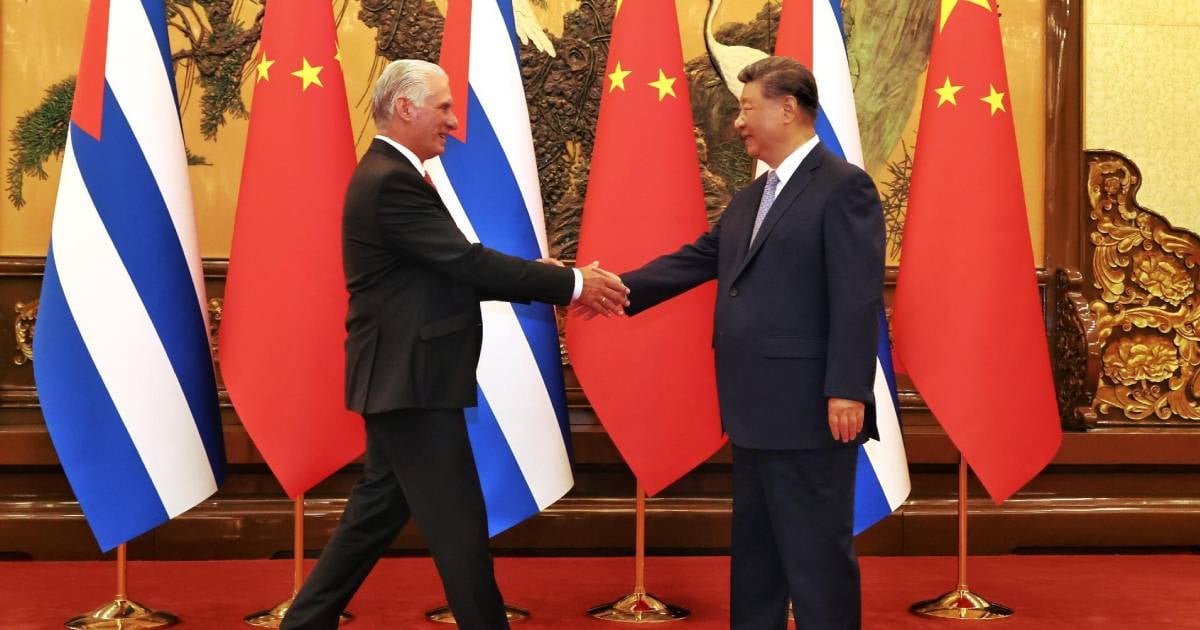
The Chinese president, Xi Jinping, assured this Sunday that Beijing is ready to strengthen ties with Cuba and described the bilateral relationship as "a model of solidarity and cooperation among socialist countries," amid the deep crisis that the Island is facing.
According to the state agency Xinhua News, the statements were made while exchanging congratulations with Miguel Díaz-Canel on the 65th anniversary of diplomatic relations between the two countries.
The Chinese leader emphasized that the ties, which have existed since Havana recognized "New China" in 1960, have also become an example of "sincere mutual assistance" among developing countries.
According to Reuters, Xi stated that Beijing is ready to "deepen high-level mutual political trust, advance development cooperation, strengthen comprehensive strategic coordination, and jointly safeguard international fairness and justice."
Dependency on Beijing amid the crisis
The speech comes at a time when the Cuban regime is intensifying its dependence on China to navigate the internal crisis, characterized by blackouts, inflation, shortages, and increasing social unrest.
In recent months, Havana has sought support in its relationship with Beijing through economic and security agreements. During his visit to Beijing in September, Díaz-Canel signed eleven cooperation commitments that cover areas from agriculture and infrastructure to artificial intelligence, biotechnology, and the cultural and media sectors. The leader expressed his “deep gratitude” to Xi for his “personal involvement and sensitivity” towards Cuba, in a gesture that highlights the asymmetry of the relationship.
In addition, in August, the Cuban Minister of the Interior, Lázaro Alberto Álvarez Casas, met in Beijing with his Chinese counterpart, Wang Xiaohong, to seek support for “security and law enforcement”.
Xinhua highlighted that China is willing to deepen cooperation in police training, personnel exchanges, and social control mechanisms, a key area for a regime that relies on repression to contain potential popular uprisings.
An authoritarian block with a military backdrop
The alliance has also been strengthened on the political and military front. In May, Díaz-Canel met with Xi in Russia, where the Chinese leader reiterated his support for Cuba's "sovereignty" in the face of "foreign interference and the blockade."
Havana, in turn, publicly aligned itself with the narrative of Beijing, Moscow, and Pyongyang in events filled with military and geopolitical symbolism.
The closeness with China not only means diplomatic support but also access to financing, investments, and technology at a time when the Island is practically isolated from international markets and facing increasing discredit in the West.
Between the official discourse and Cuban reality
While Havana showcases its achievements in cooperation with China, Cubans on the Island are facing an opposite reality with hospitals lacking supplies, collapsed transportation, power outages, and salaries that cannot cover the basic necessities.
With the commemoration of the 65th anniversary of diplomatic relations as a backdrop, Xi Jinping's narrative provides the Cuban leadership with a veneer of international legitimacy. However, for millions of Cubans, the strengthening of that alliance primarily signifies the consolidation of a political model that prioritizes the survival of the regime over the needs of the people.
Frequently asked questions about the relationship between China and Cuba
How does Xi Jinping describe the relationship between China and Cuba?
Xi Jinping described the relationship between China and Cuba as "a model of solidarity and cooperation between socialist countries." This statement underscores Beijing's commitment to strengthening ties with Havana amid the crisis facing the island. The relationship has been solidified over 65 years of formal diplomatic ties, with a focus on mutual assistance and cooperation in various fields.
What kind of cooperation does Cuba seek with China in the current context?
Cuba seeks extensive cooperation with China in areas such as agriculture, infrastructure, artificial intelligence, biotechnology, and security. Havana has intensified its reliance on Beijing as a strategy to address the internal crisis, signing agreements that encompass everything from the economy to security, even including police training and social control mechanisms. This collaboration aims to mitigate the effects of the economic and social crisis on the island.
What are the implications of the military relationship between China and Cuba?
The military relationship between China and Cuba involves strengthening cooperation and strategic coordination. This alliance has been reflected in the exchange of military personnel and China's willingness to elevate military relations to a "new level." These actions have raised international concerns, especially regarding the potential establishment of espionage bases and the increasing Chinese military presence on the island, which could affect the balance of power in the Caribbean region.
How does the cooperation between China and Cuba affect the internal situation of the island?
The cooperation with China appears as a lifeline for the Cuban regime, but it does not address internal shortages. While the Cuban government showcases its agreements with China as achievements, the population faces a reality of blackouts, food shortages, and collapsed basic services. The relationship with China provides economic and diplomatic support, but for many Cubans, it signifies the consolidation of a model that prioritizes the survival of the regime over the well-being of the people.
Filed under: