
Related videos:
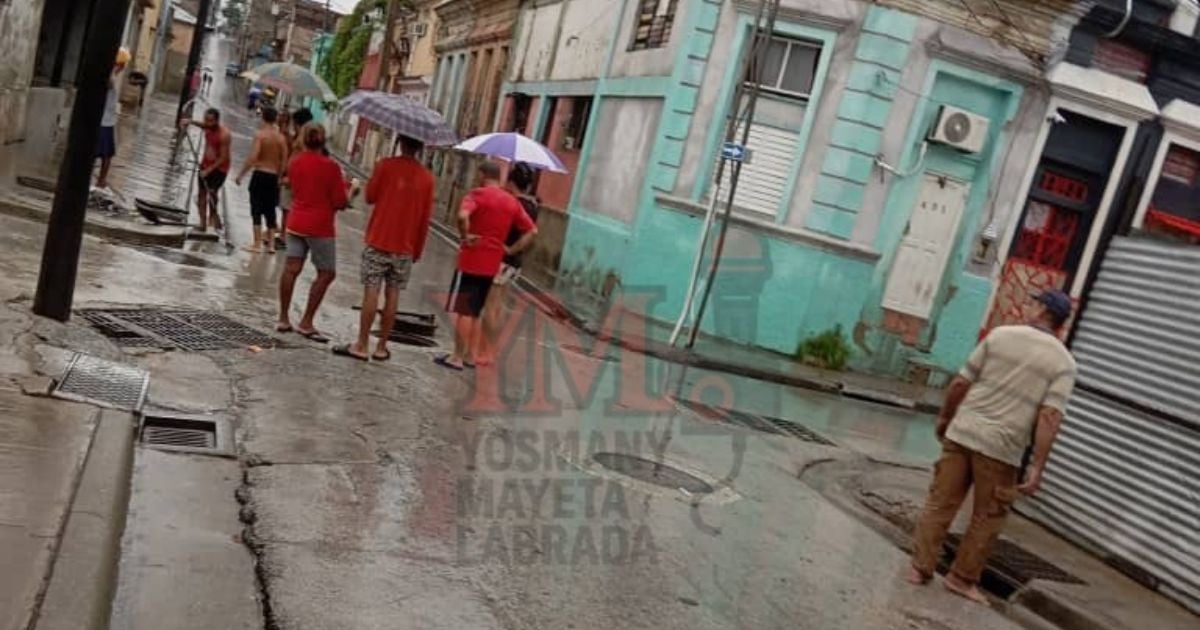
Although the regime boasts of impeccable preparations for the passage of meteorological phenomena, the reality is far from the official narrative: the intense rains associated with Tropical Storm Imelda caused flooding in several areas of eastern Cuba, and in the midst of this emergency, the residents of San Félix Street in Santiago de Cuba had to do the work that the authorities refused to undertake.
According to a report published this Sunday on by journalist Yosmany Mayeta, residents were forced to take shovels, buckets, and improvised tools to clear the blocked drains, as the water had no outlet and the homes were beginning to flood.
Despite multiple requests, provincial authorities did not send Community brigades or support teams, forcing residents to act on their own after the torrential rain, even though this is a major artery of the city's historic center.
Women, men, and youth came together for a community effort that, more than just a show of solidarity, reflects the despair over the lack of institutional response.
This episode highlighted the neglect the city is facing and the official indifference towards everyday issues, Mayeta emphasized.
While the people organize to address what falls under the government’s responsibility with their own hands, the leaders barely show up to justify their inaction or pose for the cameras, without offering concrete solutions to a crisis that recurs each year with the rains.
Similarly, the intense rains recorded in the municipality of Guamá, Santiago de Cuba, caused severe damage to the Cañizo bridge, a vital route for local traffic that is now on the verge of collapse.
According to a report published this Sunday by the official TV Santiago on its Facebook page, the weather phenomenon undermined one corner of the infrastructure, exposing the concrete base that supports the structure and compromising its strength.
This is not the only consequence left by Imelda during its passage through eastern Cuba. The Charco Mono reservoir, one of the most affected by the drought in Santiago de Cuba, achieved a significant recovery after the intense rains recorded in the region: in just 24 hours, it went from dead volume to reaching 55.1 percent of its capacity.
In Guantánamo, the weather phenomenon caused the collapse of the provisional bridge in the municipality of Imías this Saturday, leaving several communities in the area cut off from communication.
Furthermore, five people were rescued after the overflow of the Sígua River in the town of the same name in Santiago de Cuba due to the heavy rains that battered Eastern Cuba.
However, the most tragic chapter left by Imelda was the collapse of a house in Santiago de Cuba due to a landslide caused by heavy rainfall, in which a 60-year-old man lost his life while he was sleeping. The victim was identified as Luis Mario Pérez Coiterio.
Frequently Asked Questions about the Situation in Santiago de Cuba
Why did the residents of Santiago de Cuba have to clean the drains on their own?
The residents of Santiago de Cuba were compelled to clean the drains themselves because the provincial authorities did not send support teams to clear the drainage systems, despite numerous complaints. This situation reflects the neglect and lack of institutional response to meteorological emergencies.
How does the drought affect the residents of Santiago de Cuba?
The drought in Santiago de Cuba has caused the distribution of drinking water to extend to cycles of over 30 days, leaving many communities without regular access to water. Reservoirs and water sources are at critical levels, exacerbating the scarcity situation and forcing the people of Santiago to rely on water trucks, which are often insufficient.
What infrastructure problems is Santiago de Cuba facing after the heavy rains?
The intense rains have exposed the deficiencies in the drainage system, causing flooding, collapses of homes, and landslides. The lack of maintenance and structural solutions from the authorities has exacerbated these issues, putting numerous families at risk.
What impact do power outages have on the daily lives of people in Santiago?
Frequent blackouts in Santiago de Cuba have seriously affected the quality of life of its residents, forcing families to sleep on porches to escape the heat and causing food losses due to lack of refrigeration. Furthermore, they have created a significant emotional impact, especially on children.
Filed under: