
Related videos:
The city of Ciego de Ávila receives only 280 liters of water per second, when it needs at least 600 to meet the basic demand of its population, while two pumps that could double the supply remain uninstalled, held up in a workshop in the province of Mayabeque due to a lack of imported wire.
The director general of Water Supply and Sewerage, Miroslava Reyes González, confirmed to the newspaper Invasor that the turbines, each capable of delivering 100 liters per second, were supposed to be installed in San Fernando, to the south of the city, but they are still in a workshop in San José de las Lajas, "as the imported wire needed for this work has not yet been received."
With only 46% of the necessary flow, the distribution cycle cannot be less than seven days, and Reyes admitted that, under current conditions, reducing it is impossible. The situation requires allocating the supply day not only to delivering water through the network but also for urgent unclogging and the use of trucks to reach disconnected households.
The precarious situation is also evident in the city of Morón, where 362 graves remain uncleaned because out of the 13 available teams, only five are operational. The others are out of service due to a lack of tires and batteries, the newspaper reported.
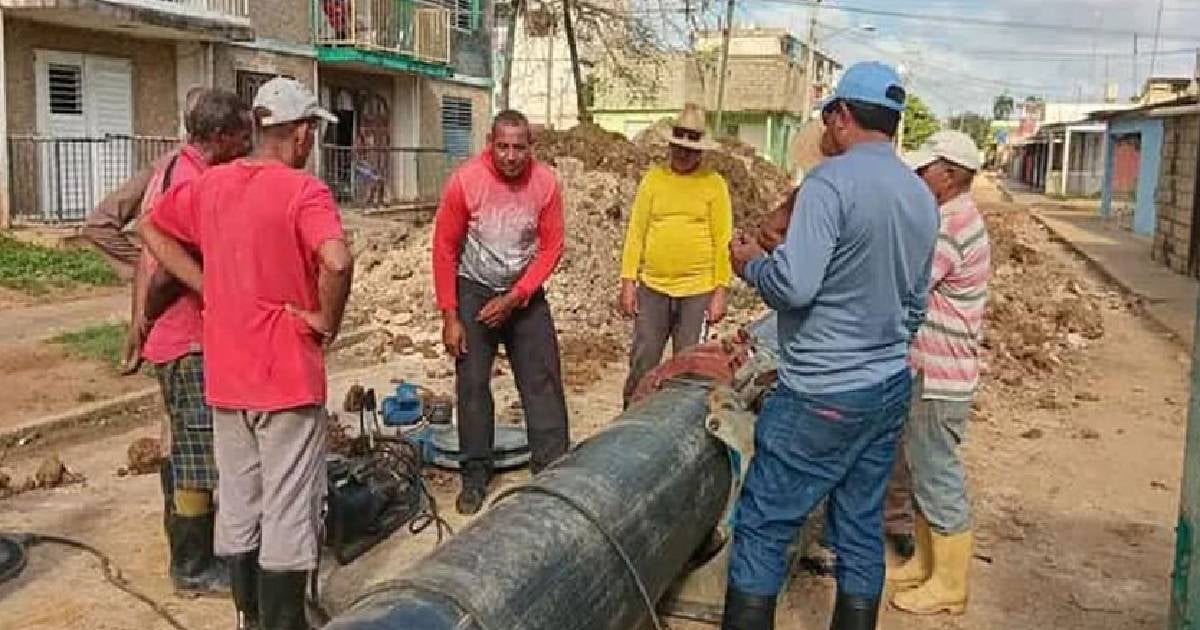
The situation there is equally tense. Currently, streets in the Villamil neighborhood are being excavated to install new high-density pipes and renew the deteriorated sewer system, “which will contribute to the evacuation of wastewater and greater efficiency in the city's drainage,” noted Invasor in a previous report.
Additionally, efforts are being made to reactivate the pumping station on Gonzalo Marín Street, and work is underway to clear obstructions, remove debris, and maintain the hydrosanitary networks in the area bordered by Libertad and Padre Cano streets, in anticipation of the upcoming cyclone season and the potential for heavy rains associated with meteorological phenomena.
Authorities insist that efforts are being made, but the lack of basic supplies and the nearly complete dependence on imported parts leave thousands of residents in Avila with a fundamental right compromised: regular and dignified access to potable water.
In March, it was reported that the authorities extended the water distribution cycle to nine days in the city of Ciego de Ávila, a decision that has directly impacted the daily lives of its residents and highlights the severity of the water crisis facing the area.
The decision, which aims to alleviate the water shortage in the municipality, has been made in response to the reduction in flow from the main sources and the decline in the performance of the pumping equipment.
Last April was the driest month recorded in Ciego de Ávila since 2008, with precipitation levels below 30% of the historic average, according to preliminary data from the Provincial Meteorological Center, which warned about the worsening drought in the area.
This deficit adds to a sustained trend of low rainfall in the last five years, due to the decrease in precipitation in the region. The central province has been facing a crisis since 2021: 35 of the last 51 months (69%) recorded rainfall below historical averages.
Frequently Asked Questions about the Water Crisis in Ciego de Ávila
What is the current situation of the water supply in Ciego de Ávila?
The city of Ciego de Ávila receives only 280 liters of water per second when it needs at least 600 to meet the basic demands of its population. This situation is worsened by the lack of installation of two pumps, due to the shortage of imported wire, which prevents the doubling of the necessary water supply for the city.
Why aren't the necessary water pumps being installed in Ciego de Ávila?
The two pumps that could increase the water supply in Ciego de Ávila are stuck in a workshop due to the lack of necessary import wire for their installation. This situation reflects the reliance on imported parts and the lack of resources that hinder solutions to the water crisis.
How does the water crisis affect the daily lives of the residents of Ciego de Ávila?
Due to the water shortage, the distribution cycle cannot be less than seven days, which requires the use of trucks to supply water to homes disconnected from the system. Additionally, the scarcity impacts the quality of life, making basic daily tasks difficult and generating concern among the population.
What measures are being taken in response to the drought in Ciego de Ávila?
To combat the drought, a 24-hour water distribution cycle has been implemented every nine days, utilizing different supply sources and prioritizing the most affected areas. However, the lack of resources and reliance on imports limit the effectiveness of these measures.
Filed under: