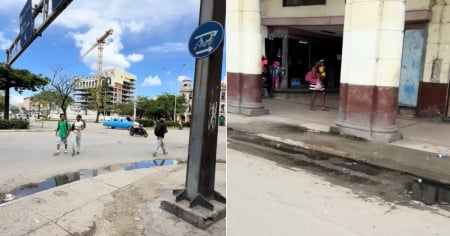
A video created with artificial intelligence is moving thousands of Cubans both on and off the island. In just a few seconds, the piece showcases the transformation of Havana: from destroyed streets, crumbling buildings, and accumulated trash to a clean, tree-lined city with restored facades and an air of modernity that many associate with the developed world.
The post has gone viral and, along with the excitement it generates, has sparked a debate filled with emotions, hopes, and concerns about the future of Cuba.
I hope this is true one day, even if I can't see it, commented a user, reflecting the wish of many Cubans who, despite the distance or disillusionment, still dream of a renewed country.
Others were more spiritual, saying that “every day I ask God for my Cuba to be free,” wrote another user, while a Cuban in exile summed up the feelings of many, stating that “a video can't make you feel that much emotion, my God.”
The debate about the identity of Havana
The video also sparked controversy among those who fear that a "modern" future will erase the architectural essence of the capital. “Don’t destroy the architecture of Havana. With good architects, many buildings can be rebuilt, at least the facades,” commented an internet user.
Others warned that a reconstruction without preserving the historical elements would risk turning the city into a landscape of "glass and concrete boxes without character," as one user pointed out, comparing the situation to Miami.
Beyond aesthetics, many pointed to the social and political background. “True reconstruction and freedom must start from within us. We have lost our way as a society,” reflected a commentator.
Another was more direct: “Without communism, that can be done in just 10 years.”
There were also those who brought up the economic issue: “And who will be the owners of those houses and buildings, the people or will we have to pay outrageous rents like in Europe or the United States?”.
A shared emotion in the region
The impact of the video transcended Cuban borders. A Chilean user confessed: “I can’t help but feel emotional watching this, what happiness for our Cuban brothers, I hope to see Cuba reborn one day.” A Venezuelan expressed something similar: “I wish you all happiness, abundance, and prosperity.”
However, not everyone received the message with optimism. A critical voice concluded with disappointment, mentioning that "nothing is going to happen. No one is going to do anything for us, those on the inside are afraid, and those of us who left have given up."
The video has become a mirror of the desires and frustrations of an entire nation. A brief piece, created by a machine, yet capable of igniting tears, discussions, and, above all, the eternal question: when will the day come when the dream of a free, prosperous, and beautiful country ceases to be virtual?
Frequently Asked Questions about the video "The Cuba of Tomorrow" and the current context in Cuba
What is the video "La Cuba del mañana" that has gone viral about?
The video, created with artificial intelligence, showcases a transformation of Havana, transitioning from a dilapidated city to a modern and restored one, evoking emotions and sparking discussions about the future of Cuba among Cubans.
What emotions has this video stirred among Cubans?
The video has sparked feelings of hope and aspirations for a better future for Cuba, but it has also provoked criticism and concerns about preserving the architectural identity of Havana and the economic challenges facing the country. Some Cubans express hopes of one day seeing a free and prosperous Cuba, while others fear that reality may not allow for such changes.
What has been the reaction to the possibility of modernizing Havana?
There are divided opinions: some fear that modernization will erase the historical essence of the city, while others advocate for a renewal that preserves the facades and architectural character of Havana. There are parallels with cities like Miami, where modernization may have altered the urban identity.
What obstacles are mentioned for achieving a similar transformation in the Cuban reality?
The main obstacles mentioned are the political system and the economic crisis. Some users believe that without the communist regime, transformation could be possible within a decade. Additionally, there are questions about who would own the homes and whether the Cuban people could afford the high living costs associated with such modernization.
Filed under: