
Related videos:
Health authorities in the municipality of Sagua la Grande, in Villa Clara, have issued a warning about the increase in fever cases in recent weeks, amidst an outbreak of several arboviruses that has affected various provinces in Cuba.
According to the information released this Wednesday in official media, an intensive plan for surveillance and vector control has been activated in the Isabela de Sagua Popular Council.
They also implement actions that include destructive focal treatment in 100% of the blocks, the use of abate in all water reservoirs, and three days of indoor fumigation to break transmission chains associated with mosquitoes.
Additionally, sanitary brigades conducted house-to-house surveys in 25 identified blocks that showed the highest incidences of fever.
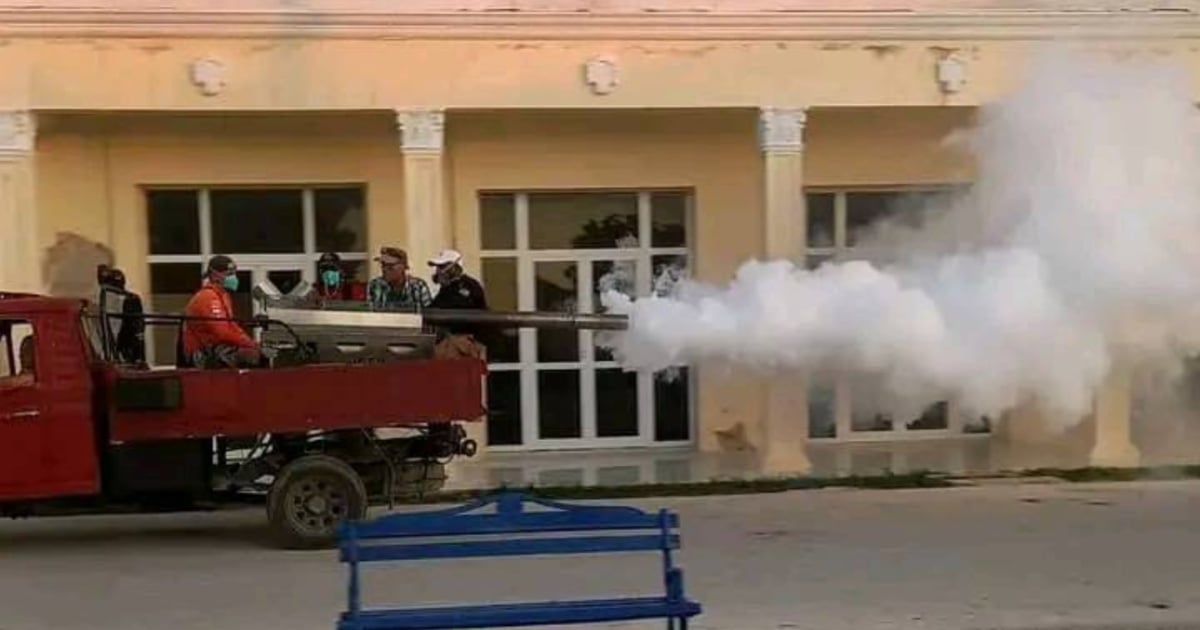
On the evening of this Tuesday, the first round of fumigation with adulticide treatment was carried out in the streets to reduce the population of adult insects.
This fact adds to the complex epidemiological scenario in Cuba, where four arboviral diseases are circulating: dengue (endemic), chikungunya, zika, and oropouche, the latter not transmitted by Aedes mosquitoes, but by other types of mosquitoes.
The key vectors are Aedes aegypti and Aedes albopictus; accumulated waste, rainfall, and high temperatures favor their reproduction.
In Matanzas, there has been a report of the circulation of chikungunya since June, with initial diagnoses in Perico and then in Máximo Gómez.
The authorities are implementing targeted treatment (larvicides), fumigation, adulticides, and peripheral actions. So far, there are no severe or critical cases, and health services are not overwhelmed.
Just in the municipality of Colón, 435 cases of unspecified febrile syndromes were reported in one week, with 40 beds occupied and five patients showing warning signs.
According to the authorities, house-to-house investigations, the removal of illegal dumps, and fumigation are being carried out in the areas with the highest incidence, but these actions are insufficient.
In Matanzas, everyday life has turned into a struggle against fever and resource shortages. The sick are piling up in homes and hospitals, while blackouts and accumulated waste make it impossible to control the mosquito.
Chikungunya is usually not fatal, but it leaves lasting effects and hits hard in a context where there is a shortage of medications, insecticides, and healthcare services.
What proves to be lethal is the combination of shortages, official indifference, and a lack of information, a cocktail that has turned Matanzas into the epicenter of a health emergency that the government is trying to hide, but which has already overwhelmed Cuban households.
Frequently Asked Questions about the Increase in Fever Cases in Isabela de Sagua and the Health Situation in Cuba
What is the current health situation in Isabela de Sagua?
In Isabela de Sagua, a rise in fever cases has been reported in recent weeks, prompting health authorities to activate an intensive surveillance and vector control plan. The measures include indoor fumigation and treatment of water storage to break the transmission of diseases associated with mosquitoes, particularly Aedes aegypti and Aedes albopictus.
What arboviral diseases are currently present in Cuba?
In Cuba, four arboviruses are currently circulating: dengue, chikungunya, zika, and oropouche. These diseases are primarily transmitted by the Aedes aegypti and Aedes albopictus mosquitoes, whose populations thrive due to the accumulation of trash, rainfall, and high temperatures.
How is chikungunya affecting the population of Matanzas?
Chikungunya has hit the population of Matanzas hard, leaving many with high fever and severe joint pain. The disease is not usually fatal, but its aftereffects can last for weeks or months. The situation is worsened by the lack of medications, insecticides, and proper medical attention, in a context of unsanitary conditions and power outages.
What measures are being taken to control the arboviral outbreak in Matanzas?
To control the outbreak of arbovirus in Matanzas, authorities have implemented intensive fumigation actions, elimination of mosquito breeding sites, and active house-to-house searches. However, these measures arrive too late and with insufficient resources, relying on support from volunteers and personnel from other sectors such as sports and agriculture.
How has the Cuban government responded to the health crisis in Matanzas?
The Cuban government has acknowledged the shortage of resources to tackle the health crisis in Matanzas, particularly concerning insecticides and trained personnel. Although they have implemented a national plan to combat arboviruses, its effectiveness is questionable due to the structural fragility of the healthcare system and the lack of basic sanitary conditions.
Filed under: