
Related videos:
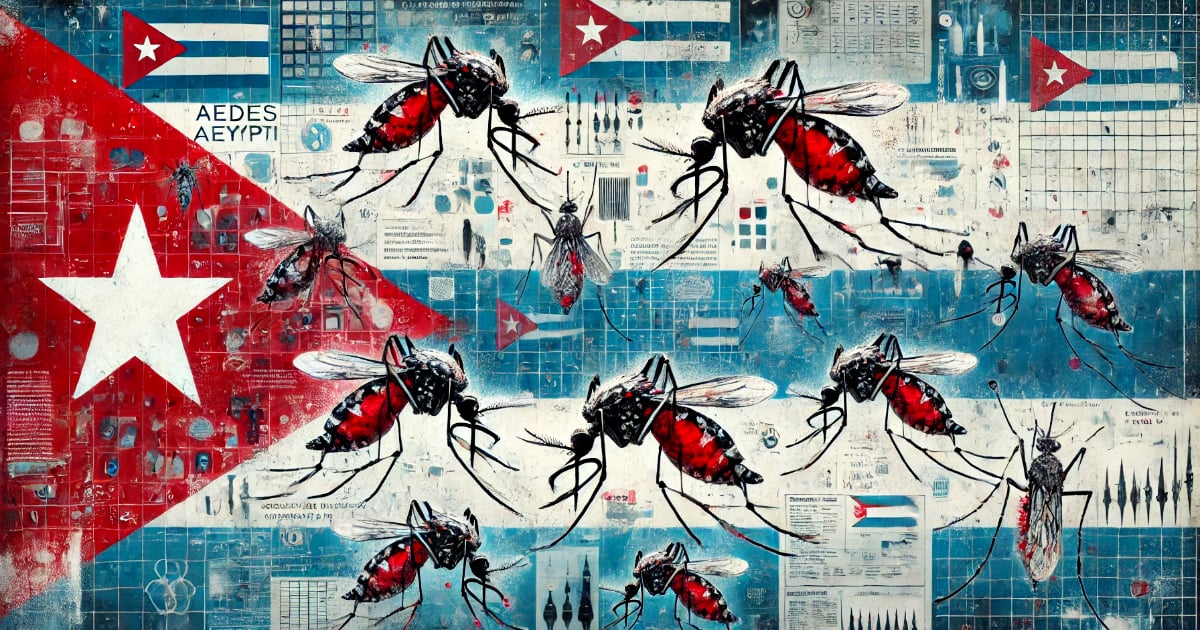
Cuba is experiencing one of the most complex epidemiological crises in recent years: the simultaneous circulation of three mosquito-borne viruses —dengue, chikungunya, and Oropouche—, a phenomenon that international specialists refer to as “combined arboviral infections”.
However, the Ministry of Public Health (MINSAP) does not officially recognize it nor has it modified its surveillance and care protocols to reflect this new reality.
Since July, the province of Matanzas has become the epicenter of a sustained wave of infections that has already reached several provinces in the western and central parts of the country.
Although the authorities acknowledge the "active transmission of dengue" in seven provinces, they refrain from mentioning the coexistence of other viruses, despite medical and community reports describing atypical symptoms and prolonged fever episodes.
The very doctor Francisco Durán, national director of Epidemiology, has publicly acknowledged the detection of chikungunya cases and suspicions of the Oropouche virus in some areas of Matanzas.
But the official discourse continues to address each outbreak in isolation, making it difficult to understand the magnitude of the problem and limiting the health response on the ground.
Three viruses, one vector
Dengue, chikungunya, and Oropouche are arboviruses—viruses transmitted by arthropods such as mosquitoes Aedes aegypti and Culicoides paraensis—that share clinical manifestations: fever, muscle pain, severe headache, skin rashes, and general weakness.
This similarity makes it difficult for doctors to distinguish between them without specific tests, which in Cuba is practically impossible due to the lack of reagents and basic equipment in provincial laboratories.
In hospitals in Cárdenas and Colón, doctors have reported that leukograms and platelet counts, which are essential for detecting early signs of severe dengue, are not being performed, a claim that authorities have sought to deny.
“We are attending to patients with high fever without being able to confirm if it’s dengue, chikungunya, or something else,” said a professional wishing to remain anonymous to CiberCuba. “Without a diagnosis, we are treating blindly.”
This lack is exacerbated by the shortage of essential medications, ranging from pain relievers and intravenous hydration solutions to basic antihistamines.
This is compounded by the intermittent paralysis of the fumigation brigades, which rely on the supply of fuel, insecticides, and voluntary personnel, all resources that the regime has acknowledged to be at "critical levels."
An epidemic within another: Combined arboviruses
Although the term "combined arboviral disease" is not included in official Cuban terminology, its existence is well documented in international scientific literature. It is used to describe contexts in which multiple mosquito-borne viruses circulate simultaneously within a population or infect the same person at the same time.
A global review published in ScienceDirect —“Global prevalence of dengue and chikungunya coinfection” confirms numerous clinical cases of dengue-chikungunya coinfection and warns that its actual incidence is underestimated due to the lack of differential diagnosis in lower-resource countries.
Another study from PLOS Biology ("Arbovirus coinfection and co-transmission: A neglected public health challenge") warns that the co-circulation of viruses transmitted by Aedes aegypti poses a neglected public health challenge, capable of altering the dynamics of outbreaks and clinical outcomes.
Research conducted on the border between Colombia and Venezuela showed the simultaneous presence of dengue, chikungunya, and Zika in patients with acute fever (BMC Infectious Diseases), and studies in Brazil confirmed the coexistence of multiple arboviruses in the same neighborhood (Parasites & Vectors).
In the laboratory, it has been demonstrated that these viruses interact with each other: they can enhance or inhibit one another depending on the order in which the infections occur.
A study from Frontiers in Cellular and Infection Microbiology showed that prior chikungunya infection can partially suppress dengue replication in human cells, but the opposite effect—dengue before chikungunya—can intensify symptoms.
Clinical effects and medical challenges
From a clinical perspective, combined arboviral infections increase the severity of fever presentations and complicate medical responses. Studies in Colombia revealed that up to 22% of children hospitalized with a diagnosis of dengue also presented with chikungunya infection (PLOS Neglected Tropical Diseases).
Co-infected patients may develop persistent fever, bleeding, rashes, debilitating joint pain, and alterations in the liver or central nervous system.
Doctors indicate that, without laboratory tools, it is impossible to differentiate severe dengue from a complex viral co-infection, which can lead to inappropriate or delayed treatments.
In Cuba, these limitations are evident. The hospital network does not have molecular tests (PCR) for arboviruses, and the research centers that could conduct them — such as the Pedro Kourí Institute of Tropical Medicine — operate with minimal resources and lack the capacity to cover the entire country.
A country unprepared to respond
The internationally recommended measures to contain viral co-circulation are not applicable in the current Cuban context.
Mass fumigation is intermittent or nonexistent in many areas due to a lack of insecticides and fuel. Vector control programs operate with reduced brigades and without constant technical supervision.
In hospitals, the shortage of basic medications such as paracetamol, oral rehydration salts, or intravenous solutions limits the proper management of febrile patients.
There are also no sustained public health education campaigns or surveillance systems that integrate the three viruses.
Meanwhile, the official discourse reduces the entire issue to dengue, ignoring that the Aedes aegypti—present throughout the country—may be transmitting more than one virus at a time. This lack of acknowledgment prevents the establishment of unified protocols for diagnosis, isolation, and treatment, leaving both doctors and patients vulnerable to a silent and more dangerous epidemic.
The Cost of Silence
Scientists agree that the co-circulation of arboviruses is a real biological and epidemiological phenomenon, and that the institutional denial of its existence only worsens its effects.
As concluded by PLOS Biology, “the lack of multipathogen surveillance may hinder the early detection of coinfections and delay the public health response.”
In Cuba, where information is centralized and health reports are published with delays, that warning takes on greater significance. Every week without diagnosis or effective fumigation is time gained by the mosquito and lost for public health.
Recognizing the existence of a combined arbovirus crisis is not merely a semantic issue: it is the first step in addressing a reality that is already affecting thousands of Cubans.
And as long as the country continues to treat dengue as an isolated problem, the virus—and its companions—will keep spreading, invisible and intertwined, throughout the archipelago.
Filed under: