The First Deputy Prime Minister of Cuba, Inés María Chapman, acknowledged this weekend the seriousness of the water supply crisis affecting thousands of people, and called for stronger coordination between the national hydraulic system and the Electric Union.
The call comes after months of persistent issues that the government has failed to resolve, despite repeated promises, high-level meetings, and numerous citizen protests in the streets.
During a working session in Havana, Chapman emphasized the need to better coordinate water pumping operations with electric load dispatches, a coordination he considers "quite complicated".
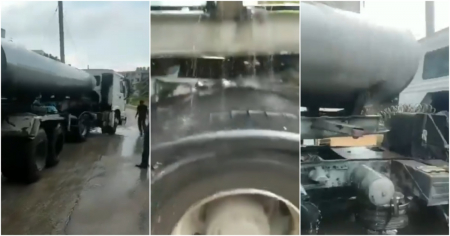
“There are supply systems that require between 4 and 24 hours of electricity service to reach the last area of the population,” admitted the leader, while acknowledging that they have had to move generators to different zones, a measure that had already been announced on previous occasions without sustainable results.
The government did not present new strategies nor set specific deadlines to address the issue. The speech revolved around generalities and calls for joint management, without taking responsibility for the prolonged deterioration of the service.
On his part, the general director of the Electric Union, Alfredo López Valdés, stated that the aqueduct system is constantly monitored.
“We are all mobilized,” he said. However, the situation in Havana contradicts that statement because more than 233,000 people are still experiencing total or partial service disruptions, according to official data.
Water deficit and unfulfilled promises
Currently, the Cuban capital has a water deficit exceeding 2,000 liters per second, and is still operating with only 17 of the 19 required pumping units.
Municipalities such as Diez de Octubre and Plaza de la Revolución are reporting severe impacts, especially in the higher areas, where there is not even enough pressure for water to reach the homes.
Chapman proposed that delegates, political coordinators, and mass organizations visit the affected communities to "explain" the situation.
Government responses remain focused on information control, with no clear indications of when a basic service like water will be restored.
Frequently Asked Questions about the Water Crisis in Cuba
What is the current situation of the water supply in Havana?
Havana is facing a water supply crisis that affects more than 233,000 people. The Cuban capital has a water deficit exceeding 2,000 liters per second and operates with only 17 of the 19 necessary pumping units. Higher areas like Diez de Octubre and Plaza de la Revolución are particularly affected, as there is not enough pressure for the water to reach homes.
What measures has the Cuban government taken in response to the water crisis?
The First Deputy Prime Minister, Inés María Chapman, has called for enhanced coordination between the hydraulic system and the Electric Union, but no new strategies or specific deadlines have been presented to address the issue. Government responses focus on informational control and visits from delegates to affected communities to "explain" the situation, without taking clear responsibility.
How does the electricity crisis affect the water supply in Cuba?
The electrical crisis in Cuba causes 70% of the issues with water supply. Power outages and voltage drops disrupt pumping, seriously affecting the distribution of water. Without electricity, water takes between six and eight hours to reach the cities, worsening the situation in vulnerable neighborhoods.
Why are there protests in Havana related to water?
The protests in Havana, such as the recent one on Reina Street, are a response to the prolonged water shortage. The residents of the capital have taken to the streets to demand immediate solutions to a problem that the government has not sustainably resolved, reflecting widespread discontent over the lack of basic services.
Filed under: